What led to UNC’s cuts to global studies centers? A look behind the curtain
AI-generated summary reviewed by our newsroom.
- UNC will close six centers, aiming to save $875,000 from them.
- Loss of Title VI and proposed state cuts were key factors in the decision.
- Administrators finalized staff cuts and program plans days before faculty were notified.
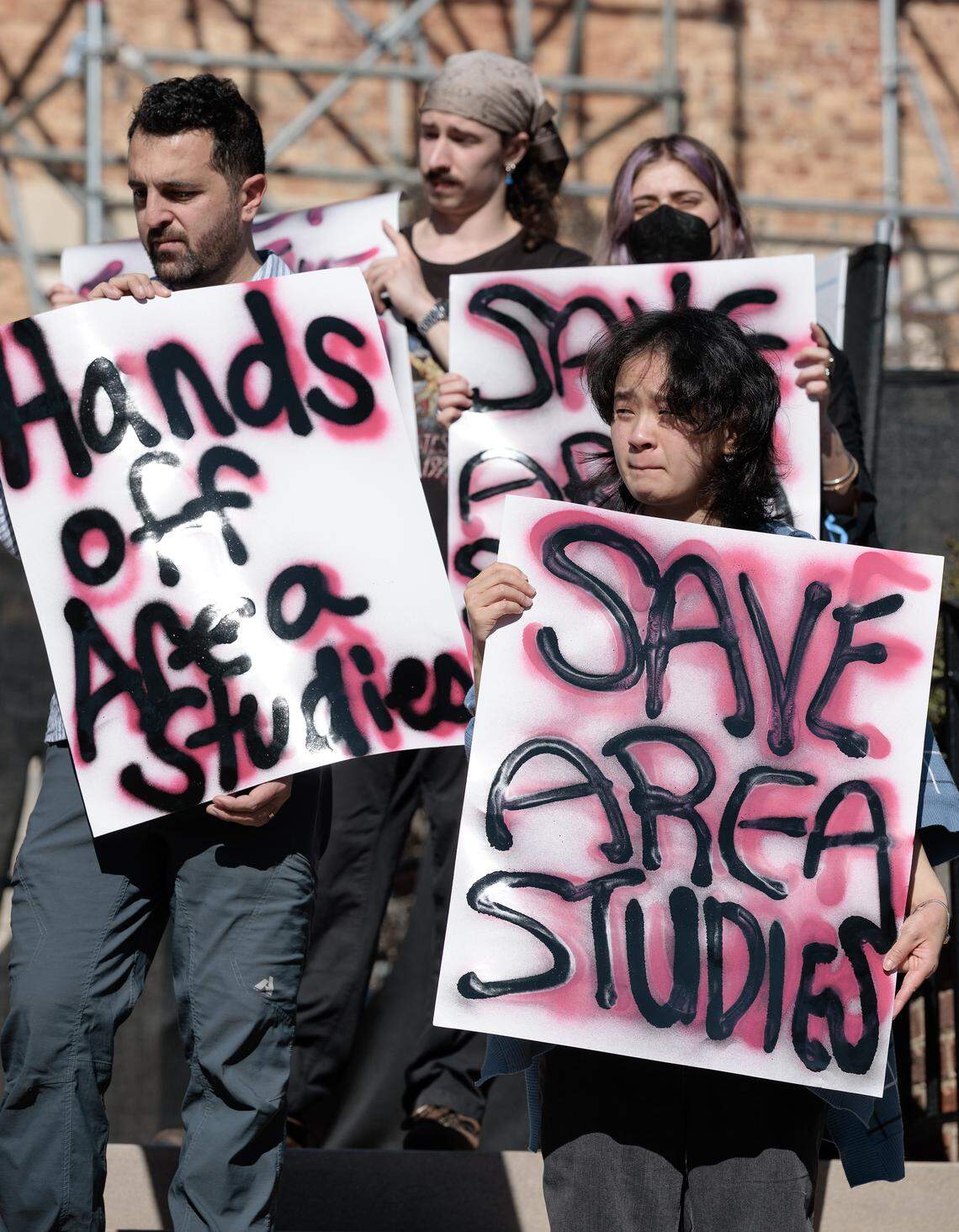
After UNC-Chapel Hill announced plans to cut six academic centers focused on international studies, the university’s faculty, students and staff had unanswered questions about the reasoning behind the cuts and the implications for the activities of the area study centers.
Records recently obtained by The News & Observer — including emails, financial spreadsheets, and other documents — shed light on those specifics.
In late January, UNC formally announced plans to shutter the African Studies Center, the Carolina Asia Center, the Center for European Studies, the Center for Slavic, Eurasian, and East European Studies, the Center for Middle East and Islamic Studies and the Institute for the Study of the Americas. The cut is part of a wider effort to save a total of $87 million in the face of state and federal funding pressure.
A Dec. 12 email from Jacob Bacharach, senior associate dean of operations and strategy, to Jim White, dean of the College of Arts and Sciences, shows the university expected to save $825,000 in state money by closing the centers.
Since this outline was drafted, the plan for the centers has evolved. Now, instead of moving funds and employees into existing departments, the university is considering creating a new umbrella organization for what remains of the centers — largely as a concession to center directors. The details of this arrangement are not yet hammered out.
How much will the cuts save the university?
According to the plan obtained by The N&O, the school was spending $1.5 million of its own money on the centers. It proposed as of December to keep spending $675,000 on a handful of retained employees, rehoused degree programs and operating grant and philanthropic-funded activities. That’s the same amount the university said this month it would spend on the new unit.
The school can’t just end programs supported in part by donors or endowed funds, like the Phillips Ambassadors Program, because of legal obligations. It’s also why some centers will take longer to close out than others, like the Asia Center’s two-year plan and the Institute for Study of the America’s three-year plan.
What will the impact be on center faculty and staff?
The university proposed to retain seven full-time employees from the centers, according to the outline:
- Three from the Center for European Studies: the degree program directors of the European Studies major and the Transatlantic master’s degree, and a student services coordinator.
- Two from the Carolina Asia Center, one for the Phillips Ambassadors Program and another for program and grant management.
- Another two from the Institute for the Study of the Americas to manage funds and events.
No staff from the African, Middle Eastern, or Eastern European centers were proposed to be retained; all besides those seven were to be laid off or reassigned to vacant positions in other departments.
The sunsetting outline doesn’t mention a plan for faculty.
What pressures precipitated the cuts?
The centers were primarily funded by outside money, not the university, according to records obtained by The N&O. Their total expenses come to more than $7.5 million, but the university spent approximately $1.5 million a year on them. It received $6 million in external funding.
The university is no longer able to rely on a primary of source that outside funding — the federal government.
In September 2025, the U.S. Department of Education delivered a letter to the university announcing the discontinuation of its Title VI grant funding related to the study of foreign nations and languages.
The university expected to receive $12.7 million over the course of four years from Title VI. It received only $9.5 million before funding was cut, leaving a $3.2 million gap and a lack of future assurances.
“This determination is further reflected in the Department’s FY 2026 Budget Request, which did not request funding for the programs noted in this decision, as being programs that ‘are inconsistent with Administration priorities and do not advance American interests or values,’” reads the letter from the Department of Education.
According to the financial records obtained by The N&O, each area study center relied heavily on federal and private grants, which made up anywhere from 42% to 74% of their budgets.
What’s more, the state budget proposed by the state Senate includes a cut of $33.6 million to centers and institutes across all UNC schools. The six area study centers at UNC Chapel Hill relied on a total of nearly $1.4 million in state money — with the Institute for the Study of the Americas getting the most. Though no budget has passed, Chancellor Lee Roberts said that proposed cut was a part of the decision-making.
The university wants to find a total savings of $7 million from cuts to centers and institutes. There are 28 other degree programs, in addition to 19 departments, that qualify for further review and could possibly be cut, Nate Knuffman, the vice chancellor of finance and operations, told the Board of Trustees in January.
What factors did the university consider in their analysis of the centers?
In the report obtained by The N&O, the following financial metrics were considered: total expenses, state appropriations, state receipts, facilities and administrative costs, owned and non-owned trusts, sponsored research, state-to-grant return on investment, percentage grant funded, percentage “self” funded, percentage non-central funded, total central investment, revenue from external sources, and net return on investment.
The net ROI represents how much money the unit brought in on its own, from funding sources like gifts and research dollars, compared to dollars from the university. Each center had a positive ROI, and the centers with the highest were the European Studies Center and the Center for the Study of the Americas, at more than $1.1 million each.
The university also considered some non-financial metrics, according to the spreadsheet. For example, only the Eastern European Center was listed as contributing to campus-level interdisciplinary research.
When, and how, was the decision made?
The center directors were aware of the end of Title VI funding in September, and each submitted requests for reconsideration to the Department of Education on Sept. 15. They highlight the centers’ contributions to the military and national security.
The copies of emails obtained by The N&O show that the “updated/final” plan for cuts to the area study centers was shared among administrators on Dec. 12, at least four days before faculty were first made aware via email. By then, staff cuts, dollar figures, and program plans were already determined. Many faculty members saw this as a breach of the principle of “shared governance,” which ensures faculty a voice in the management of the university.
“It is increasingly difficult for me to understand who we are as an institution anymore,” wrote Betsy Olson, a professor of geography at UNC, in an email reacting to the announcement obtained by The N&O.
“Without Dept of Ed funds, the centers have been hobbled. This seems like a terrible circle of damage that is very short-sighted — the value of these long-established centers is impossible to calculate,” wrote Vicki Rovine, a professor of African art at UNC in another email.
The oldest center to be cut is the Institute for the Study of the Americas, which was established in 1940.
But for Roberts, the cuts are a necessary response to real budgetary pressure from both the federal and state government, not a sign of disrespect for the work of the centers.
“I’ve received a lot of emails and letters and phone calls about how it represents Carolina turning its back on the world, Carolina deciding that we don’t need to be a global university,” Roberts told faculty at a recent council meeting. “I’m not saying that’s an illegitimate conclusion. I understand how people could have drawn that conclusion from the decision that we made. I’m just saying that was not the intent of the decision.
“I’ll just reiterate that we believe it’s crucial to be a global university.”
Roberts later apologized to the faculty for how the messaging around the decision was handled.
This story was originally published February 27, 2026 at 10:56 AM with the headline "What led to UNC’s cuts to global studies centers? A look behind the curtain."