3 things to know as Charlotte-Mecklenburg Schools unveils magnet program overhaul
Charlotte-Mecklenburg Schools leaders are unveiling proposals to overhaul the district’s magnet programs, including moving some to new campuses.
CMS currently has 16 magnet programs across 71 of the district’s total 186 schools, and approximately 20,000 students apply for program choice in the district each year. The proposed new model, which would go into effect during the 2027-28 school year, would reduce the school system’s offerings to six main pathways, with multiple campuses in different parts of town offering different choice programs.
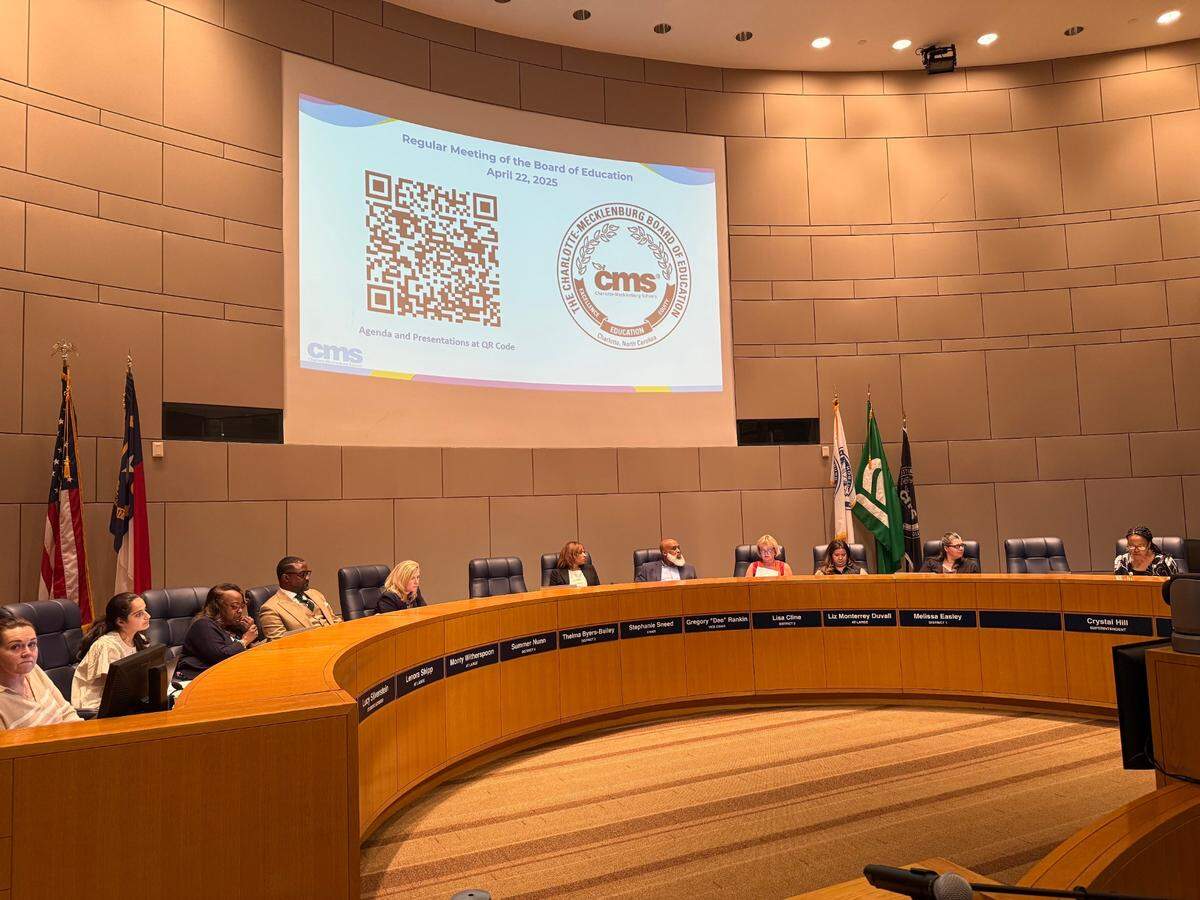
“School choice often creates competition for limited seats, uneven enrollment, transportation challenges and resource limitations,” CMS Deputy Superintendent Melissa Balknight told the CMS board Tuesday night. “This approach ensures families are choosing what students learn, rather than what school they can access, while preserving neighborhood connections and promoting equity.”
The plan would also entail opening a new STEM high school, Second Ward High School in uptown, during the 2028-29 school year and making EE Waddell High School in south Charlotte a comprehensive high school with an International Baccalaureate program.
CMS also currently offers 23 career and technical education pathways and, under the new proposal, will offer a minimum of six at each district high school beginning in the 2027-28 school year.
The changes would likely involve redrawing some zoning boundaries in south Charlotte, but no maps have been made. If the plan is approved, district leaders will go to the community for feedback on new attendance boundaries in the fall.
“We don’t anticipate a large number of boundary impacts,” Balknight told reporters Wednesday.
She said most changes would involve new schools being opened, not restructuring of school choice programs.
The plans are still just a proposal, and CMS will collect community feedback in May and April. The superintendent will present her official recommendation to the board April 28, and a public hearing will be held May 12. The board will take a vote May 26.
The proposal was formed using feedback collected from 10,000 people during the district’s comprehensive review in late 2024. The changes reflect a desire from parents for more “simplicity, clarity and transparency” in the program choice process, Balknight said Wednesday.
“This is a business, and our families are our customers,” she said. “Our job is to make sure our customers are satisfied.”
CMS magnet plan themes change
There would be six school choice pathways, with options from kindergarten through 12th grade.
CMS would also implement a new school choice transfer and lottery system called Parchment, which allows for waitlists at every school and offers families multiple chances to accept their seat in a chosen program.
Students wishing to continue in the same choice program they’re currently in will get priority placement.
The six themes include:
Visual and performing arts
This magnet program will only be offered at University Park Creative Arts Elementary, First Ward Creative Arts Middle and Northwest School of the Arts.
The programs will no longer be offered at Crestdale Middle School, Greenway Park Elementary School, and Long Creek Elementary School.
Montessori
Montessori programs would remain largely as is, with students at Lincoln Heights, Highland Mills, Billingsville (formerly Chantilly) and Sedgefield Montessori all feeding into JT Williams Montessori — the only public high school Montessori program in North Carolina.
Montessori education was originally developed by Italian educator and physician Maria Montessori, and it emphasizes allowing students to pursue their own educational interests and learn at their own pace in multi-age classrooms.
World languages
World languages programs will be housed at North Academy of World Languages, Oaklawn Language Academy, Charlotte East Language Academy, Collinswood Language Academy, South Academy of International Languages, Garinger High School, North Mecklenburg High School and South Mecklenburg High School.
Science, technology, engineering and math
STEM programs will be offered at seven elementary schools: Bruns Avenue, Dorothy J. Vaughn at Parkside, Paw Creek, Oakhurst STEAM, Governors’ Village, Rea Farms STEAM and Winget.
Six middle schools will have STEM magnet programs: Coulwood STEM, Governors’ Village, McClintock, Northridge, Rea Farms STEAM and Kennedy.
High school STEM programs would be at Philip O. Berry Academy of Technology and the new Second Ward High School.
Programs will no longer be offered at Northeast Middle School, Walter G. Byers K-8 School, Whitewater Middle School, Wilson STEM Academy and Harding University High School.
International Baccalaureate and Learning Immersion/Talent Development
IB-LI/TD programs will be housed at 11 elementary schools: Blythe, Mallard Creek, Irwin Academic Center, Lansdowne, Shamrock Gardens, Idlewild, Elizabeth Traditional, Cotswold, Charles H. Parker, Huntingtowne Farms and Myers Park Traditional.
Five middle schools will house IB-LI/TD programs: J.M. Alexander, Piedmont, Marie G. Davis, Quail Hollow and Randolph.
Five high schools will house IB-LI/TD programs: North Mecklenburg, West Charlotte, East Mecklenburg, Ballantyne Ridge and E.E. Waddell.
The International Baccalaureate program will no longer be offered at Statesville Road Elementary, Albemarle Road Middle School and Ranson Middle School. The LI/TD program will no longer be offered at Tuckaseegee Elementary School.
International Baccelaureate is an internationally-recognized curriculum focused on critical thinking and intercultural understanding. It’s already offered in some CMS schools, and “The IB diploma is the most rigorous diploma there is,” CMS Superintendent Crystal Hill said Tuesday. Learning Immersion/Talent Development is similarly focused on critical thinking and academic rigor.
Early colleges
This theme is only offered in high school in partnership with the University of North Carolina at Charlotte, Central Piedmont Community College and Carolinas College. It allows students to take college courses and receive up to two years of college credit while still in high school.
All current early colleges will remain the same, while middle colleges will be converted into early colleges.
Currently, the district has four middle colleges, which serve grades 11 and 12. Under the new plan, those would be converted into early colleges, serving grades 9 through 12.
Early colleges currently have the most demand and longest waitlists in CMS, Superintendent Crystal Hill said Tuesday. Meanwhile, none of the district’s middle colleges are at capacity.
Balknight estimates the conversion of middle colleges to early colleges will add approximately 800 early college seats.
Magnet program transportation
There would be three transportation zones, grouped geographically.
Magnet programs will be located in each of the three zones, with school placement determined by geography. The “violet zone” covers north Mecklenburg County and north Charlotte, along with parts of west Charlotte. The “blue zone” covers south Charlotte, down to the state line and uptown. The “green zone” covers the eastern part of the city and county.
Career and technical education
Career and technical education programs would be offered at every high school in CMS, with six pathways at each.
Career and Technical Education, or CTE, programs offer students the opportunity to learn hands-on skills aligned with trades like IT, cosmetology and culinary arts.
This story was originally published February 25, 2026 at 10:12 AM.