
Fewer CMS schools are getting poverty money. What that means for students
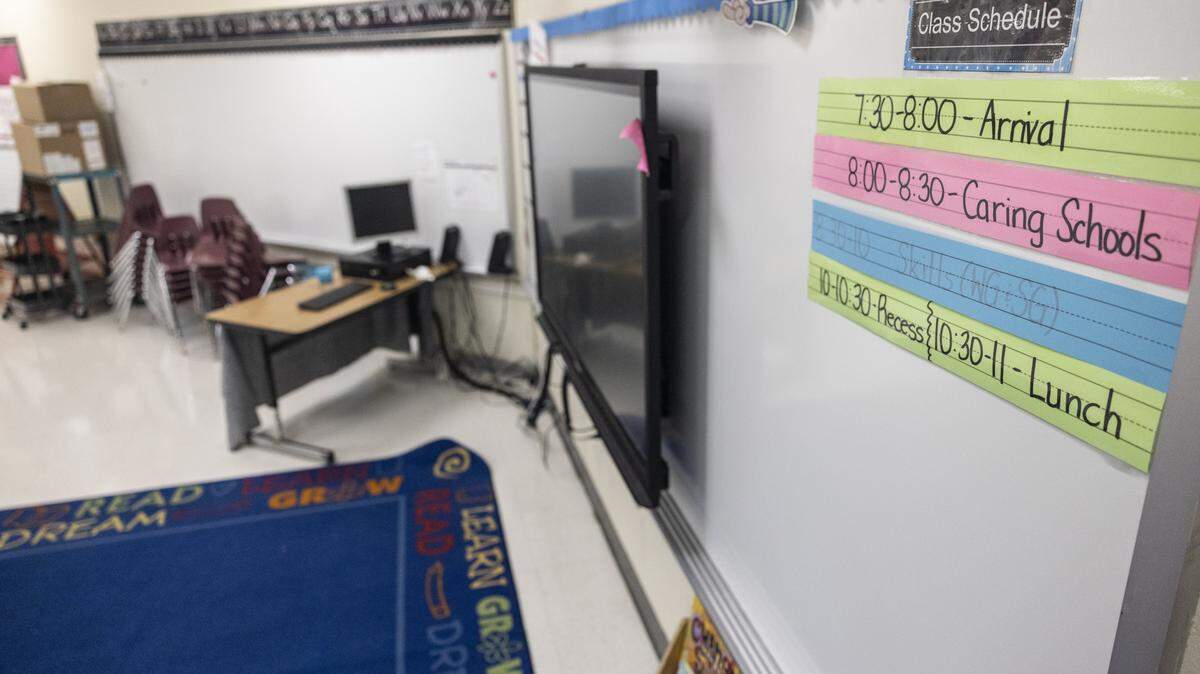
Charlotte-Mecklenburg Schools will have fewer schools receiving federal funds for high-poverty campuses this year.
Title I is a federal program that provides funding for schools with a high proportion of students at or below the poverty line. It’s the largest federal grant program for K-12 education and cumulatively, it gives billions in federal aid to schools each year.
Of CMS’ 185 total schools, 102 will receive Title I funds next school year. That’s down from 103 this school year and 105 during the 2024-25 school year. That’s because schools have to fit a specific poverty level to qualify, and over the last three years the list of CMS schools meeting criteria has grown slightly smaller. However, over half of the district’s campuses still qualify for the program.
Olympic High School and Huntingtowne Farms Elementary will be Title I next year, after not qualifying in past years. Meanwhile, Marie G Davis, Military and Global Leadership Academy and Billingsville Elementary will no longer be Title I.
CMS will receive $48.4 million in Title I funds for 2026-27, district leaders told the school board Tuesday. That’s in addition to over $13 million it will get from Title II, III and IV grants for things like teacher development and support for multilingual students.
“Federal entitlement funds are essential because they allow us to target resources to students with the greatest needs,” CMS Deputy Superintendent Melissa Balknight told board members Tuesday. “Each program supports a different aspect of our work.”
District leaders previously feared cuts to federal funding after the Trump administration froze around $6 billion in already-allocated Title II, III and IV grants last summer, including $12.5 million in CMS. The administration reversed course after 24 state attorneys general, including North Carolina’s Jeff Jackson, sued for the money to be released.
In December, CMS Chief Financial Officer Kelly Kluttz warned that up to 60% of the district’s Title II, III and IV funds could be slashed for next school year. However, in February, she told board members the cuts didn’t come to fruition.
“This is the best-case scenario for us,” Kluttz said.
Federal funding isn’t for CMS to use however it sees fit: it comes with a lot of requirements and oversight. Here’s a look at what federal grants CMS expects to receive and how it plans to use them.
Didn’t CMS already approve a budget?
Board members approved Superintendent Crystal Hill’s second budget proposal for next year on May 12 after rejecting her first draft in a surprise 8-1 vote April 28. They called for more focus on student well-being and closing achievement gaps between groups of students.
But, board members have to take a separate vote to sign off on the district’s use of its federal grant funding. That vote will take place June 9.
Federal money accounts for about 6.8% of CMS’ $1.97 billion operating budget for the 2026-27 school year. This year, it made up 6.1%. The majority of the district’s dollars come from the state, followed by Mecklenburg County.
Title I grants fund schools with a high proportion of economically disadvantaged students and account for the biggest pot of CMS’ federal funding. If the board approves district leaders’ plan, 480 positions in the district would be funded by Title I.
Meanwhile, Title II grants are designed to address teacher development. Title III grants fund programming for multilingual learners. Title IV grants are for academic enrichment and student support.
How does CMS plan to use its Title I, II, III and IV funding?
Most Title I money – about $29.7 million – would be allocated to specific schools based on the poverty level of their student body. Schools with higher poverty get more funding.
Title I status is solely determined by the income-level of a school’s student body, which is measured by the proportion of students that qualify for free lunch under federal guidelines. Families that receive food stamps, for example, automatically qualify for free school meals.
About $18.4 million would go toward initiatives across the district, including $12.5 million for CMS pre-K.
About $733,000 would go to continuing CMS’ “Math I Excellence Bonus.” It gives up to $15,250 each to Math I teachers at 16 Title I schools who meet certain benchmarks for student performance and surpass growth expectations over the course of the school year.
Around $500,000 would go toward the district’s “Investment in Excellence” initiative. It provides additional resources and support for the district’s five lowest-performing Title I schools: Cochrane Collegiate Academy, Hidden Valley Elementary, J.M. Alexander Middle School, Ranson Middle School and South Pine Elementary.
That support means additional teaching assistants, an intensive behavior coordinator at each school, extended day tutoring and literacy coaching. The program serves a combined 3,829 students.
The approximately $5.9 million of Title II funds would go toward professional development, the district’s teacher residency program, admin costs and beginning teacher support.
The $3.5 million in Title III grants would go primarily toward personnel to support students learning English, in addition to curriculum development and family engagement. Title IV funds, totaling around $3.7 million, would go toward arts programs, crisis response and prevention staff and curriculum development.