A once-in-a-50,000-year cosmic event will be visible in Charlotte tonight. How to see it
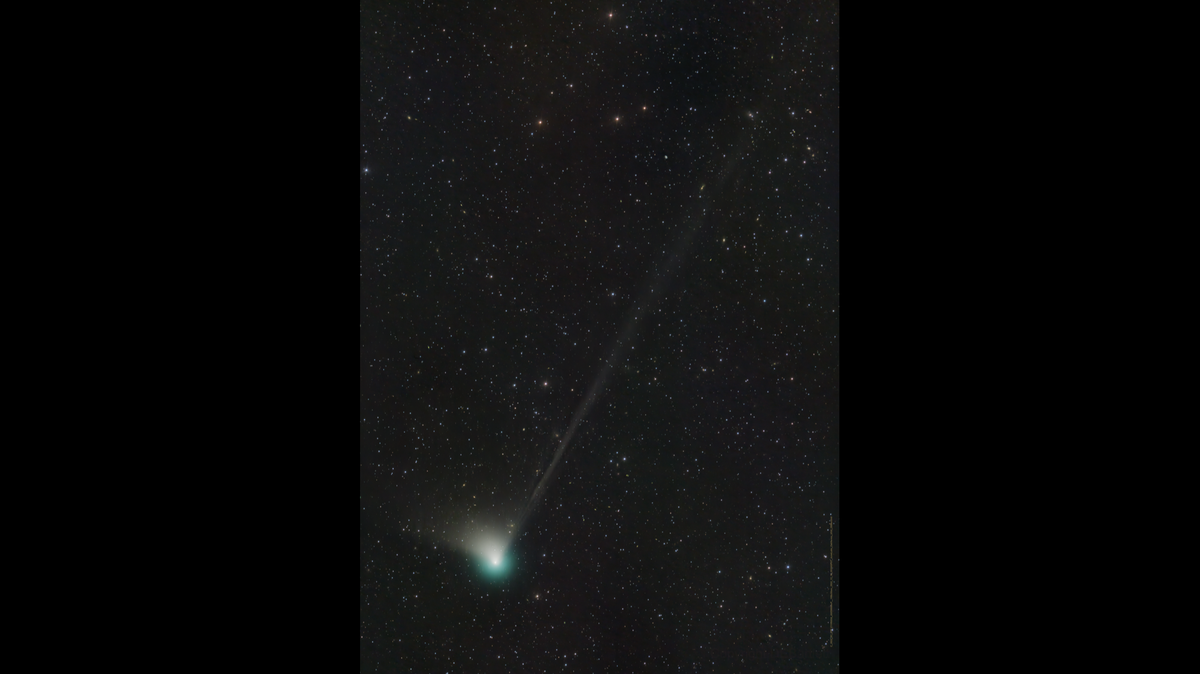
A rare green comet is scheduled to appear in the night sky for the first time in 50,000 years.
The comet, named C/2022 E3 (ZTF), will make its closest approach to the sun Thursday night, and pass closest to the Earthagain on Feb. 2, according to NASA.
According to researchers at the Pasadena, California-based The Planetary Society, “the comet has a long orbit that takes it from the outer reaches of the Solar System in toward the sun over thousands of years,” which is why it has taken so long to reappear in the sky.
Astronomers discovered the comet in March using a telescope at the Zwicky Transient Facility in southern California, according to the cosmos tracking website EarthSky.
How to see the comet in Charlotte
On Jan. 12, the comet will be visible low on the northeastern horizon just before midnight, according to EarthSky.
Stargazers will likely need binoculars to see the comet, but it could become visible to the naked eye in dark skies depending on how bright it gets, NASA says, adding that the brightness of comets is “notoriously unpredictable.”
The comet will be in the general vicinity of the North Star on Jan. 30 and will become visible earlier in the evening, EarthSky explained.
For first-time comet watchers, EarthSky recommends trying to locate it on Feb. 10, when it appears closest to Mars. Photographers can take pictures of the comet by pointing the camera toward its approximate location and taking long-exposure photos of 20 to 30 seconds.
Tips for observing comets
Here are some tips on how to observe comets, according to Celestron, a telescope manufacturer:
Watch from a remote location using binoculars and let your eyes adapt to the darkness for one hour
Find a clear view of the horizon where the comet is predicted to be
Avoid areas obstructed by buildings, trees, or hills
Instead of looking directly at the comet, look off to the side about 20 degrees to see the light coming from it
Tonight’s Charlotte weather forecast
There is a chance of thunderstorms before 11 p.m. in Charlotte before a 90% chance of showers from 11 p.m.-1 a.m., according to the latest forecast from the National Weather Service.
NWS forecasters predict the area could see up to an inch of rain tonight, with wind speeds between nine and 16 miles per hour, and gusts of up to 30 miles per hour.
This story was originally published January 12, 2023 at 2:26 PM.