ChatGPT can think like a human. What are Charlotte’s schools, workforce doing about AI?
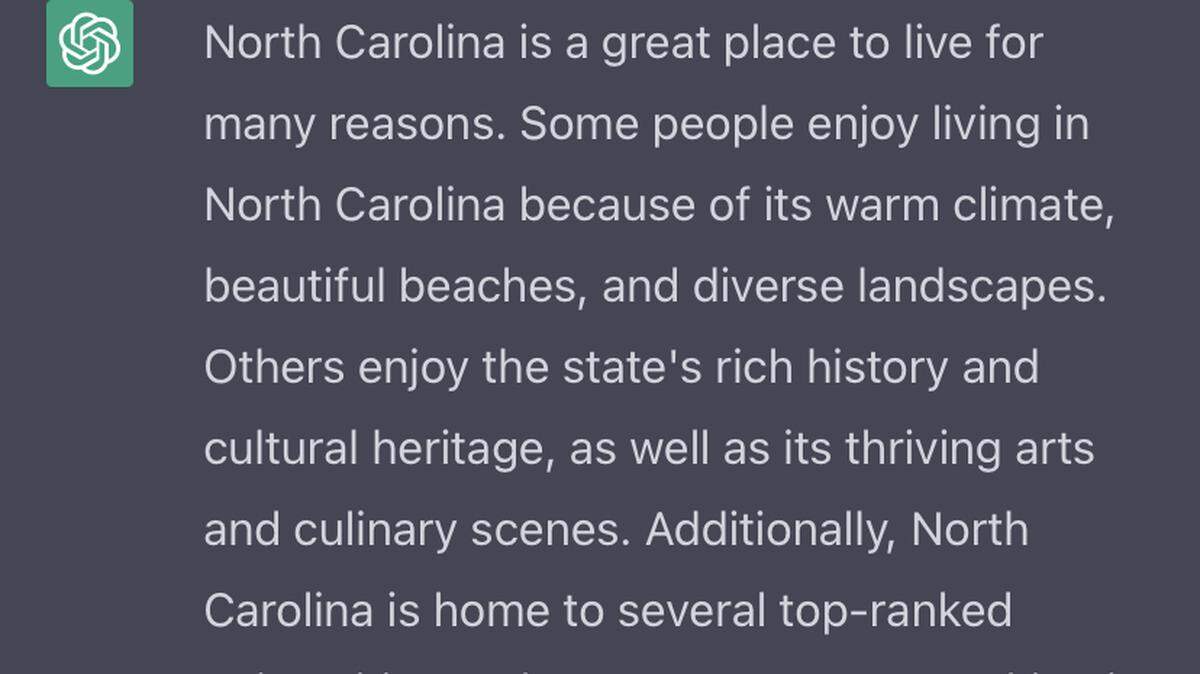
One of the latest internet trends, the chatbot ChatGPT, is drawing interest and raising questions about what the increased use of artificial intelligence means for the future.
Although chatbots have been around for years, ChatGPT has reached high levels of popularity and drawn a great deal of mainstream attention for its ability to write school essays and answer complex questions in the tech world with information gleaned from the internet.
At times, the site is not even available because of how many people are already using it.
And that relatively widespread use has many different fields in Charlotte and beyond, including local schools and colleges, thinking through its potential impacts.
Here’s what to know about chatbots, ChatGPT and what it means for various parts of daily life:
What is ChatGPT?
ChatGPT is a chatbot, a computer program that simulates a conversation. It’s an example of artificial intelligence.
The specific chatbot, launched in late 2022, “is one of the largest and most advanced language models currently available,” the program says.
“One of the key features of ChatGPT is its ability to generate human-like text responses to prompts,” the site says. “This makes it useful for a wide range of applications, such as creating chatbots for customer service, generating responses to questions in online forums, or even creating personalized content for social media posts.”
In order to use the program, you have to get a specific “API key,” a type of identification code. Once you’ve got the API key, available through openai.com/api, “you can use the ChatGPT model by sending it a prompt in the form of a text string,” the program explains.
Examples of prompts offered by the program include requests for the chatbot to solve a word problem, translate a paragraph into English, write a JavaScript code and “write me a poem in praise of the AI in the style of a Donald Trump speech.”
How good are chatbots at replicating humans?
Chatbots have since their invention drawn criticism and lampooning from some for a variety of issues, from responses so weird they become humorous to serious ethical concerns.
But over time, they have become more advanced and adept at mimicking real humans.
“As the technology continues to advance, it will be able to perform tasks that were previously thought to require a high level of education and skill. This could lead to a displacement of workers in certain industries, as companies look to cut costs by automating processes,” writer Annie Lowrey wrote in an Atlantic article headlined “How ChatGPT Will Destabilize White-Collar Work.”
ChatGPT has already drawn attention from fields ranging from scientific research to the arts for its ability to create convincing scientific abstracts and children’s books.
Are chatbots stretching ethical limits?
As chatbots such as ChatGPT continue to become more advanced, companies and countries are continuing to figure out what rules or laws, if any, will be applied to them.
“One key issue is the extent to which AI chatbots can be considered ‘creators’ of original content for purposes of copyright law. As these systems become more advanced, they are able to generate text, images, and other forms of content that are indistinguishable from human-generated content,” attorney Moish Peltz writes for the Falcon, Rappaport & Berkman firm. “This raises questions about who should be considered the “author” of this content for copyright purposes, and whether such content should be entitled to the same IP protections as human creators.”
In addition to intellectual property concerns, experts say advanced chatbots could have far-reaching implications for everything from immigration policy to the practice of law itself.
What Charlotte schools are doing about ChatGPT
Another field already scrambling to work through the implications of chatbots such as ChatGPT is education.
Candace Salmon-Hosey, chief technology officer for Charlotte-Mecklenburg Schools, said it’s a topic of conversation “in the tech world as well as among” technology directors across North Carolina.
“CMS has blocked the download on all student devices as well as the filtering system,” she said in a statement to the Observer.
Central Piedmont Community College does not “currently” use chatbots, spokesman Jeff Lowrance said.
“The college used one briefly during the early days of the pandemic to answer related questions from students,” he added. “It was provided to the college free of charge for a few months.”
This story was originally published January 24, 2023 at 11:38 AM.