
Only you can prevent wildfires. Here’s what items you can’t burn in Charlotte
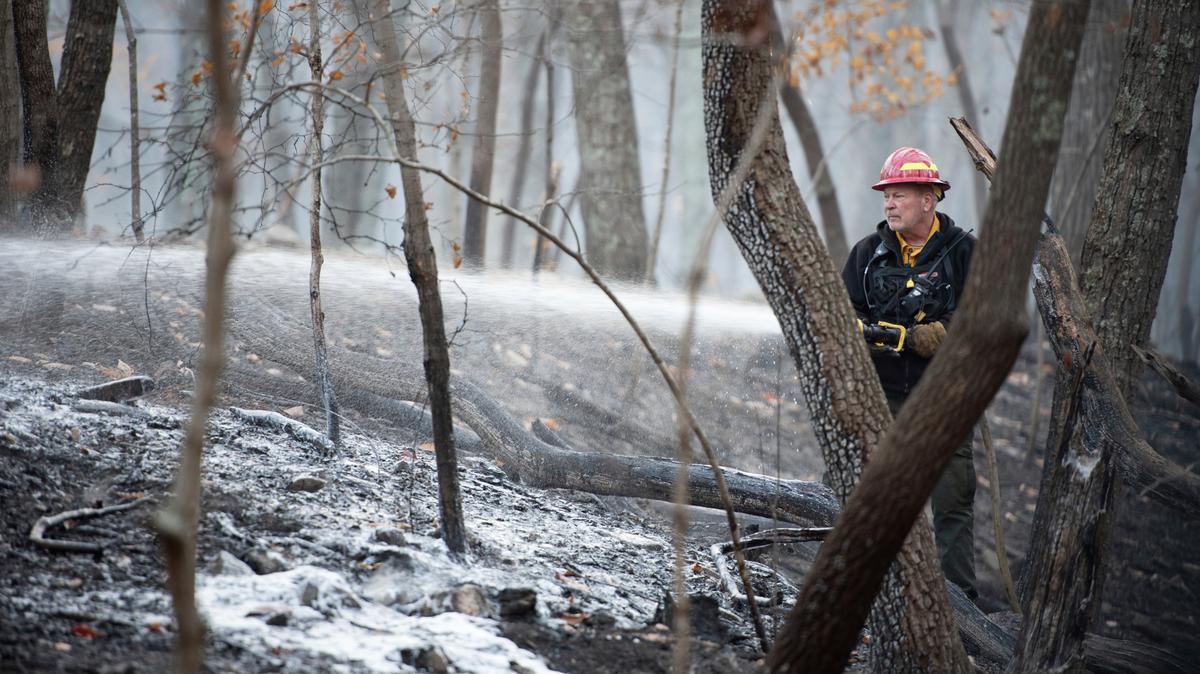
March begins the official start of spring wildfire season in North Carolina.
The state is ranked third in the U.S. for the most human-caused wildfires, with 99 percent of wildfires resulting from human activity, according to the National Interagency Fire Center.
In 2022, nearly 6,400 wildfires burned more than 27,000 acres across the state, including one in the Great Smoky Mountains that spread over 960 acres. Escaped outdoor fires continue to be the leading cause of wildfires in North Carolina, experts say.
That’s why the North Carolina Forest Service is urging residents to be cautious when burning leaves, limbs, and other yard waste. It is illegal to burn anything other than vegetative material and household trash must be taken to a trash or recycling station, the agency said.
The agency explained that March through May can be the peak time for wildfire activity across the state. But Mecklenburg County and Charlotte have specific ordinances for open burning and recreational fires. Here’s what to know:
City of Charlotte burn ordinance
Recreational fires: According to the Charlotte Fire Department, there are specific rules for recreational fires in Charlotte, which can be used for pleasure, religious, ceremonial, cooking, warmth, or similar purposes. But they cannot be used to burn household trash, yard debris, or construction materials.
The fire must be at least 25 feet from structures and other combustible materials.
Fuel area may not exceed 3 feet in diameter and may not exceed 2 feet in height.
Only solid fuels are allowed (no rubbish).
Dry grass, leaves, and other combustibles must be cleared for a minimum of 10 feet around the fire area.
Any condition which could cause a fire to spread within 25 feet of a structure must be
eliminated.
The fire must be constantly attended to by an adult and a portable fire extinguisher or garden hose must be in place for immediate use.
Portable outdoor fireplaces:
Must be at least 15 feet from structures and other combustible materials.
Only solid fuels are allowed (no rubbish).
Must be used in accordance with the manufacturer’s instructions.
Must be constantly attended by an adult and a portable fire extinguisher or a garden hose must be in place for immediate use.
What you can’t burn in Mecklenburg County
There are separate legal requirements for outdoor fires In Mecklenburg County under the jurisdiction of the Mecklenburg County Fire Marshal’s Office.
Open burning is prohibited unless a permit has been issued by the Mecklenburg County Fire Marshal’s Office. Depending on the location, some fires may also require permits from the N.C. Forest Service.
Open burning of leaves, logs, stumps, tree branches, or yard trimmings where public pickup services are available is prohibited. The burning of tires, rubber, rubbish, refuse, paints, paper, cardboard, building materials, chemicals, shingles, oils, and synthetic items are also strictly prohibited under all circumstances.
Open burning, when permitted, must not take place within 50 feet of a structure, approved extinguishing equipment must be readily available and fires must be constantly attended until put out.
Recreational Fire: Recreational fires are not considered open burning and no permit is required. They can be started for religious, ceremonial, cooking, or warmth purposes.
For example, campfires or fires for the purposes above in handmade fire pits. This does not include outdoor fireplaces, portable outdoor fireplaces, barbecue grills or pits.
Fires must be located greater than 25 feet from a structure or combustible material.
Fires must be constantly attended to until the fire is extinguished.
Approved extinguishing equipment must be available for immediate use.
Portable outdoor fireplaces:
Fireplaces may only be operated at least 15 feet from a structure or combustible material, except at one and two-family dwellings.
Fireplaces must be attended to until the fire is extinguished.
Approved extinguishing equipment must be available for immediate use.
Penalties for burn violations
Whether someone illegally starts an open fire in or outside Charlotte city limits, there are different consequences for those caught. But the punishments for violations within jurisdictions do not overlap. For Mecklenburg County, fire officials first seek to educate the parties involved, but if the burn activity continues, a $200 citation can be issued.
If caught within city limits, the Charlotte Fire Department said they inform the culprit if possible. If illegal burning persists with anyone in particular, at that point the violators could be issued a $50 citation.
This story was originally published March 14, 2023 at 6:00 AM.
.jpg)