How can your Charlotte neighborhood become a historic district? This is what’s required
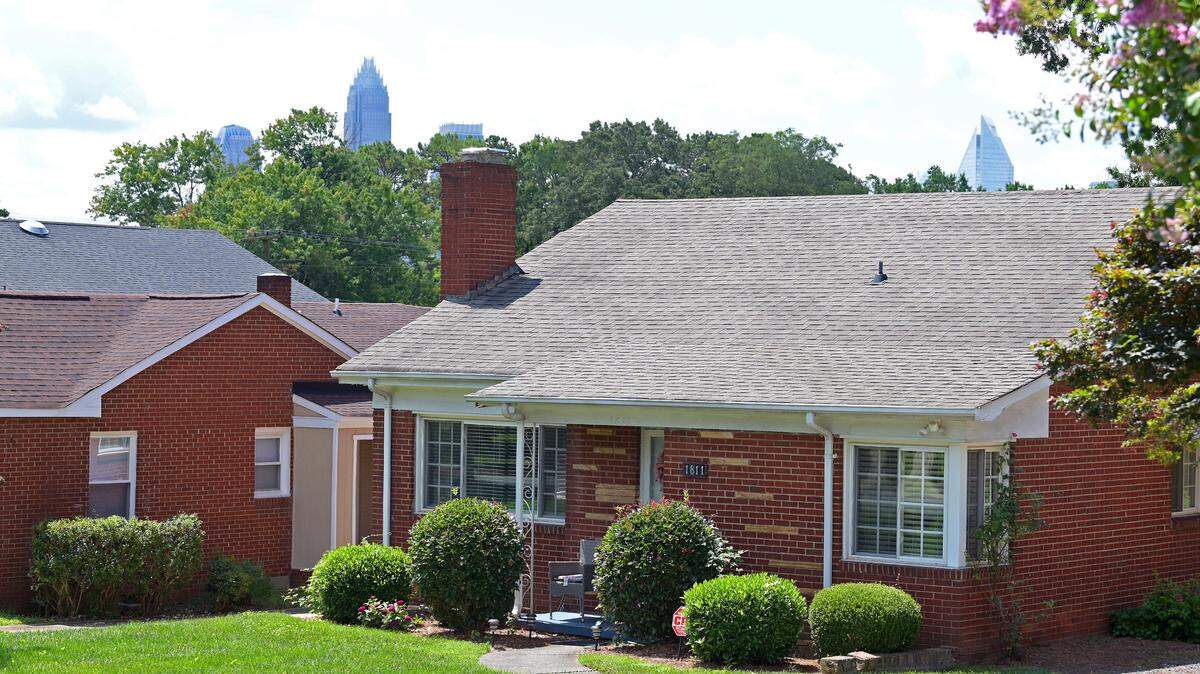
Charlotte residents who live outside of neighborhoods with homeowner’s associations are free to make any improvements to their homes.
But those who live in historic districts could get fined if they renovate their homes without the city’s permission.
A Charlotte Observer reader recently asked about the building restrictions for historic districts, and how neighborhoods can apply for the designation.
“How many neighborhoods have historical designations with restrictions on remodeling?” the unidentified reader asked. “Where are they? How can other neighborhoods get the same protection from tear down/rebuilds?”
There are eight historic districts in Charlotte, according to the Charlotte Historic District Commission, a group that “works with property owners and businesses in the districts to assure that development and renovation occurs in a manner that is consistent with the character of the neighborhood.”
The current districts that fit the designation in Charlotte are:
Here’s what to know about building restrictions in Charlotte:
How to apply for historic district designation in Charlotte
Kristi Harpst, the program manager for historic districts for the City of Charlotte, said residents interested in securing historic district status can contact the Historic District Commission to determine the boundaries of the proposed district.
“We’ll usually come out and do a tour of the neighborhood,” Harpst said. “Historic districts are for areas that still have a concentrated collection of older buildings, and for us, older and historic starts at 50 years.”
According to the Charlotte HDC Rules of Procedure, a historic district designation application must be submitted to the city along with a letter of support. A local district designation report, which can include a map of the proposed district boundary, a written narrative about the history of the neighborhood and photos of properties , is also required.
The Historic District Commission then can begin to coordinate with property owners within the proposed district, as well as the N.C. Department of Natural Resources and State Historic Preservation Office to finalize the documents.
Once those items are reviewed, they are sent to the commission for an official vote on whether to support the district.
“The commission has never not supported a request,” said Harpst. “By the time people have gotten that far, we know it’s eligible to be a historic district at that point.”
If the commission signs off on the request, the applicant can file a rezoning request, which includes an application, and documentation of the State Historic Preservation Office’s review of the request. It also includes a petition signed by at least 51% of the property owners within the proposed district.
How long does the process take from start to finish?
The length of the designation process varies, Harpst said, adding the size of a district and the amount of historical research that needs to be done are factors that can extend it.
“McCorey Heights did the whole thing in 18 months,” she said, “but it’s my understanding that it took about 10 years for Wilmore to be designated.”
The Charlotte Historic District Commission has a set of design standards for historic districts to protect the character of each neighborhood.
For example, homeowners are required to make repairs to original windows rather than replace them and are not allowed to remove large trees without approval.
Property owners are also required to contact the Historic District Commission office to obtain a Certificate of Appropriateness before proceeding with any exterior changes to existing structures.
Work that is done without a certificate can be reported to the commission online at the city’s website.
How many historic landmarks are in Charlotte?
There are 367 historic landmarks in Mecklenburg County, according to the Charlotte-Mecklenburg Historic Landmarks Commission.
To have a property considered for landmark designation, you can submit an application to the Charlotte-Mecklenburg Historic Landmarks Commission.
Applicants are required to provide the following in order to have a property considered for landmark designation:
Name, street address and tax parcel number of the property
A name, address, phone number and email address
A brief statement on the significance of the property
Photographs of the property
For more information about the historic landmark designation process, you can call 980-314-7660, or send an email to historiclandmarkscommission@mecknc.gov.