Traffic is getting worse around Lake Norman. Why has NCDOT delayed vital road projects?
Lake Norman is a haven for anglers, boaters and water sports enthusiasts.
But for drivers, it’s a nightmare.
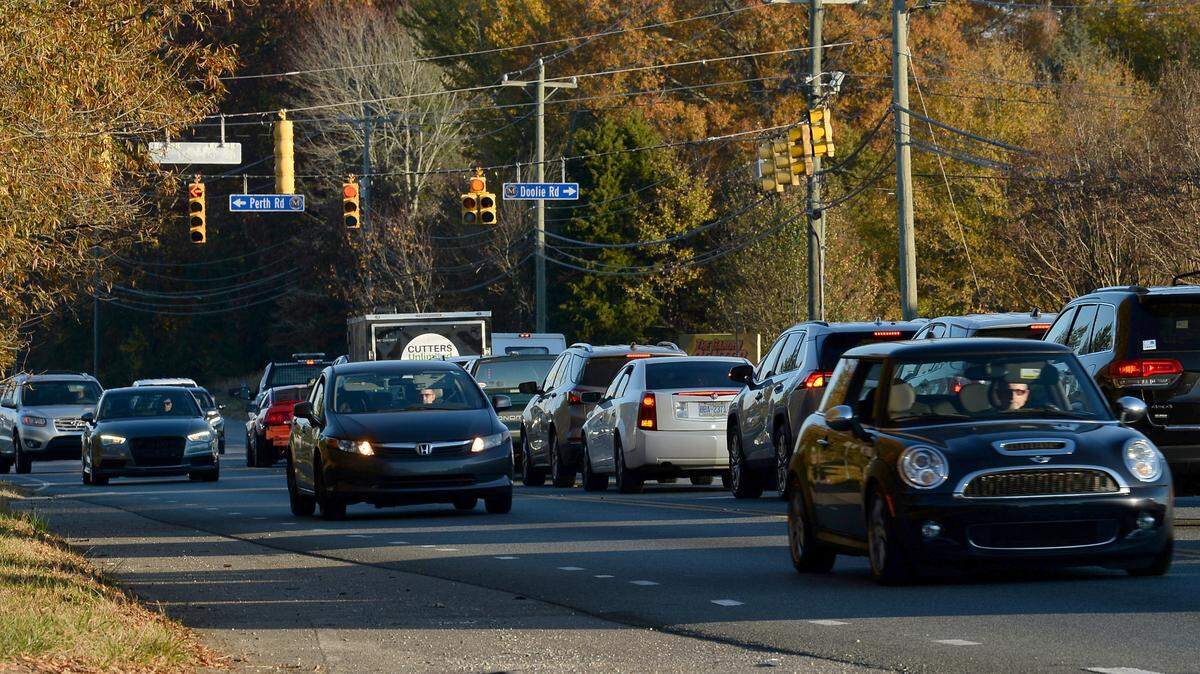
During rush hour, it’s common for traffic to be backed up for miles on N.C. 150, the highway that connects Denver and Mooresville.
At a meeting to discuss a potential moratorium on new developments due to ongoing traffic concerns last month, Mooresville Town Manager Randy Hemann told commissioners that an estimated 18,000 vehicles travel on N.C. 150 per day.
“The area around 150 … is absolutely the worst in town,” Hemann said. “We have a lot of projects in the hopper, but we also know that, over the years, a lot of those projects have been pushed back.”
Construction on the project to improve traffic flow by widening the highway is scheduled to begin in 2025, according to NCDOT.
At the southern end of the lake, on N.C. 73, traffic is equally as bad — and commuters will have to wait at least a few more years before it gets better.
A project to widen the highway from Denver to Huntersville, originally scheduled for 2021, is now slated to begin in 2026, according to NCDOT.
Without improvements, traffic on N.C. 73 would increase by 35% between West Catawba Avenue and N.C. 16, and by 65% between West Catawba Avenue and Northcross Drive by 2040, according to the Cornelius Planning Department.
Why have road projects been delayed?
Some of the current road project delays can be traced back to 2019, when storms that ripped through the Carolinas caused millions of dollars in damage, NCDOT Communications Officer Jen Thompson said.
“We ended up spending a lot more money on cleanup and getting roads back open than we had initially thought we would,” Thompson said.
Additionally, since 2016, NCDOT has spent at least $600 million settling lawsuits after the Supreme Court ruled in favor of landowners who challenged the Map Act, the law that allows the state Department of Transportation to reserve land for roads it plans to build in the future, The News & Observer reported.
And perhaps most crucially, the COVID-19 pandemic resulted in further funding constraints for NCDOT, according to Thompson.
“We were losing more money because we rely heavily on the gas tax,” Thompson said. “We lost about $300 million in the first quarter of 2020. That made us have to take a step back and suspend a lot of work.”
When pandemic restrictions were lifted, the price of construction materials and real estate went up drastically, Thompson said. Like most other industries, NCDOT also experienced labor shortages during that time.
Due to cost increases, improvements in NCDOT’s 2020-2029 State Transportation Improvement Program (STIP), a document that maps out road projects for the entire state that is updated every two years, would result in an $8 billion deficit if all of those projects were funded today.
Despite multi-million dollar losses, relief is on the horizon for drivers.
The budget Gov. Roy Cooper signed into law in July redirected 2% of state sales tax revenue to NCDOT instead of the state’s general fund, The N&O reported.
The budget also puts $1 billion into a new fund, called the State Inflationary Reserve, as budget writers wanted to have a way to pay for inflation-related cost increases for construction and infrastructure projects.
NCDOT’s 2024-2033 STIP, which is currently under development, should be approved by the N.C. Board of Transportation next month, Thompson said.