
Lake Norman algae blooms spotted across four counties, prompting warnings
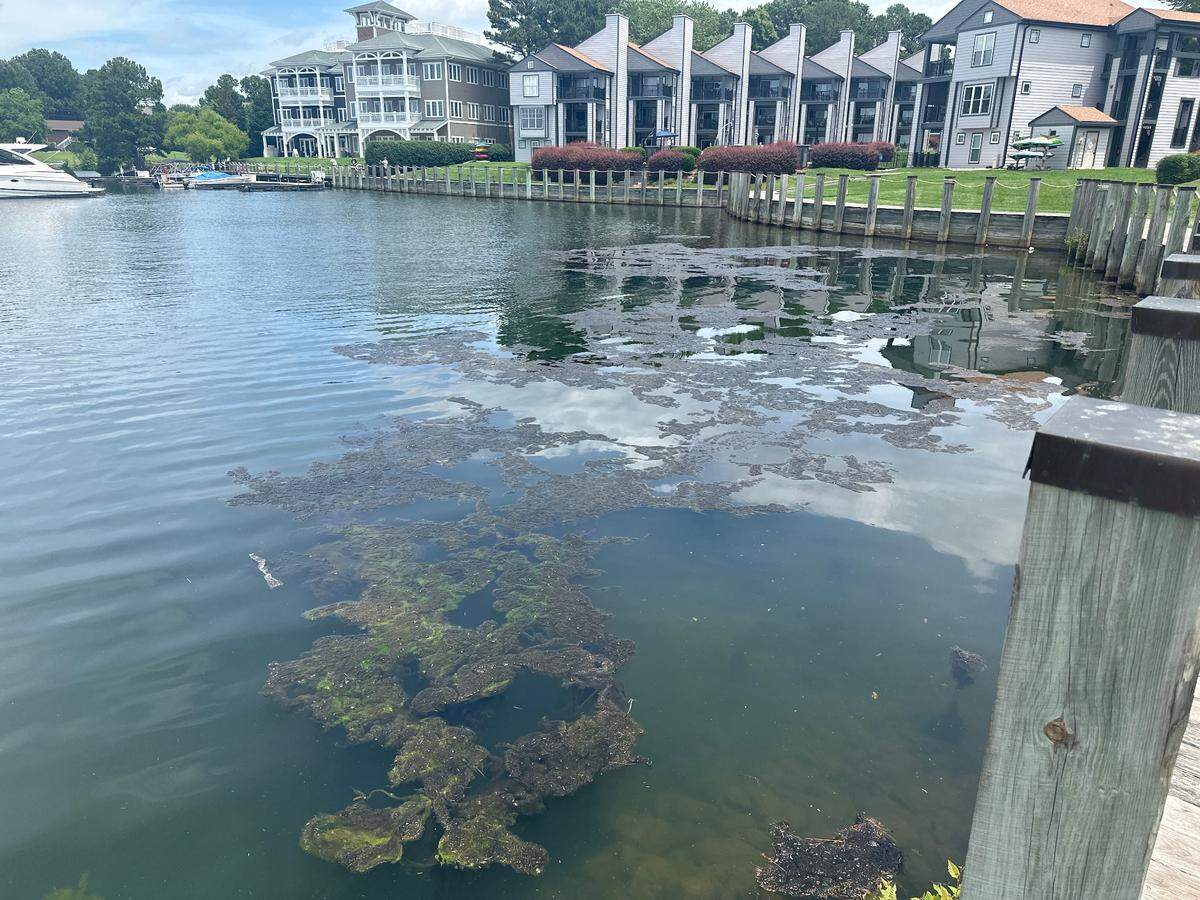
A blue-green algae has emerged on Lake Norman, prompting warnings from state health officials to avoid the water where spotted.
Algal blooms have lingered since Monday “at multiple locations” in Mecklenburg, Iredell, Lincoln and Catawba counties, according to a new release Thursday by the N.C. Department of Environmental Quality’s Division of Water Resources.
Keep children and pets from water that’s bright green, blue, discolored or scummy, health officials said.
Children are at greater risk of serious illness than adults if they ingest the algae simply because they weigh less, according to the North American Lake Management Society.
Seek immediate medical care if your child appears ill after being near algae, officials urged.
Animals can die within hours of ingesting the toxin, according to the society.
“If your pet appears to stumble, stagger or collapse after being in a pond, lake or river, seek veterinary care immediately,” according to the state Division of Water Resources.
Algae bloom sightings
Algae has clustered primarily in northeastern parts of the state’s largest manmade lake, although blooms can move with the wind and waves, officials said.
Blooms have been reported near the Davidson College lake campus off Langtree Road in Mooresville; the Sam Furr Road-Ranger Trail intersection in Huntersville; and Safe Harbor Westport, formerly Westport Marina, in Denver, according to the state’s fish kill and algal bloom report dashboard.
Other reports include Rio Oro Drive in Cornelius; Camelia Point Road, Wellesbourne Road and Riviera Drive in Sherrills Ford; and Beaten Path Road and Pinnacle Shores Drive in Mooresville.
A Cornelius resident reported a “green floating growth” while walking his dog outside his condo June 13, according to the NC algal bloom dashboard. “Growth appears to have increased over the last 24 hrs, and there are concerns over safety,” a state investigator said. “Advised to stay out of water in the interim.”
The state has investigated algae reports at five locations and determined that the blooms are dominated by dolichospermum, which belongs to the algal group cyanobacteria.
State continues monitoring the blooms
The blooms are typically bright green and have a foul odor. They change to a milky blue as they decay.
Dolichospermum can produce microcystins, a type of algal toxin. Tests revealed no microcystins, according to the state.
“However, toxin production is dynamic and can begin and end quickly,” according to Thursday’s statement. “It is not possible to tell just by looking at a bloom whether toxins are being produced or not.”
State officials said they will report any new developments on the state algal bloom dashboard as soon as they are available.
This story was originally published June 20, 2025 at 9:34 AM.