
Bad behavior at fraternities has some questioning the system
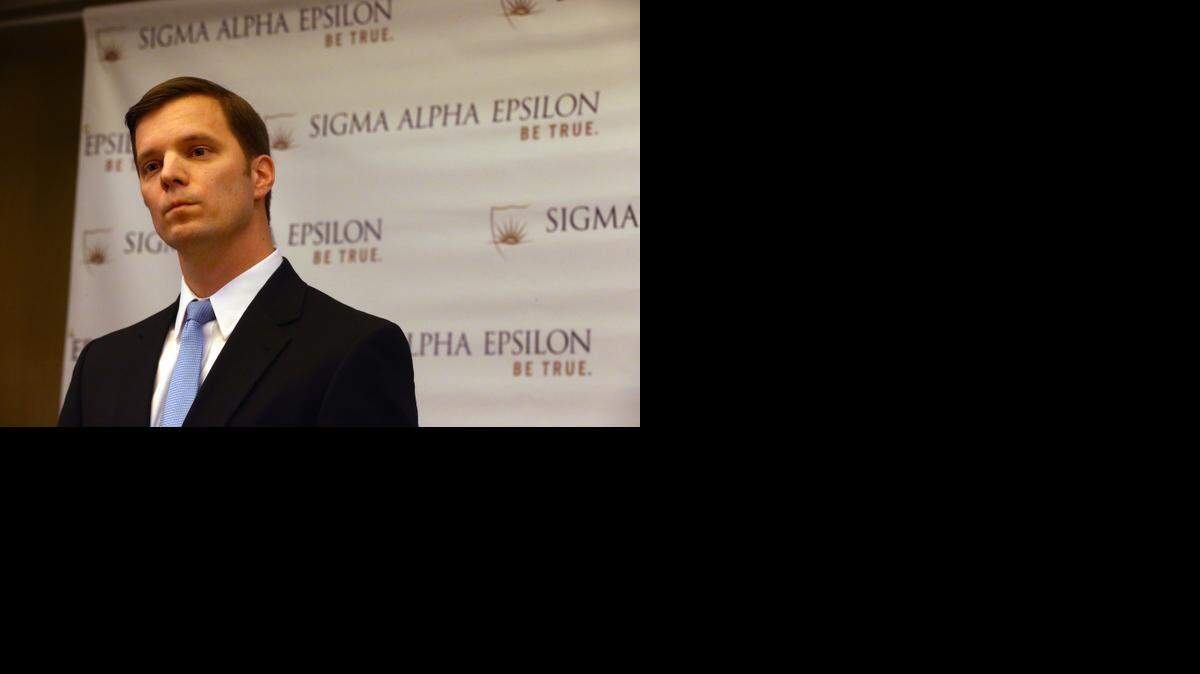
The secret Facebook page where members of Kappa Delta Rho at Penn State University allegedly posted and commented on pictures of naked, unconscious women is just the latest in a spate of publicized incidents that have cast a shadow on fraternities nationwide.
The controversies, including racist singing at the University of Oklahoma and allegations of hazing at the University of Houston, have triggered deep soul-searching on campuses in recent days as administrators and students seek out answers to stop the bad behavior.
But they’ve also led to larger questions about Greek life itself, whether the campus organizations have become incubators for dangerous behavior and whether the problem has gotten so bad that some students should rethink membership – or at least drop the Greek letters from their resumes.
Marc Bourne, vice president of Know It All Intelligence Group, a Philadelphia-area firm that offers employment screening, said companies are looking more closely at the activities students are involved in. Even a distant association with one of these fraternities in the news can have a detrimental impact on a job candidate, he said.
“We’d like to say in a perfect world that you wouldn’t judge someone at a different campus based on what happened at another campus,” Bourne said in an interview. “However, we know that’s not true. You hear of SAE and the first thing you think of is the incident of the chanting and racist remarks.”
Earlier this month, after the 50th anniversary of civil rights demonstrations in Selma, Ala., a nine-second video emerged of Sigma Alpha Epsilon members at the University of Oklahoma singing a racist song to the tune of “If You’re Happy and You Know It.” The fraternity chapter was suspended and David Boren, the university president, expelled two students.
On Wednesday, the University of South Carolina’s Pi Kappa Alpha fraternity was suspended as police investigated the death of one of its members. As of Friday, the circumstances of the death had not been reported.
People need to stop acting surprised when disparate and segregated organizations behave poorly, said Matthew W. Hughey, who studies Greek life as an associate professor of sociology at the University of Connecticut.
“We really need to move the discussion away from good or bad apples and toward a question of what’s going on with the orchard,” he said.
Fraternities were created for the “creme de la crème of society” back in the 18th and 19th centuries, he said. The exclusive clubs, Hughey said, had the specific purpose of protecting and fostering white power, wealth and status.
To some extent, it’s worked. Forty-four percent of U.S. presidents and 31 percent of U.S. Supreme Court justices have been members of a social fraternity, according to the North American Interfraternity Conference. Nearly 40 percent of the last class of U.S. senators and 24 percent of members of the House of Representatives were part of a fraternity or sorority.
Greek organizations have a long history of battling ugly stereotypes associated with alcohol-fueled parties, racial and ethnic insensitivities, hazing and sexual assault of young women.
The Sigma Chi chapter at the University of Houston was suspended this week following allegations of hazing.
Another Sigma Alpha Epsilon chapter, at Clemson University, was suspended last year after some of its members threw a gangster-themed holiday party dubbed “Clemson Cripmas.”
That year, Sigma Phi Epsilon closed down its University of Mississippi chapter after members placed a noose and a Confederate flag around the statue of the school’s first black student.
Kappa Sigma suspended its Duke University chapter in 2013 after students hosted a controversial Asian-themed party.
It’s not just the boys.
In 2014, the Chi Omega sorority closed its Penn State chapter following the circulation of a photo of members wearing fake mustaches and sombreros with a sign that read: “Will mow lawn for weed + beer.”
Supporters of the Greek system say the actions of a few do not detract from the positive contributions of the hundreds of thousands of fraternity members nationwide.
The North American Interfraternity Conference, a trade association representing 74 member fraternities, says members raise tens of millions of dollars annually for charitable causes and volunteer millions of hours in their communities.
Pete Smithhisler, president and CEO of the conference, cites statistics that show fraternity members earn higher grade-point averages than their at-large peers.
In a statement, Smithhisler said he expects those involved will be appropriately disciplined.
Despite the controversies, interest in Greek life does not appear to be waning. The Higher Education Research Institute found that 15 percent of freshmen at public universities and 21 percent at private universities said they were likely to join a fraternity or sorority last year. Ten years ago, it was 8 percent at public universities and 9 percent at private.
For a young graduate with little to no related job experience, fraternity membership on a resume can demonstrate civic engagement and extracurricular interests, said John Challenger, CEO of the job-placement firm Challenger, Gray & Christmas.
But like politics, or religion, Greek life can also be polarizing, and possibly professionally dangerous, depending on whom is on the other side of the recruiting desk, he said.
“If you have people who are anti-fraternity when they were in school, then incidents like this might just reinforce their dislikes and may push people who are in the middle more toward the anti- side,” Challenger said.
Some national organizations and colleges have taken steps to change the reputations by banning alcohol at fraternity houses and curbing hazing. But Beverly Lindsay, a professor of higher education at Penn State University and University College London, said the larger issue is not only changing the actions but the attitudes of these young men, who likely never would have acted in such a way if they thought it might be shared publicly.
“They were operating as if there was a certain level of impunity to their statements,” Lindsay said. “And that’s what often happens, whether people are posting photos of nude women or pouring alcohol down the mouths of women who are half asleep. They think there will be no one who will report it.”
The fact that the Sigma Alpha Epsilon song was caught on video only inflamed matters as it circulated across social media. Lindsay felt the University of Oklahoma president, a former governor and senator, had little choice but to expel the students. He couldn’t afford to even remotely look like he condoned the behavior, she said.
But others, like Roger Geiger, a higher education professor at Penn State, felt the Oklahoma president’s decision was based more on public relations and political correctness vs. what’s in the best interest of the student body. While describing what the students did as reprehensible, Geiger questioned whether more could have been done.
“Universities are supposed to educate people,” Geiger said. “If they make terrible mistakes, the university, you’d think, would try to at least make some attempt to correct those mistakes instead of banishing them.”
Email: fordonez@mcclatchydc.com; Twitter: @francoordonez.
This story was originally published March 20, 2015 at 2:36 PM with the headline "Bad behavior at fraternities has some questioning the system."