
The nation's first 'free range' parenting law takes effect in Utah. Could your state be next?
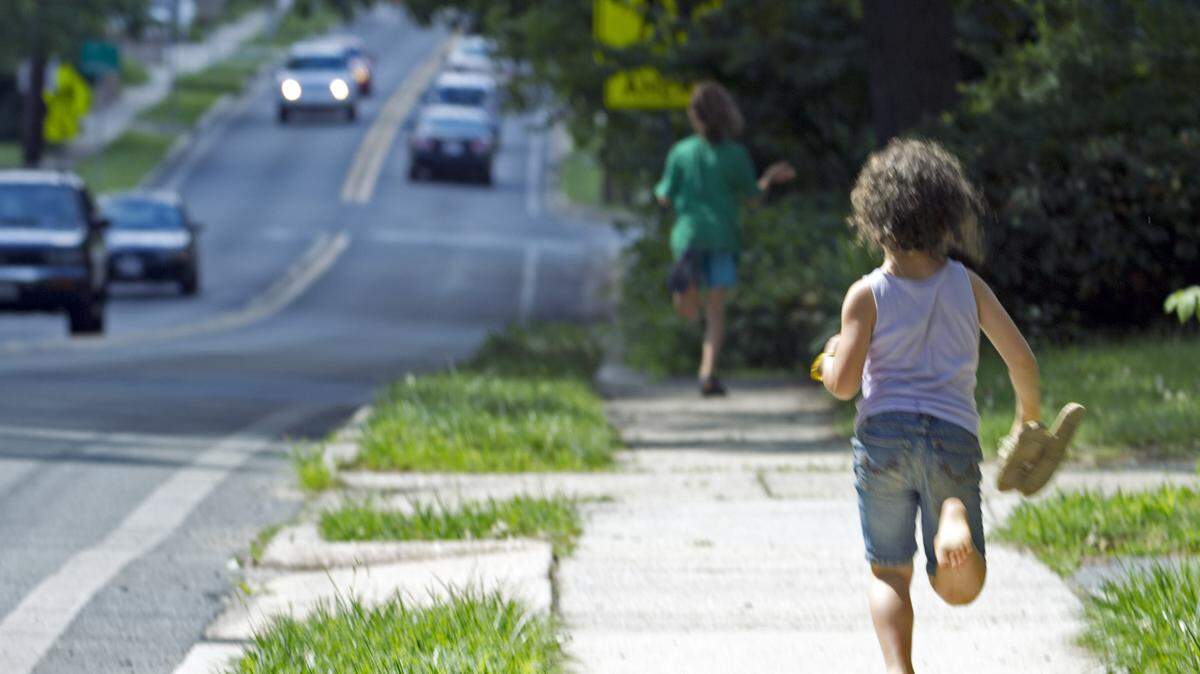
Earlier this year, legislators in Utah unanimously passed the nation's first-ever law protecting 'free range' parents from prosecution. It goes into effect Tuesday, and the groundswell of support has other states eying similar moves. But what exactly is 'free range' parenting, and why did Utah pass a law protecting it?
The definition can be a little murky, but 'free range' parenting generally means allowing children to do certain things without adult supervision. That could mean playing in a nearby park, walking to school, going to a store or rambling through a neighborhood creek.
Some may look back on their own childhoods and wonder when the 'free-range' parenting movement became a movement at all. But in recent years parents have been visited by police and even charged for allowing their children to wander neighborhoods freely.
In 2015 Danielle and Alexander Meitiv faced criminal child neglect charges when they allowed their two children, ages 6 and 10, to walk home alone from a park in Silver Spring, Md (the charges were dropped). In 2014, Nicole Gainey, of Port St. Lucie, Fla., was arrested and charged with child neglect after allowing her 7-year-old to walk home from a park (those charges were also dropped).
The bulk of the 'free-range' parent movement may rest on the shoulders of Lenore Skenazy, a New York City mom who sparked a national firestorm with her column on why she allowed her 9-year-old to ride the subway alone. She was lambasted as the "world's worst mom," a title she eventually reclaimed for her own reality TV show. Now she runs the Free Range Kids website and writes regular columns for Reason.
Utah Sen. Lincoln Fillmore, the bill's sponsor, told The New York Times the state's definition of child neglect was too broad. "Neglect should not mean letting your kids play by themselves in the park or walk home from school alone," he told the paper.
The new law narrows the scope of child neglect, allowing a child "whose basic needs are met and who is of sufficient age and maturity" to "engage in independent activities." Those activities include playing outside, traveling to or from school, going to stores, staying in a car unattended, staying at home alone and more.
"I think it's important because around the country parents have been arrested, investigated and had their kids taken from them for doing things as simple as letting their kids play in the park or play basketball in the front yard while they're on their way home from work, or walk to and from school," Fillmore told The Deseret News. "We need to stand up and push back against the idea that in order to keep our kids safe, we need to hover over them constantly."
Another state lawmaker, Representative Brad Daw, considered the law a boon for police. He told The New York Times officers will now have more discretion on whether to respond to "nuisance" calls from certain parents calling to complain about other parents. The Deseret News reported that Utah officials investigated about 3,000 calls related to supervision of children in 2016.
“The law says that you can’t just call authorities if you see a child playing alone in the park. It frees up authorities from investigating these nuisance calls while allowing them to focus on children who are actually being neglected,” Daw told The New York Times.
The new law has faced criticism from some parents concerned about safety.
But Utah Governor Gary Herbert told ABC News, "We believe that parents know and love their kids better than anybody. Absent evidence of clear danger, abuse or neglect, we believe that parents have the best sense of how to teach responsibility to their children."
Now other states are looking at picking up the baton from Utah.
New York state assemblyman Phil Steck told the Associated Press he was going to introduce a similar proposal. Arkansas state senator Alan Clark, who tried (and failed) to pass a similar bill in 2017, also told the AP he would be trying again. FIlmore told ABC 4 lawmakers from "about a half-dozen" states called him and asked him for help replicating the law.
"When I was a child, you let your dogs and your children out after breakfast and ... they had to be home for dinner," Steck told the AP. "I felt I gained a lot more from just playing on the street than my children did from being in organized sports activities."
This story was originally published May 7, 2018 at 9:55 AM with the headline "The nation's first 'free range' parenting law takes effect in Utah. Could your state be next?."