Florida man dupes companies out of $4 million by posing as covert CIA agent, feds say
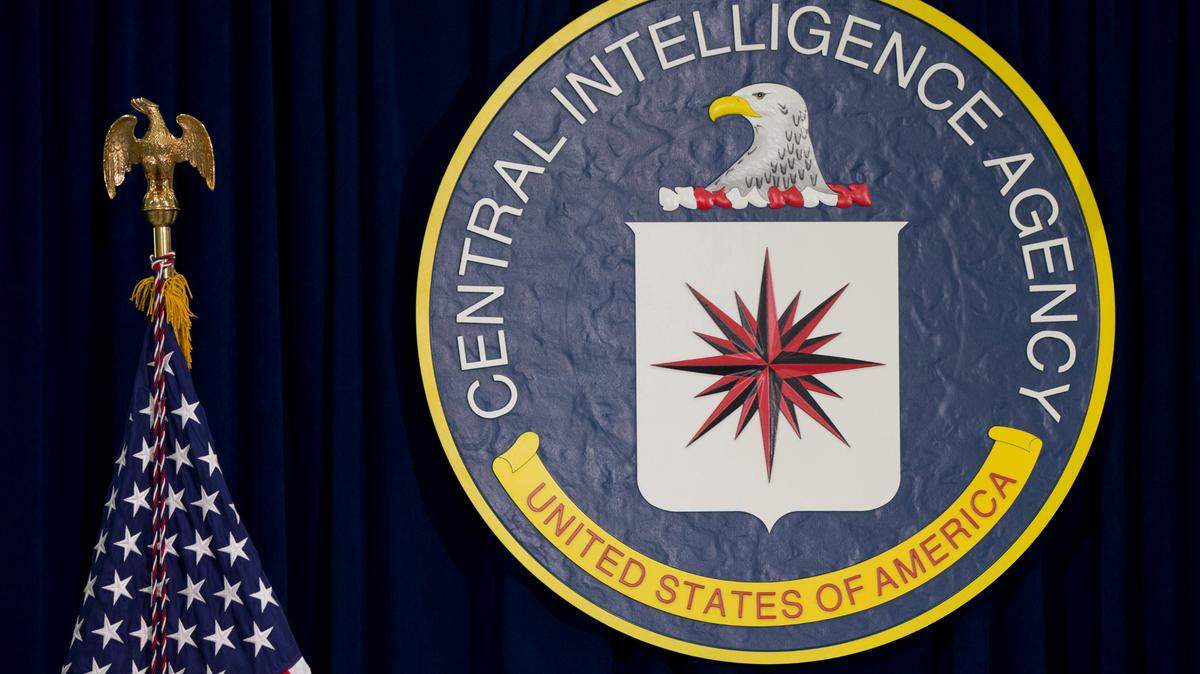
Garrison Kenneth Courtney, a 44-year-old resident of Tampa, Florida, worked in public affairs for the U.S. government for eight years — including, for a time, as the chief spokesperson at the Drug Enforcement Administration, according to his LinkedIn page.
He did not, however, work for the CIA, federal prosecutors said Thursday.
But that didn’t stop Courtney from bilking upwards of a dozen companies out of $4.4 million by pretending to be a covert agent seeking a day job to cover for his work on a top-secret, highly classified government project, the U.S. Department of Justice said in a news release.
Courtney pleaded guilty Thursday to wire fraud and faces up to 20 years in prison if convicted, the U.S. Attorney’s Office in the Eastern District of Virginia said.
“According to the false story told by Courtney, this supposed classified program sought to enhance the intelligence gathering capabilities of the United States government,” the Justice Department said. “In truth, Courtney had never been employed by the CIA, and the task force that he described did not exist.”
Courtney, who studied broadcast journalism at the University of Montana, was a weather man at CBS news before transitioning to government work, according to his LinkedIn.
He moved through the ranks starting in 2001 as a spokesperson for the U.S. Department of Homeland Security before becoming chief of staff to Florida Rep. Katherine Harris in 2004, The Washington Post reported. Prosecutors said he then worked as a spokesperson for the DEA from 2005 to 2009.
After leaving the DEA, Courtney was a producer at TMZ for one year before becoming a “communications and marketing executive” at “various Fortune 500 companies” for the next decade, according to his LinkedIn.
That’s when his multi-million-dollar scheme kicked off.
According to court filings, Courtney did apply for a job with the CIA in 2005 and was given a conditional offer, but it lapsed in 2007 when he failed to respond.
From 2012 to 2016, he then held himself out as a “covert officer of the CIA” working on a classified task force, the Justice Department said.
“To accomplish the fraud, Courtney approached numerous private companies with some variation of this false story, and claimed that the companies needed to hire and pay him to create what Courtney described as ‘commercial cover,’ i.e., to mask his supposed affiliation with the CIA,” Thursday’s news release states.
In return, he reportedly promised the companies both “lucrative” government contracts and a full reimbursement for his salary.
Courtney’s “illusion” ran deep, prosecutors said.
In an accompanying back story, Courtney told the companies he had “hundreds of confirmed kills” while serving in the U.S. Army during the Gulf War and sustained lung injures from “fires set to Iraq’s oil fields,” Thursday’s news release states.
In reality, Courtney’s supposed “lung injuries” were asthma, according to court filings.
He also turned an ordinary health issue that required him to be hospitalized into a foreign government’s attempt to “assassinate him by poisoning him with ricin,” the Justice Department said.
Ricin is a poison found in castor beans, according to the U.S. Centers for Disease Control and Prevention.
When asked questions about the fraud, Courtney claimed his identity and actions were “classified,” according to the news release. He also forced “victims and witnesses to sign fake nondisclosure agreements” and “forbade anyone involved from speaking openly” about his activity.
He later used those nondisclosure agreements to “withhold” supposed payouts from the government, telling companies they had “leaked classified information or otherwise breached security,” according to court filings.
“When certain individuals would doubt or question Courtney’s legitimacy, he would falsely accuse them of being spies on behalf of foreign intelligence services in a bid to discredit him,” one filing states.
At one point, prosecutors said he accused someone who threatened to expose his fraud of being an Iranian spy.
The Justice Department said Courtney later convinced actual government officials the so-called task force was real.
He “then used those officials as unwitting props falsely to burnish his legitimacy” by instructing them to speak with victims and verify his claims were legitimate, according to the news release.
“Courtney thereby created the false appearance to the victims that the government officials had independently validated his story, when in fact the officials merely were echoing the false information fed to them by Courtney,” the Justice Department said.
The scheme ultimately net Courtney a job as a private contractor for the National Institutes of Health, where he steered government contracts to the companies paying him “and used the false pretext of national security concerns to warp the process by preventing full and open competition,” according to the news release.
It was not clear in court filings how Courtney’s scheme unraveled.
According to an order setting his conditions of release on a $25,000 bond, Courtney is due to be sentenced Oct. 23. In the meantime, he’s ordered not to leave the Washington, D.C., area with the exception of two counties in Florida — Hillsborough and Pasco.