Fracture in vital I-40 bridge in Memphis may have started decades ago, report finds
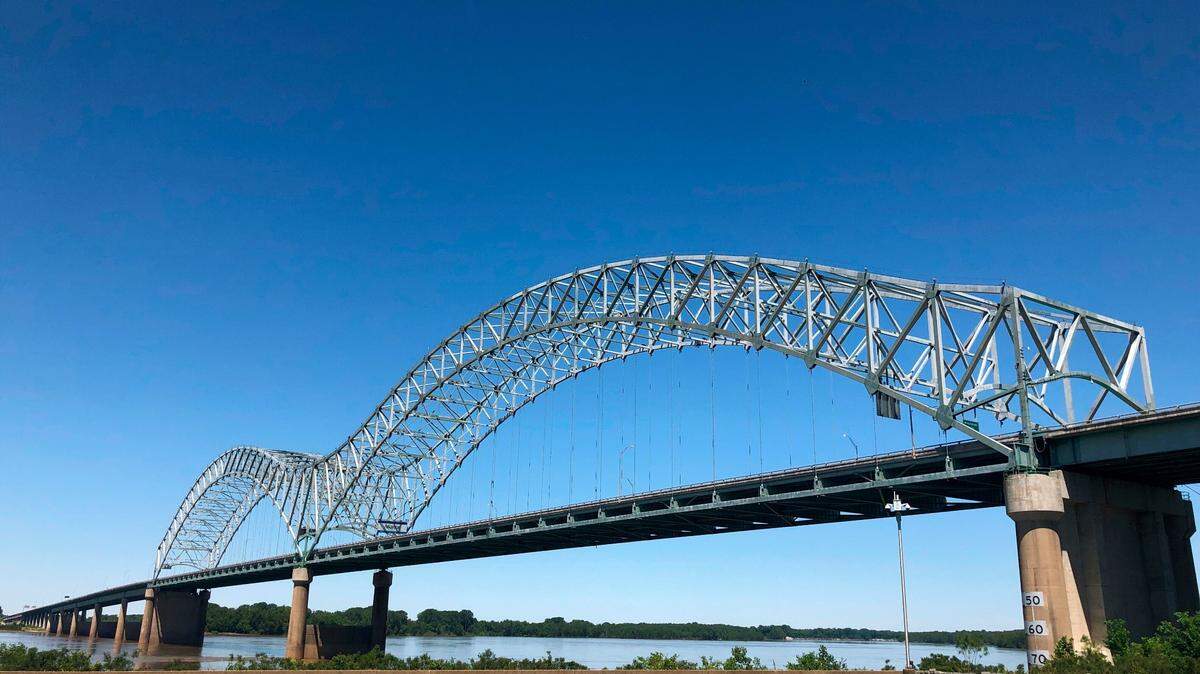
The fracture that shuttered a vital Memphis bridge connecting Tennessee and Arkansas may date back decades.
The crack in a steel beam on the Interstate 40 Hernando de Soto bridge, which runs over the Mississippi River, was discovered during a routine inspection in May — causing the bridge to close to interstate traffic for repairs until early August. Transportation officials later said drone footage showed the crack was visible in 2019, and the worker who inspected the bridge in 2019 and 2020 was fired.
Now, a report from the Arkansas Department of Transportation on Nov. 10 said the fracture was “visible at least as early as 2016” but likely originated decades before that.
Origin of the fracture
The crack occurred in a “welded splice between two plates in the tie girder of the bridge,” according to the report.
A closer examination of the beam revealed that the initial fracture started in an area of the weld where two weld repairs were made during the fabrication of the bridge in the 1970s, the report said.
“The weld repairs were more susceptible to cracking because of the type of steel and the welding method used in the fabrication of this bridge in the 1970s,” the report said. “In all likelihood the cracking in the weld occurred within hours of its completion but was not detected by any post-weld repair fabrication testing and remained unchanged for a number of years.”
The report said that in the 1980s, defects found in similar bridges revealed the “potential for cracking in welds.”
But the defects in the Hernando de Soto bridge were not found during an ultrasonic testing inspection of its tie girder welds in 1982, according to the report.
The fracture then spread in three phases before it was noticed in May.
“The initial fracture occurred on the interior face of the box where it was not visible by conventional inspection,” the report said. “The second phase of crack propagation fractured through the remaining thickness and was later identified in the 2019 drone video. The third fracture event propagated up the remaining web, across the top flange, and arrested in the flange to web weld of the tie girder.”
The report said the “existing weld cracks became unstable” because of a combination of low temperatures, tie girder stress, and the “effects of live loads to which the bridge had not been previously subjected.”
It’s “highly unlikely” that a similar fracture will occur in the bridge, the report said, given its “48-year service life,” the fact the fracture occurred in three phases over many years, the recent inspections for welding defects and the fact that there was “no evidence of observed fatigue crack growth during this study.”
About the fracture
When the fracture was found on May 11, the bridge initially closed to waterway and interstate traffic — sparking concerns about shipping delays as the bridge serves as one of the heaviest freight corridors in the U.S. — and federal and state officials launched an investigation.
The bridge soon reopened to water traffic but didn’t reopen to vehicle traffic until August, after repairs were made.
The first phase of repairs involved installing two 30-foot steel plates on both sides of the fracture to stabilize the bridge and allow crews to work on it. The second phase involved removing and replacing the steel beam using “high-strength steel rods” to restore strength to the beam and then replace the section with the fracture.
Transportation officials originally said the fracture was a result of wear and tear, later saying it went undetected because the worker who inspected the bridge in 2019 and 2020 “failed to carry out his responsibilities correctly.”
“He didn’t see it,” Arkansas Department of Transportation Director Lorie Tudor said of the worker during a May news conference. “But the reason he didn’t see it is because he wasn’t following proper protocol. The way we’re supposed to inspect a bridge is you literally go inch by inch along that beam and physically inspect every inch of the beam. That did not happen.”
The report released on Nov. 10 said the “terminated inspector was directly responsible for inspecting that portion of the bridge in 2016, 2017, 2019 and 2020.” The inspector in charge of the portion of the bridge in 2018 had “never inspected this portion of the bridge before” and will receive more training.
The report also identified “improvement opportunities” for transportation officials.
“ARDOT is grateful that the bridge investigations are complete,” Tudor said in a statement. “We will now move forward with confidence and make the changes necessary to improve our program so that the past will not be repeated. Our highest calling as public servants is the safety of Arkansas’ road users.