
What’s led up to Russia’s invasion of Ukraine? Here’s a brief look at their history
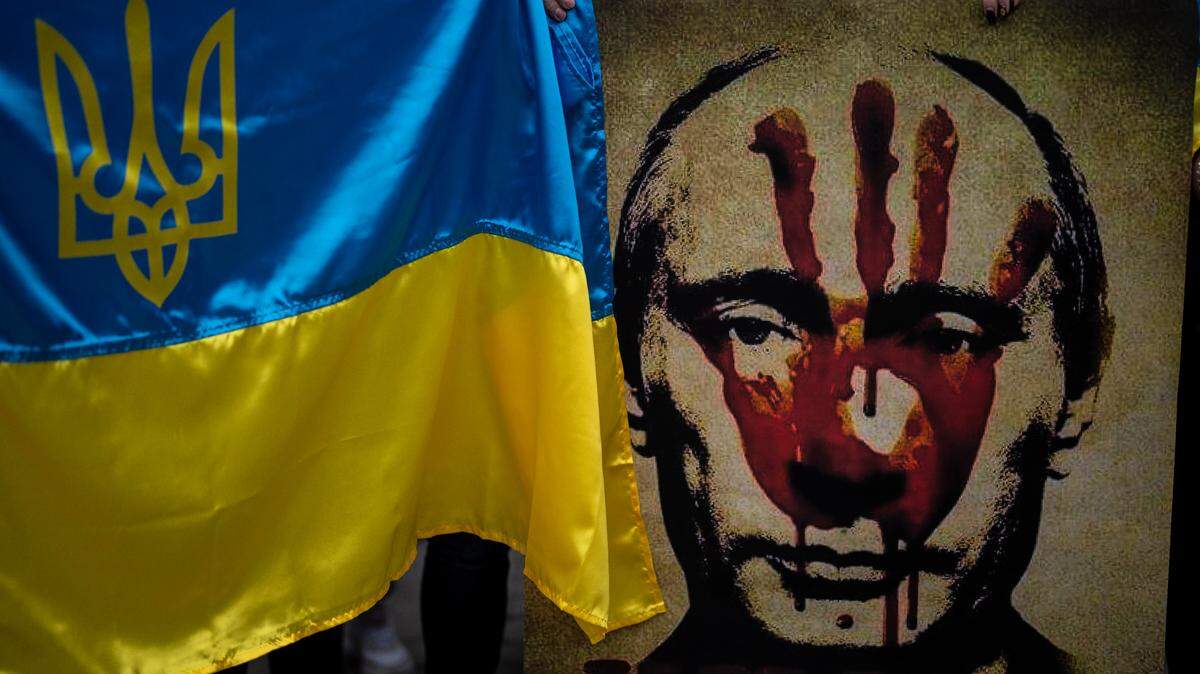
President Joe Biden and world leaders have condemned Russia’s “unprovoked and unjustified” attack on neighboring Ukraine in Eastern Europe that has the world on high alert.
Russian President Vladimir Putin warned against other countries stepping in, promising “consequences you have never seen” as the full-scale invasion of Ukraine began Feb. 24, the Associated Press reported.
Explosions have gone off in several Ukrainian cities and many Ukrainian military bases have been decimated, according to the outlet. Ukraine has reported at least 137 soldiers dead and 316 others hurt in the ongoing conflict.
“Putin has chosen a premeditated war that will bring a catastrophic loss of life and human suffering,” Biden wrote Feb. 23 on Twitter. In a subsequent post, Biden said “the world will hold Russia accountable.”
“This is a declaration of war against the whole of Europe,” Ukrainian President Volodymyr Zelenskyy wrote Feb. 24 on Twitter.
A brief history on Ukraine and Russia:
There hasn’t been a military conflict as large on European soil since World War II, which lasted from 1939 until 1945 and left millions of soldiers and civilians dead.
Russia’s invasion of Ukraine — the second largest European country in terms of land mass — is a result of long-simmering tensions between the two nations at their shared borders. Modern Ukraine has never been a part of Russia but was once a part of the Soviet Union.
The U.S. has supported Ukraine “in the face of continued Russian aggression” for years since it broke off from the Soviet Union in 1991 and became independent, according to the State Department. The Soviet Union existed from 1917 until 1991 after succeeding the reign of Russia’s monarchs — the tsars, according to Encyclopedia Britannica. Its capital was Moscow, now the capital of Russia.
The “commitment to Ukraine’s independence, sovereignty, and territorial integrity is ironclad,” U.S. Secretary of State Antony Blinken said in a statement. The U.S. set up its embassy in Ukraine’s capital Kyiv in 1992, according to the Office of the Historian.
Meanwhile, Putin said in a July 21 letter that he doesn’t recognize Ukraine’s independence and believes Russians and Ukrainians are “one people – a single whole.”
In 2008, he told President George W. Bush that “Ukraine is not a country,” The Washington Post reported.
Six years later, in 2014, a major escalation in tensions between Ukraine and Russia occurred with “Russia’s illegal seizure and ongoing occupation” of Ukraine’s Crimean Peninsula, according to the State Department.
“Russia manufactured a crisis, invaded and occupied Ukraine’s territory in Crimea, and orchestrated a war in eastern Ukraine with proxies it leads, trains, supplies, and finances,” the department said.
This ensued after the Russian parliament voted to annex Crimea and “‘incorporate’ (it) into the Russian Federation,” according to an interactive timeline on the conflict by the State Department.
The U.S. “does not, and will not ever, recognize Russia’s attempted annexation of Crimea,” the State Department says.
Fighting over Crimea decreased in 2020 until Russia began amassing troops on the Ukrainian border and in Crimea in 2021, according to the timeline. Over 1.5 million people are “displaced” as a result of the conflict.
Russia and Ukraine before the 20th Century
Ukraine and Russia’s “shared heritage goes back more than a thousand years” when Kyiv “was at the center of the first Slavic state,” Kyivan Rus, known as “the birthplace” of both nations, National Geographic reported. It existed roughly from the 9th to 13th centuries.
Several armies “carved up” Ukraine since Kyivan Rus fell until the Russian Empire annexed the country in 1793, according to National Geographic.
Ukraine was independent from 1918 until 1920 before it was incorporated into the Soviet Union, according to Encyclopedia Britannica.
“When the (Soviet Union) collapsed, many people in Russia and Ukraine sincerely believed and assumed that our close cultural, spiritual and economic ties would certainly last, as would the commonality of our people, who had always had a sense of unity at their core,” Putin wrote in his letter.
“However, events – at first gradually, and then more rapidly – started to move in a different direction.”
A 2014 Pew Research Center poll found that just 12% of Ukrainians said they want their country to merge with Russia.
Amid the current conflict, the U.S. hit Russia with “sweeping financial sanctions” on Feb. 24, the White House said.
This story was originally published February 24, 2022 at 4:08 PM with the headline "What’s led up to Russia’s invasion of Ukraine? Here’s a brief look at their history."
.jpg)