Man torched TN courthouse during George Floyd protests, feds say. He’s prison bound
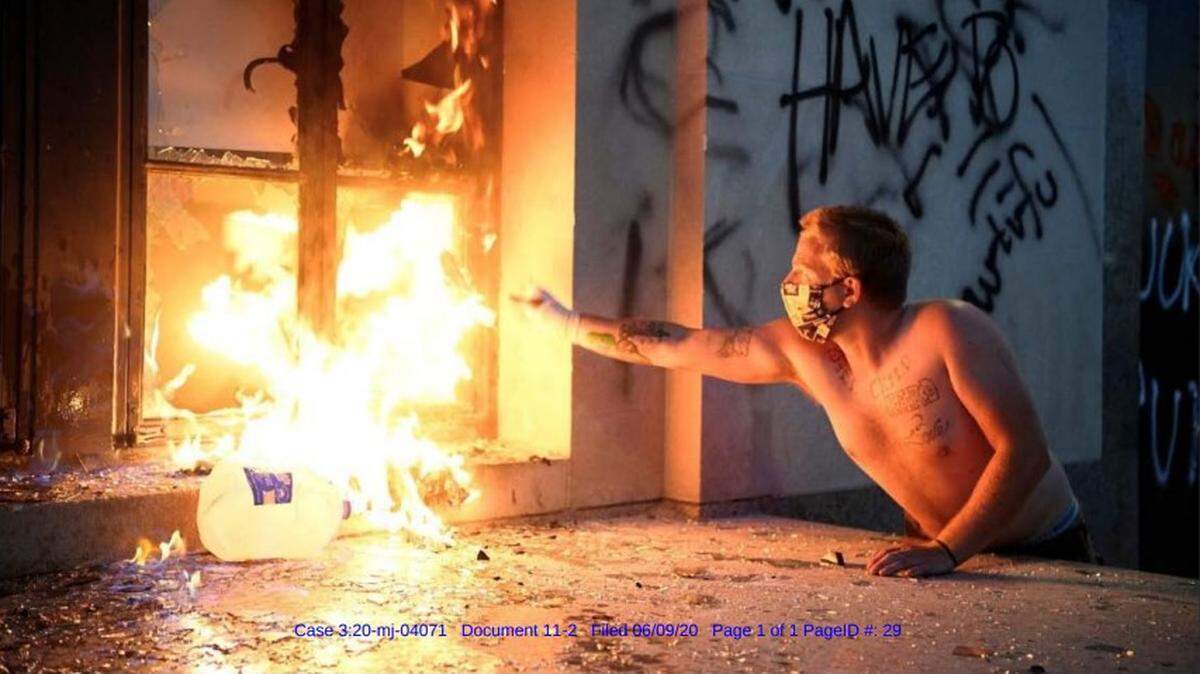
On the night of May 30, 2020, as protesters gathered outside city hall in Nashville, Tennessee, prosecutors said a shirtless man in cargo shorts set a sign on fire and placed it in the courthouse window.
Then he sprayed an accelerant on it, the government said.
The man — later identified by his “distinctive chest tattoos” as 26-year-old Wesley Somers — was among those protesting the death of George Floyd five days earlier, according to prosecutors. Floyd, 46, died after now-fired Minneapolis police officer Derek Chauvin pressed a knee into his neck for more than 9 minutes, sparking an avalanche of protests throughout the summer of 2020.
Somers was later charged with malicious destruction of property using fire. On Wednesday, March 23, a federal judge sentenced him to five years in prison followed by three years of supervised release.
Somers has remained in custody since his arrest on June 3, 2020, and could not be reached for comment. A public defender representing him in the federal case did not immediately respond to McClatchy News’ request for comment on March 24.
But a judge appeared to heed his attorney’s request for leniency by sentencing Somers at the bottom end of the recommended guideline range.
“Wesley’s actions were undoubtedly serious, damaging, and dangerous,” his public defender said in sentencing documents. “However, they should be viewed in the larger context of the feelings and energy motivating the protests, the large number of unascertained participants causing damage to the same City Hall building, and the group mentality at work during this event.”
According to court documents, protests began downtown and continued into the evening, when a crowd made its way to Nashville City Hall, also known as the Metro Courthouse.
Some individuals used crowbars to smash windows, the government said, while others spray-painted graffiti on the walls. Videos footage was shared on social media and by local TV stations.
Somers was seen in at least two videos setting what appeared to be a poster on fire and putting it in a courthouse window before spraying it with accelerant, court filings state. Prosecutors said Somers was not wearing a shirt in the footage and at least two tattoos were visible on his chest. They included the words “Wild Child” and “Hard 2 Love.”
According to court documents, Somers was arrested the next day. In a recorded phone conversation from jail, prosecutors said, he was heard discussing the courthouse fire and referred to himself as a “f------ celeb.” He also said he had been given the nickname “Protest.”
The government moved to have Somers detained pending trial, citing the seriousness of the charges and his criminal record, which included charges of child neglect and domestic assault.
Somers waived his right to a detention hearing, and a magistrate judge committed him to the custody of the attorney general. He was later indicted alongside his co-defendant, Shelby Ligons, on Oct. 14, 2020, court documents show.
Somers pleaded guilty on June 29, 2021, more than a year after he his arrest.
Prosecutors described Somers as the “face of the attempt to burn down City Hall” in sentencing documents. They told the judge he “reveled in his newfound fame” and was part of a concerted effort to disrupt a peaceful protest with “acts of vandalism, mayhem, and violence.”
“Somers was no mere bystander to that mayhem,” the government said. “Rather, Somers was one of the principal instigators of the violence at City Hall.”
They requested a prison sentence of five years and 11 months as a result.
Somers’ public defender, however, asked the judge to sentence him to the mandatory minimum: 60 months in federal prison. He pointed to Somers’ unstable childhood marred by abuse and neglect.
“He did not have an adult to model proper behavior and response to stressors,” his public defender said in sentencing documents. “His childhood trauma has yet to be addressed. Wesley realizes he has made mistakes but is remorseful and eager to change his life.”
His lawyer also said Somers was largely influenced by the crowd on the day in question and that there were others who participated in the reported vandalism at city hall.
“While many participants did remain anonymous and have never been charged, Wesley was ascertained due to unique physical characteristics,” he said in reference to Somers’ tattoos.
The judge seemingly sided with Somers, sentencing him to 60 months and ordering him to pay a $100 special assessment with no other fines.
Somers’ co-defendant, Ligons, also pleaded guilty and was sentenced to one year and one day in prison.