
Late-night earthquake reported in Smoky Mountain tourist hub of Gatlinburg, experts say
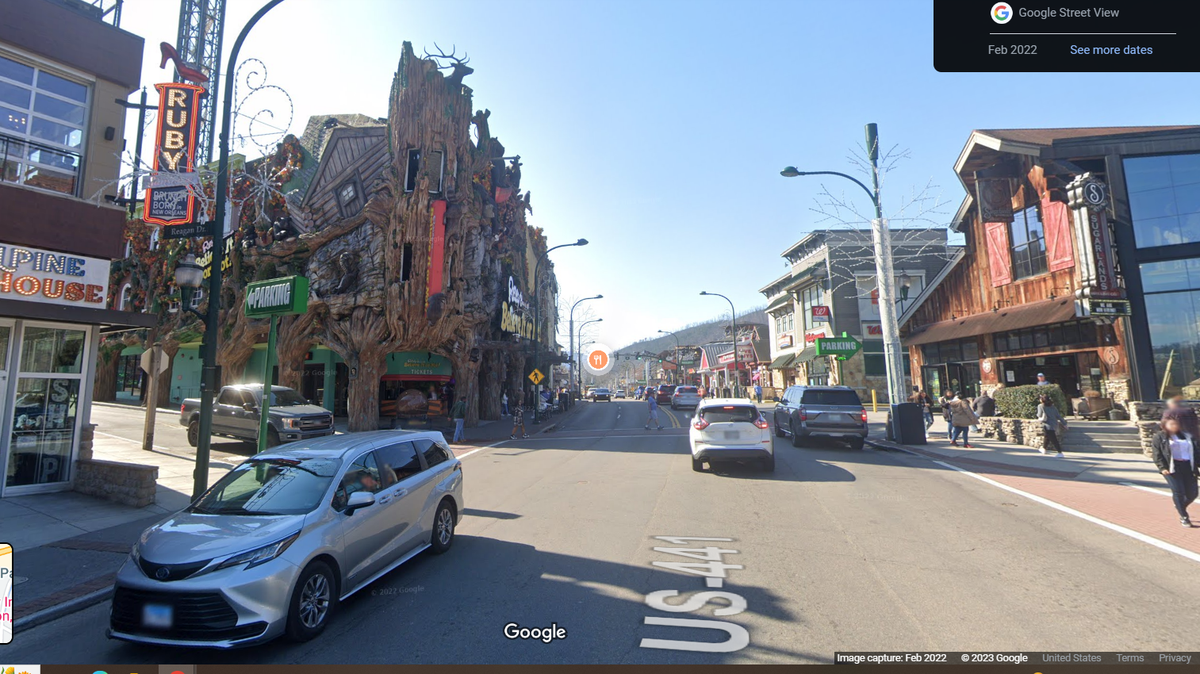
One of the South’s most popular tourist towns had a rare earthquake in the middle of the night Monday, Oct. 2, according to the U.S. Geological Survey.
The 2.4-magnitude quake was recorded at 3:23 a.m. near Gatlinburg, Tennessee, just outside Great Smoky Mountains National Park, officials said.
It was one of two quakes documented within 24 hours along the Tennessee-North Carolina state line, officials said. The other was a shallow 2.0 magnitude recorded Sunday, Oct. 1, in the afternoon about 45 miles south of Gatlinburg near Bryson City, North Carolina.
Witness accounts have not been filed for either of the quakes, suggesting they may have passed without notice, the USGS said. Earthquakes typically aren’t felt until they exceed 2.5 magnitude, experts say. That’s also the point at which minor damage can start to occur.
The point of origin for the 2.4 quake was about 6 miles southwest of Gatlinburg, at a depth of 1.2 miles, data shows.
Why is it happening?
There have been five earthquakes in the past 30 days along the mountainous Tennessee-North Carolina state line, with 2.4 being the most powerful.
The Appalachian Mountains are not on an active tectonic plate boundary — where earthquakes are common — but the region is crisscrossed by ancient faults, experts say.
Earthquakes continue to occur in the area because of those “pre-existing fault zones that have weakened rock at depth,” according to the Department of Geological and Environmental Sciences at Appalachian State University.
“Even though the southern Appalachians are not currently at an active plate boundary, our tectonic history means that built-up stresses from time to time are able to be released along old faults from the building of the Appalachians, which happened hundreds of millions of years ago,” the department reports.
What to do in an earthquake
Earthquakes’ sudden, rapid shaking can cause fires, tsunamis, landslides or avalanches. They can happen anywhere, but they’re most common in Alaska, California, Hawaii, Oregon, Puerto Rico and Washington, according to the Department of Homeland Security.
If an earthquake strikes, it’s best to protect yourself right away. Here are tips from experts:
- If you’re in a car: Pull over and stop. Set your parking brake.
- If you’re in bed: Turn face-down and cover your head with a pillow.
- If you’re outdoors: Stay away from buildings. Don’t go inside.
- If you’re inside: Stay and don’t run outdoors. Stay away from doorways.
The best way to protect yourself during an earthquake is to drop, cover and hold on, officials say.
“Wherever you are, drop down to your hands and knees and hold onto something sturdy,” officials say. “If you’re using a wheelchair or walker with a seat, make sure your wheels are locked and remain seated until the shaking stops.”
Be sure to cover your head and neck with your arms, and crawl under a sturdy table if possible. If no shelter is available, crawl to an interior wall away from windows. Once under a table, officials say you should hold on with one hand and be ready to move with it.
“There can be serious hazards after an earthquake, such as damage to the building, leaking gas and water lines, or downed power lines,” experts say. “Expect aftershocks to follow the main shock of an earthquake. Be ready to Drop, Cover, and Hold On if you feel an aftershock.”