
Watch skin-breathing hellbenders — largest salamanders in the US — return to the wild
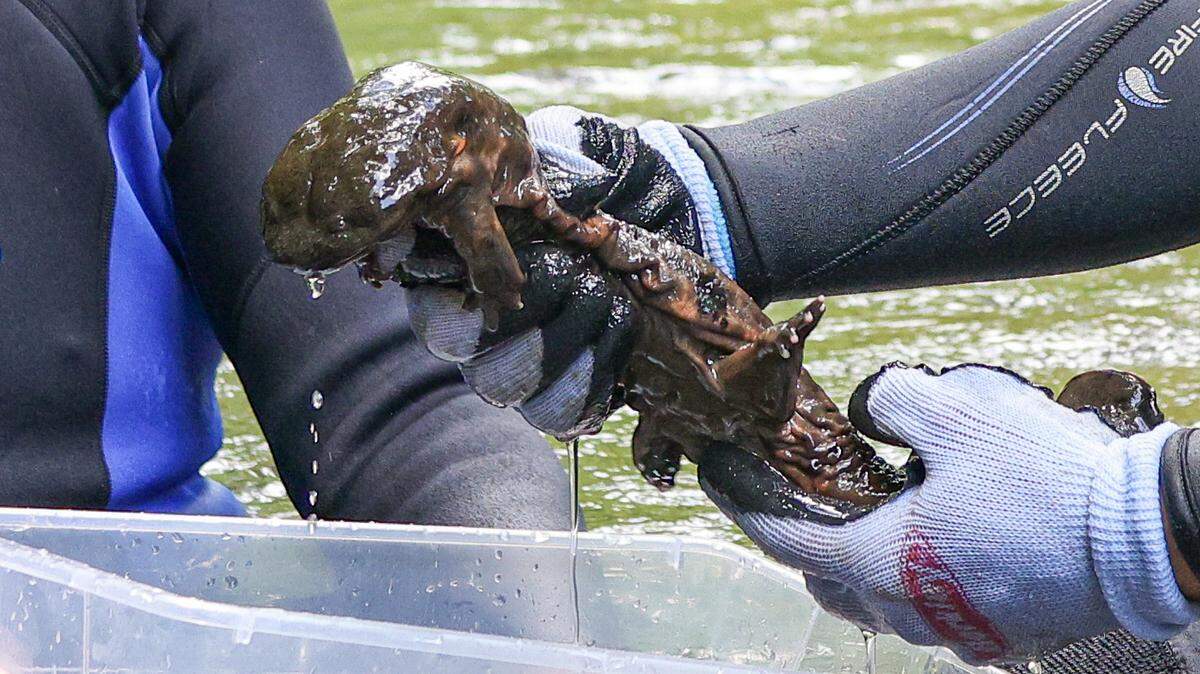
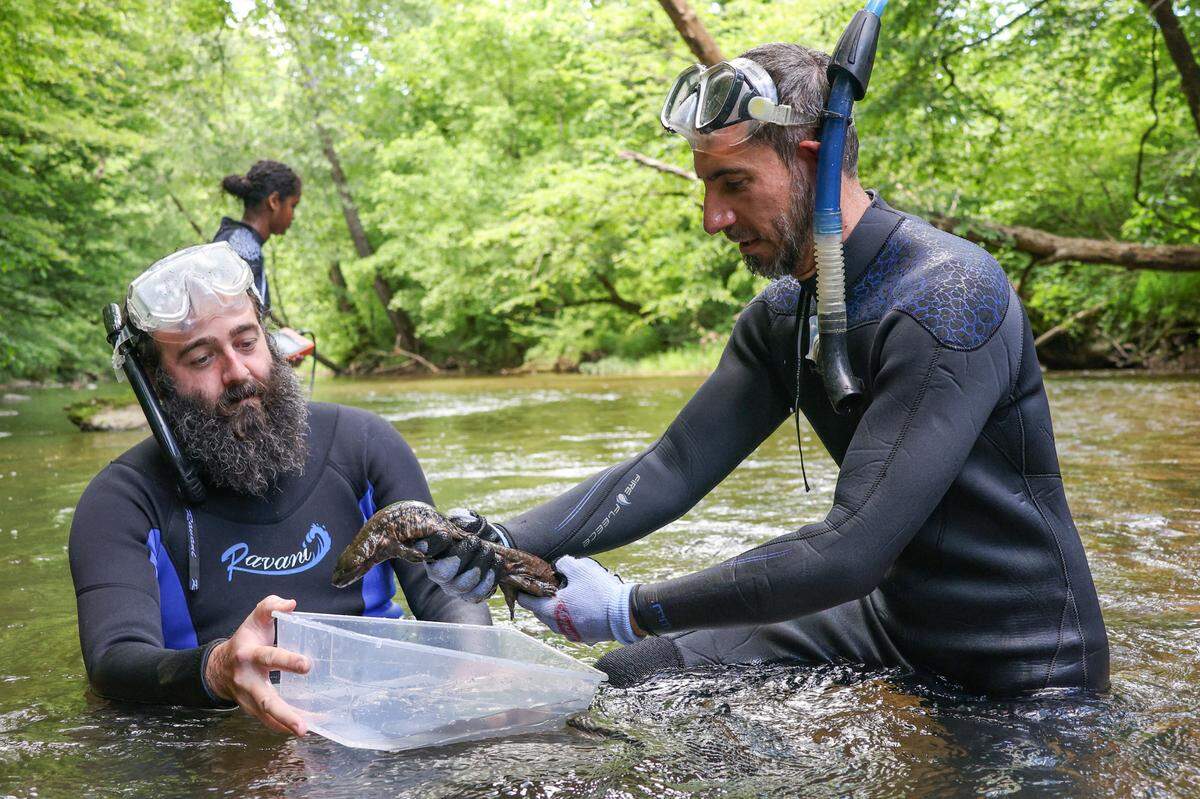
Standing in a stream wearing snorkel gear and gloves, hellbender conservationists scooped the wriggly salamanders out of their bins and deposited them under suitable rocks underwater.
The team has introduced more than 100 creatures to Middle Tennessee waterways since the start of a program to revitalize the endangered hellbender population in the state, the Nashville Zoo said May 23.
With the latest release, 27 of those hellbenders are back home.
The salamanders were taken from the wild as eggs and brought to the Nashville Zoo to hatch and grow. The zoo has been collecting eggs since 2018, and these salamanders are the fourth group released back into the wild since 2021, according to conservationists.
“We’re honored to help this state-endangered salamander species and work to strengthen their population in the wild,” zoo officials said in the release.
Eastern hellbenders are the largest species of salamander in the Americas, ranging from 12 to 29 inches long and weighing up to 5 pounds, according to the Smithsonian’s National Zoo.
This type of aquatic salamander lacks gills as an adult and instead absorbs oxygen through its skin.
“Early settlers thought that these strange looking animals looked like creatures from Hell that were ‘hell bent’ on returning and thus, the common name Hellbender,” according to the Virginia Department of Wildlife Resources.
In addition to its common name, the salamanders are sometimes called snot otters.
The zoo has been experimenting with different methods of maintaining a genetically diverse population.
In 2012, the zoo bred two captive hellbenders using artificial fertilization, and in 2015, conservationists hatched a hellbender from an egg that was fertilized with cryopreserved sperm.
“We can maintain that genetic diversity with a lot fewer animals and a lot fewer resources,” according to Dale McGinnity with the Nashville Zoo. “That’s why we’re really excited about developing these techniques.”
Species preservation efforts for the big salamanders have been in the works in other states as well. In 2022, Missouri conservationists released their 10,000th hellbender into the wild, McClatchy News reported.
The Nashville Zoo worked with the Tennessee Wildlife Resources Agency and Tennessee State University.