
Could ‘redistricting wars’ tip the scales in 2026 midterms? Experts weigh in
It started with Texas. Then came California.
Now, a slew of states across the country have joined in a hard-nosed, high-stakes redistricting battle.
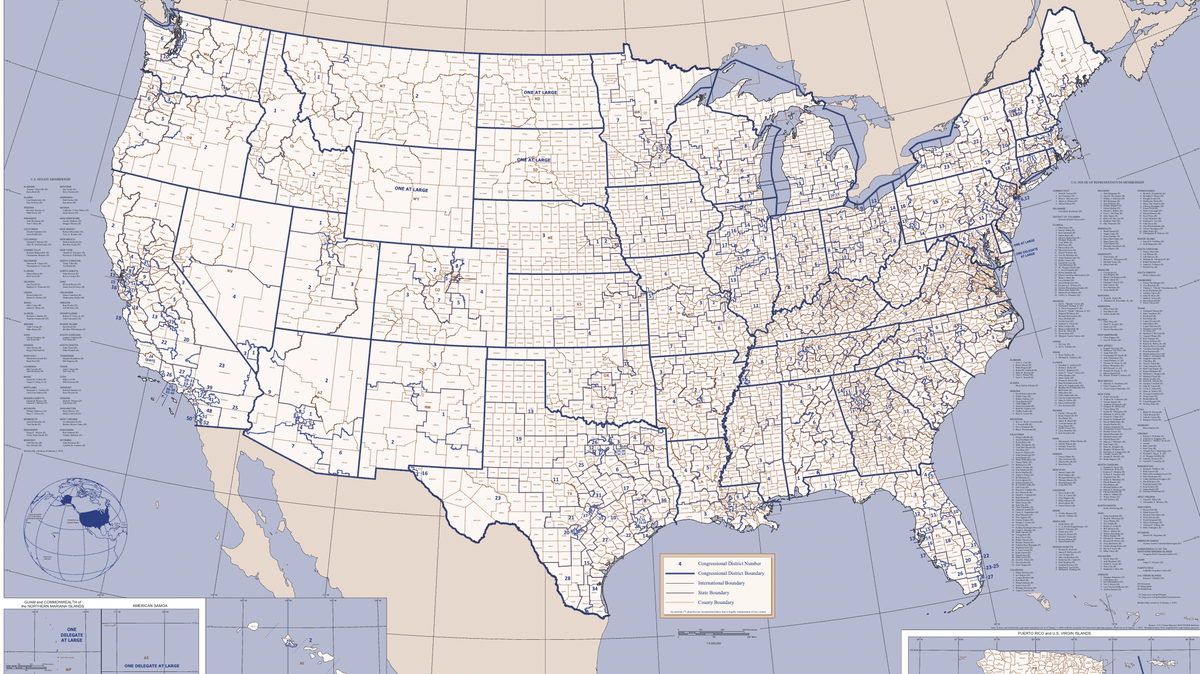
It’s a mad scramble to redraw electoral maps ahead of the 2026 midterm elections, with both Republicans and Democrats racing to secure an edge in the fight for control of the House of Representatives.
But, can states complete redistricting in time? And, if successful, will their power play be enough to tip the balance of power in Washington, D.C.? Election experts share their insights.
Which states could redistrict?
“Many states could potentially redraw their congressional districts, but Texas is furthest along and most likely to happen,” Barry Burden, a political science professor at the University of Wisconsin-Madison, told McClatchy News.
The Lone Star State’s Republican-controlled legislature plans to vote on a newly proposed district map, which would add five new GOP-majority districts. However, 50 Democratic lawmakers fled the state in an attempt to block the vote — and state officials, with the assistance of the FBI, are now seeking their return.
The state’s push to redistrict is unusual, as the process of reforming congressional districts typically only happens every 10 years, following the decennial U.S. census.
“Redistricting is (President Donald) Trump’s way of doing a hardball power play to retain the playing field,” Jeffrey Wice, a professor at the New York Law School, told McClatchy News.
Trump himself has said Republicans are “entitled to five more seats” in Texas.
As a result, officials in a number of other states have expressed their desire to follow suit — with Democratic leaders seeking to counteract Texas Republicans.
California Gov. Gavin Newsom said he plans to “fight fire with fire.” And New York Gov. Kathy Hochul called the Texas redistricting move a “blatant power grab” and said the Empire State would move forward with its own plan to redistrict.
But, blue states face a number of hurdles in their attempt to redistrict — in part because many of them have ceded redistricting power to independent commissions, experts said.
“New York would need to adopt a constitutional amendment to change its process, and the earliest we could see new maps there would be for the 2028 election,” Shawn Donahue, a political science professor at the University of Buffalo, told McClatchy News. “California would need to vote on changes to its process.”
Other Democratic strongholds like Maryland and New Jersey would also face uphill battles, he said.
On the other hand, Republican-controlled states, in addition to Texas, “have many more potential opportunities to re-redistrict for 2026,” Donahue said.
For example, Ohio is required to redraw its electoral map as its current map, approved in 2021, is set to expire, Wice said.
Other GOP-controlled states that have expressed interest in redrawing their electoral maps, like Indiana and Missouri, “can mostly do what they want as far as redistricting,” Donahue said.
Vice President JD Vance flew to Indiana on Aug. 7 to discuss a potential redistricting move with state Republicans.
Still, though, it’s easier said than done.
“There’s a big difference between members of a state legislature floating the idea of redrawing the state’s districts, or even introducing a bill to do so, and the actual enactment of a new redistricting plan, which takes a lot of work and coalition-building,” David Hopkins, a political science professor at Boston College, told McClatchy News.
On top of that, there’s a big time crunch.
“The timelines are tight because congressional primaries in some states occur as early as March, meaning that candidates would need to file for office weeks or month before that,” Burden said.
Because of this, “there’s a good chance that things stop with Texas,” Charles Stewart, a political science professor at MIT, told McClatchy News.
Could it affect the midterms?
Given the extremely narrow GOP majority in the House — maintained by just a few seats — “the redistricting wars of 2025” could undoubtedly play a role in the outcome of next year’s midterm elections, Burden said.
“Every seat in every state could potentially determine whether Trump continues to work with a Republican Congress after the midterm dust has settled,” he said.
If only Texas redraws its electoral map, it could potentially thwart Democrats’ attempt to gain control of the House — which would allow them to stall Trump’s legislative agenda.
“A five-seat swing toward the Republicans just based on the changes in Texas would make it more difficult for the Democrats to retake the House, but not impossible,” Stewart said.
However, if blue states like California succeed in redistricting, it could result in “a wash,” Wice said.
Burden echoed this view, saying “If some blue states are able to create new districts, they might end up cancelling out the efforts in Texas.”
However, larger forces are at play that may outweigh any partisan gains achieved through redistricting. Chief among these is the usual ebb and flow of power in Washington, where the president’s party often faces losses during midterm elections.
“The normal historical pattern,” Hopkins said, “is that the party of the president usually loses at least 10 House seats in the midterms.”
This trend may be difficult to counteract, given current polls that show Trump has lost significant support. A July survey by Gallup found the president’s approval rating had dipped to a record low for his second term.
“If we consider this episode as the opening salvo of the 2026 election and take it as evidence that inside Republican information is predicting a bloodbath for them in 2026, then (redistricting efforts) may end up looking like a bump in the road,” Stewart said.
This story was originally published August 7, 2025 at 3:24 PM with the headline "Could ‘redistricting wars’ tip the scales in 2026 midterms? Experts weigh in."