Deep-sea drill in South China Sea uncovers creature — and reveals ancient new species

In the depths of the ocean where the Earth’s crust meets the freezing water, chemicals leak into the seawater through cracks and fissures called cold seeps.
These floods of hydrocarbon-rich fluid and gas are in contrast to hydrothermal vents, and as their name suggests, these areas remain just as cold as their surroundings.
Multiple cold seeps have been identified in the South China Sea and were first found in the northern region in 2004, according to a study published Jan. 2 in the peer-reviewed journal Zoosystematics and Evolution.
During gas hydrate drilling expeditions to two of these seeps, researchers collected “long drilling core(s)” filled with sediment and rocky material, according to the study. In two of these drilling sites, researchers pulled cores from between 2,100 and 2,500 feet down.
Inside the cores were fossilized remains — and a species new to science.
When the researchers put the deep-sea sediment through a screen and sifted the smaller rocks and sand, they found a fossilized whorled shell, according to the study.
The sample came from a part of the seafloor dating to the Late Pleistocene era, meaning the fossil was more than 11,700 years old, and could have been living during the last planetary ice age.
The animal that called the shell home, a gastropod, was long dead, but the shell’s morphology was enough to identify the creature as a new species.
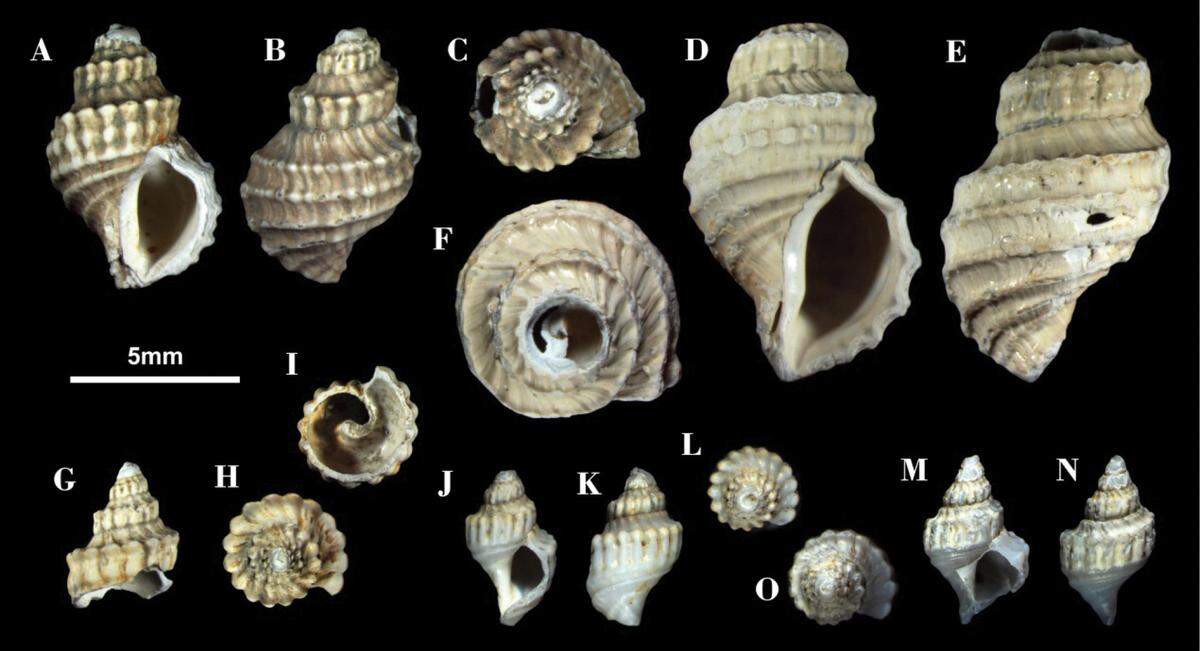
The whorled shell is “medium-sized” and belongs to the Provanna gastropod genus, researchers said. Gastropods are a class of mollusks that include snails, slugs and whelks.
The shell is “sturdy” with “prominent, angular whorls,” made from a thick, calcium carbonate material, according to the study.
The new species was named Provanna dongshaensis, after the dongsha cold seep region where it was found, according to the study.
“Certain characteristics unify all Provanna species and distinguish the genus,” researchers said. “Their specimens are never wider than tall. Regardless of their size, the specimens typically feature no more than 2 to 3 unbroken shell whorls, thin ... (outer shell coating), no umbilicus, and small, turbinate, dextral shells.”
The tubercles, or small bumps, on the shell were larger and more prominent on the “lower whorls,” creating the appearance of a “string of pearls,” researchers said.
This “bead-like” appearance has only been found in one other species that is living today, P. sculpta, and is found in the Gulf of Mexico and Caribbean Sea, far from the South China Sea where the new species was discovered, according to the study.
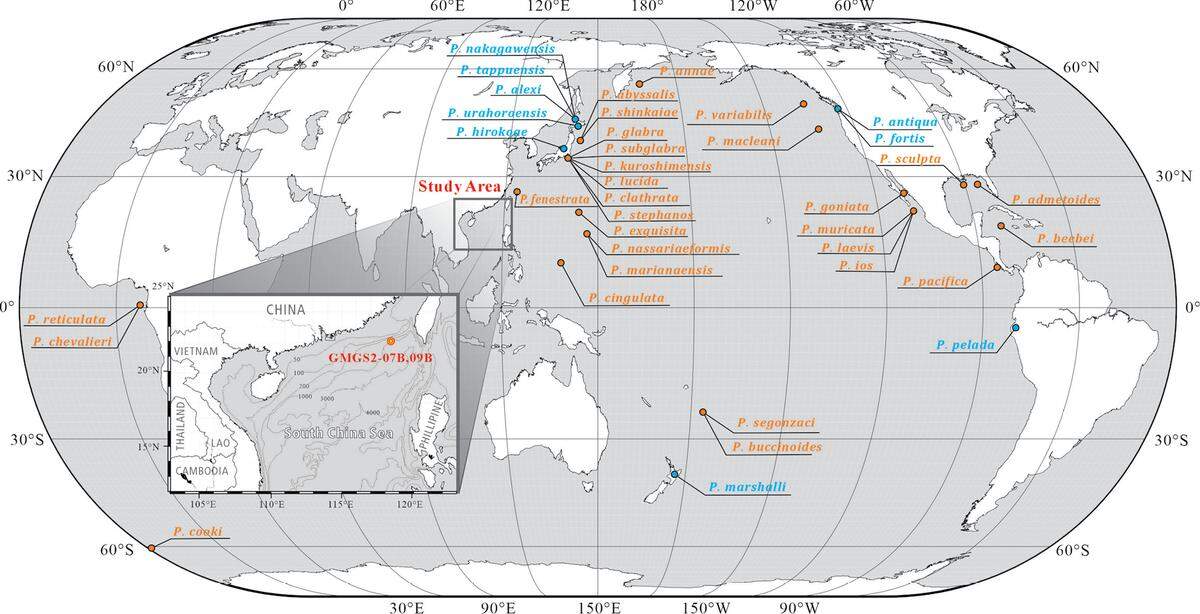
Provanna gastropods are generally small and typically found in the deep sea in chemically rich environments, researchers said. They are often found around hydrothermal vents, hydrocarbon seeps or with organic falls like sunken wood and whale carcasses.
“They are known to primarily feed on bacterial mats and detritus, functioning as both deposit feeders and grazers,” according to the study.
The cold seeps are in the northern region of the South China Sea off the southeastern coast of China and the southwestern coast of Taiwan.
The research team includes Cong Wu, Fang Chen, Ying Tian, Kazutaka Amano and Xin Su.
This story was originally published January 3, 2025 at 1:25 PM with the headline "Deep-sea drill in South China Sea uncovers creature — and reveals ancient new species."