Expansion of town cemetery reveals 3,000-year-old Bronze Age graves in Germany
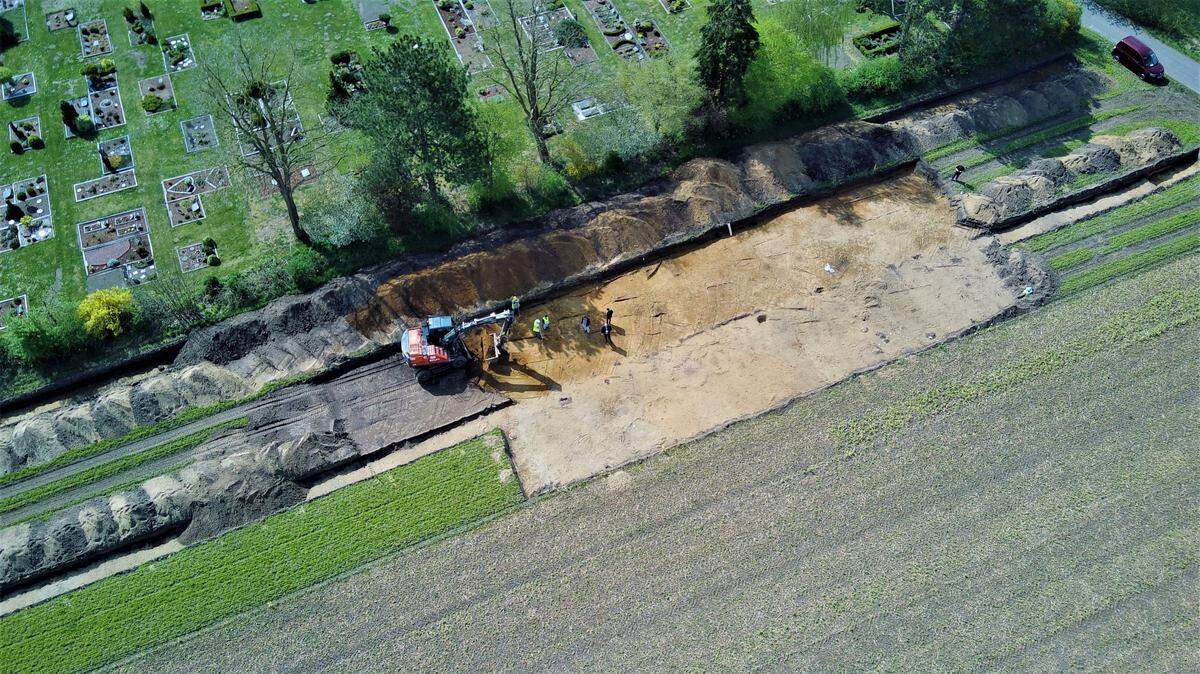
Archaeologists are investigating a 3,000-year-old gravesite discovered during the expansion of a modern-day cemetery in Germany.
An excavation team learned the site, at the Espelkamp municipal cemetery in the village of Frotheim, was once a cremation burial during the Bronze Age into the Iron Age, according to a May 26 news release from the Regional Association of Westphalia-Lippe.
Archaeologists documented 41 finds at the site, including 13 urn graves, several cremation nests and several cremation burials with the remains of the funeral pyres, according to the release.
Experts said cremation became a common practice in the late Bronze Age and would remain the norm until the Middle Ages.
Archaeologists believe the cremated remains found without an urn and with the ancient funeral pyres are more recent and likely reflect a shift in beliefs about the afterlife, according to the release.
Two urns were discovered at the Espelkamp municipal cemetery in 1956 and 1967, during the construction of new graves, experts said.
The excavation team will continue to investigate the site and preserve any artifacts uncovered, according to the release.
The village of Frotheim is about a 130-mile drive southwest from Hamburg.
Google Translate was used to translate the news release from the Regional Association of Westphalia-Lippe.
This story was originally published May 27, 2025 at 5:58 PM with the headline "Expansion of town cemetery reveals 3,000-year-old Bronze Age graves in Germany."