
Ocean creature — with medicinal interest — thriving in polluted Italy water
Where do medications come from?
Aspirin was derived from the willow tree. Penicillin was found on accident from a common bread mold.
Thousands of medications owe their development to natural sources, but many experts argue there may be a wealth of drug possibilities hidden in the ocean.
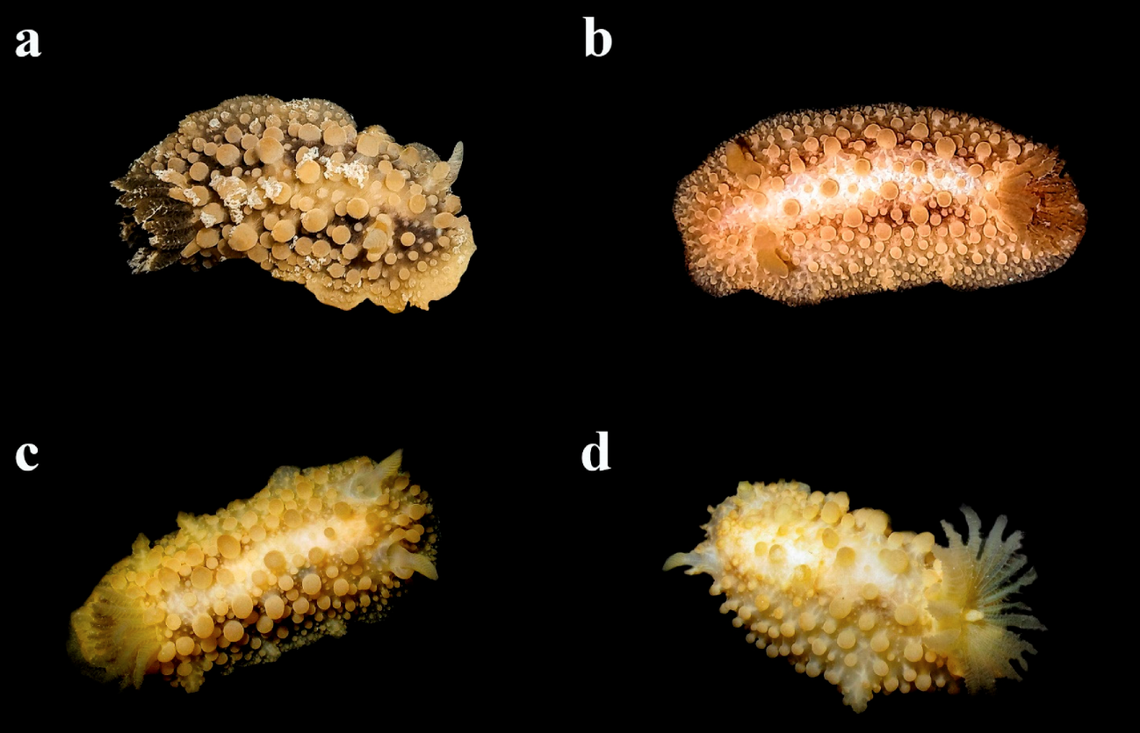
Doris verrucosa, or the warty dorid sea slug, may hold the key to some of this development.
The sea slug belongs to a group of animals called nudibranches, which are known to “obtain, accumulate and sometimes modify chemical compounds from their prey,” according to a study published Aug. 20 in the peer-reviewed journal Diversity.
But while the warty dorid sea slug is one of the oldest of their group to be identified, there is still a lot of mystery about where and how they live, according to the study.
Only two warty dorid sea slugs have been collected for scientific review and genetic analysis “despite being a common species reported throughout the Mediterranean basin,” researchers said.
Could these squishy, warty sea creatures provide the next medical breakthrough?
Researchers grabbed their snorkeling and SCUBA gear and headed to the coast of Italy to find out, stopping along the northeastern coast of Sicily and the Ionian Sea, according to the study.

“Doris verrucosa is a benthic nudibranch inhabiting rocky substrates around 0–12 meters (0 to 40 feet) depth but also found in tide pool habitats where it may feed upon sponges of the genera Halicondria,” according to the study.
The sea slugs are generally brown with some orange variations and others more “bright yellow,” researchers said. They are covered in small protrusions, reminiscent of warts.
They recorded a new range for the sea slug, stretching from the southern coast of Spain in the western Mediterranean Sea all the way to the eastern side of the Adriatic Sea in the eastern Mediterranean Sea.
The researchers noted, however, that the sea slugs were found in areas with “high human impact” like aquaculture sites.
The sites had “a high level of anthropogenic impact and pollution” and there were nearby “fish and mussel farms,” researchers said.
“The ability shown by this species to live in a polluted environment with highly variable biotic and abiotic (living and non-living) factors is noteworthy and becomes even more appealing if considering the biochemical compounds that are synthesized by D. verrucosa and that are characterised by antimicrobial and antiviral activities, abilities that could be particularly useful for the well-being of this species in such difficult environments,” according to the study.
Researchers said these human-influenced regions may be an overlooked biome for beneficial creatures like the sea slugs.
“In fact, these overlooked habitats, like ports, coastal lakes and brackish environments, have recently been revealed to be important to unravel rare or unknown diversity, to detect non-indigenous species early and to study (sea slug) species that are adapted to live under polluted and stressed conditions,” researchers said.
The research team includes Giulia Furfaro, Michele Solca, Enric Madrenas, Francesco Tiralongo and Egidio Trainito.
This story was originally published August 22, 2025 at 12:50 PM with the headline "Ocean creature — with medicinal interest — thriving in polluted Italy water."
