‘Dwarf’-like creature seen on trail camera climbing a bridge in Peru rainforest
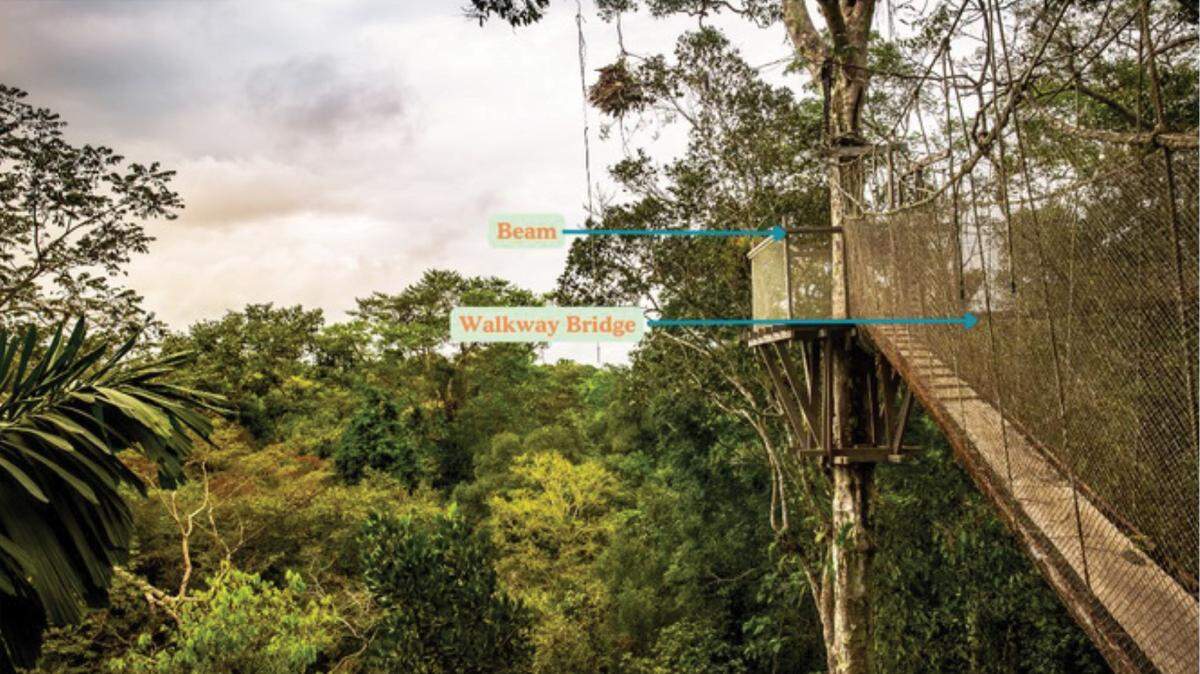
As nighttime settled over the rainforest of northeastern Peru, a “dwarf”-like mammal moved through the tree branches and began climbing across an artificial bridge. Its passage set off a nearby trail camera — and it wasn’t the only one.
A team of scientists at the Amazon Conservatory for Tropical Studies near Iquitos decided to study what mammals used the facility’s artificial rainforest bridge, Justin Santiago and Lindsey Swierk wrote in a study published Sept. 29 in the peer-reviewed journal Neotropical Biology and Conservation.
The conservatory’s structure is “one of the longest artificial canopy walkway bridge systems, spanning multiple forest levels, in the Americas” and includes several platforms and bridges stretching through the trees, researchers said. The lowest sections of the bridge are about 20 feet off the ground, and the highest sections are about 120 feet off the ground.
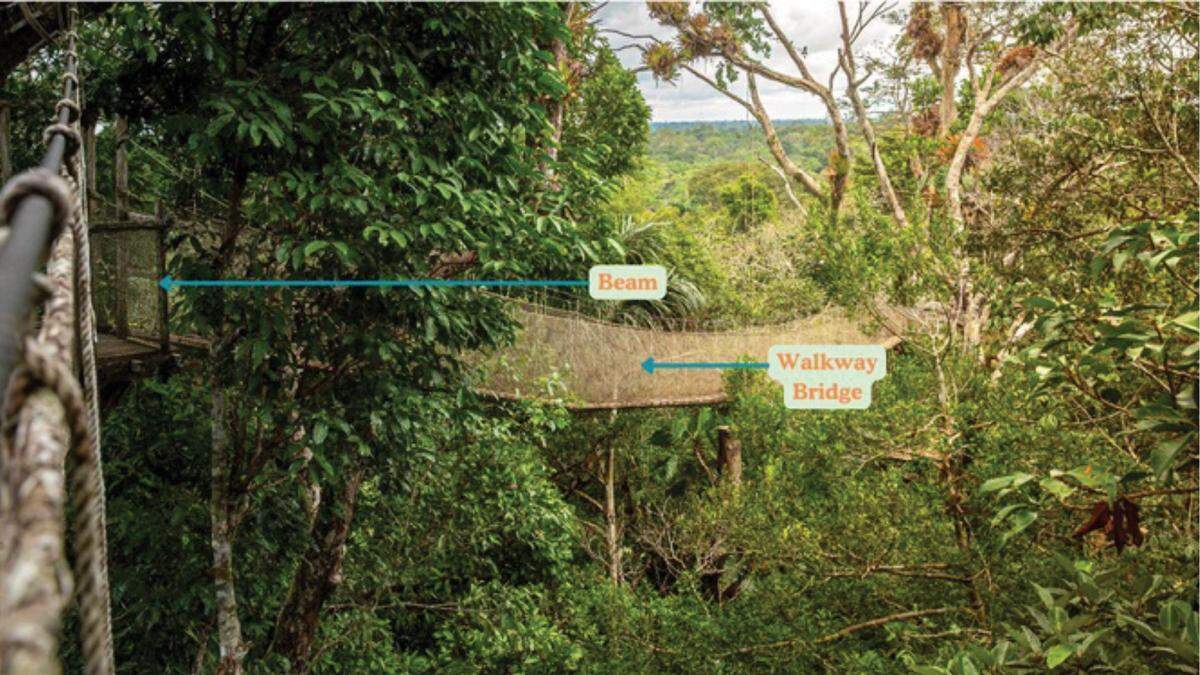
In general, “conservationists in tropical forests worldwide have found success in implementing canopy bridges to mitigate forest fragmentation” and support the conservation of tree-dwelling animals, the study said.
But what animals actually used the conservatory’s bridge system?
To answer this question, researchers set up four trail cameras at the bridge’s low, medium and high levels to record any mammals passing through at night, the study said. The cameras ran for three weeks in 2022 and “operated for a total of 1,680 camera trap hours.”
Researchers then sifted through the trail camera photos, identified the animals and analyzed their frequency, temporal patterns and other data.
In total, the trail cameras “recorded 35 independent mammal observations” of seven species, the study said.
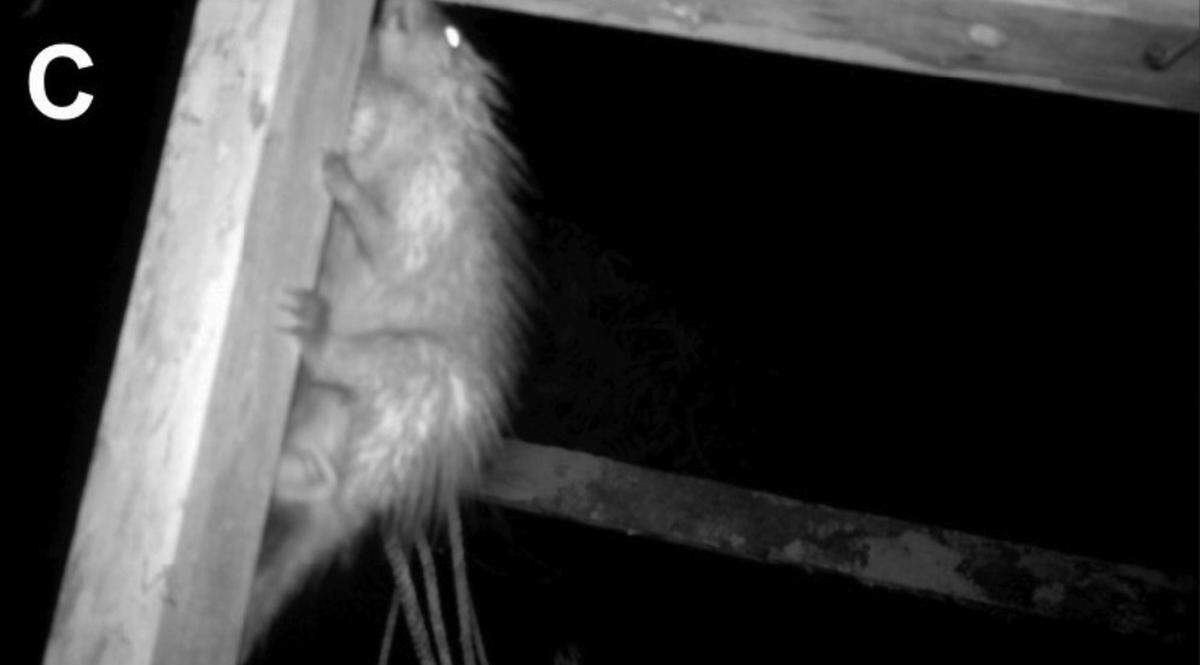
The most unusual sightings were of several streaked dwarf porcupines, a “cryptic and reclusive species” described in 2001 and seen alive for the first time in 2013, researchers said. A photo shows a streaked dwarf porcupine climbing along a bridge beam.
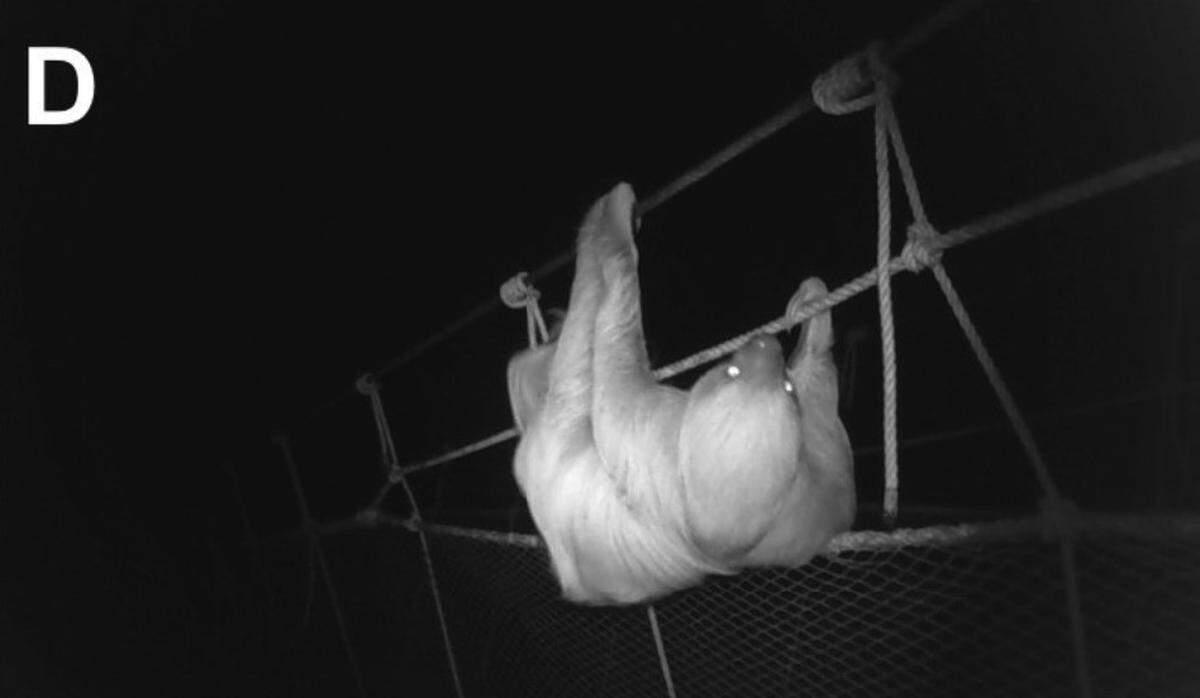
Another photo shows a Linnaeus’s two-toed sloth, “the most frequently observed species overall,” the study said. The sloths “exclusively” used the ropes to cross the bridge.

Researchers also identified two more species of porcupine, the long-tailed porcupine and bicolor-spined porcupines, using the walkway. Photos show these animals, some of which “chewed on walkway beams.”
Trail cameras also recorded one saki monkey, a Neotropical spiny rat and two brown-eared woolly opossums climbing the bridge, the study said.
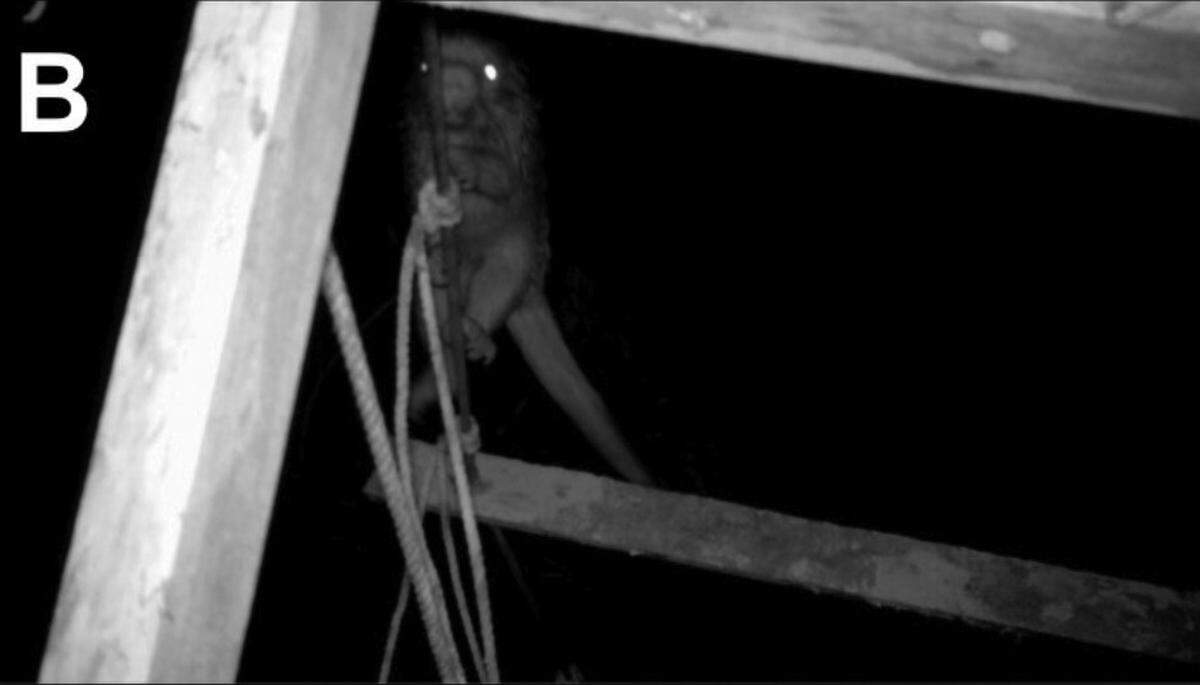
“This study provides a snapshot of arboreal (tree-dwelling) mammal use of an artificial canopy walkway system in a tropical forest with continuous canopy cover in the northeastern Peruvian Amazon,” researchers said. “Our findings demonstrate that many arboreal mammal species … actively use human-made canopy structures, even within a continuous, non-fragmented forest.”
The team concluded that, “given the increasing fragmentation of tropical forests, the use of these structures offers a promising and effective solution to maintain natural mammal population movements.”
The Amazon Conservatory for Tropical Studies is roughly 670 miles northeast from Lima.
This story was originally published September 30, 2025 at 12:01 PM with the headline "‘Dwarf’-like creature seen on trail camera climbing a bridge in Peru rainforest."