‘Remarkable’ parasite found ‘wriggling’ in the snow in Himalayas is new species
.png "Gordius nixus, a new species, is the first horsehair worm to be officially recorded in Pakistan, according to a study.")
In northern Pakistan, high up in the Himalayan mountains, researchers discovered a long, thin nematomorph “wriggling” on freshly fallen snow.
Nematomorphs are alien-like creatures known as horsehair worms. They survive by entering a host species as larvae and growing inside them, sapping their nutrients before hijacking their nervous systems, driving them to water where they drown themselves, thereby releasing the adult worm inside.
They are known to parasitize crustaceans and insects including praying mantids, beetles, crickets, and occasionally millipedes and centipedes, according to the study.
The Pakistan horsehair worm, first found in a small village in Khyber Pakhtunkhwa Province, is now revealed to be a new species named Gordius nixus, according to an Oct. 2 study published in the journal Evolutionary Systematics.
It is also the first time any horsehair worm species has been officially reported in the country, according to researchers.
Additional specimens were found around the province, the study said.
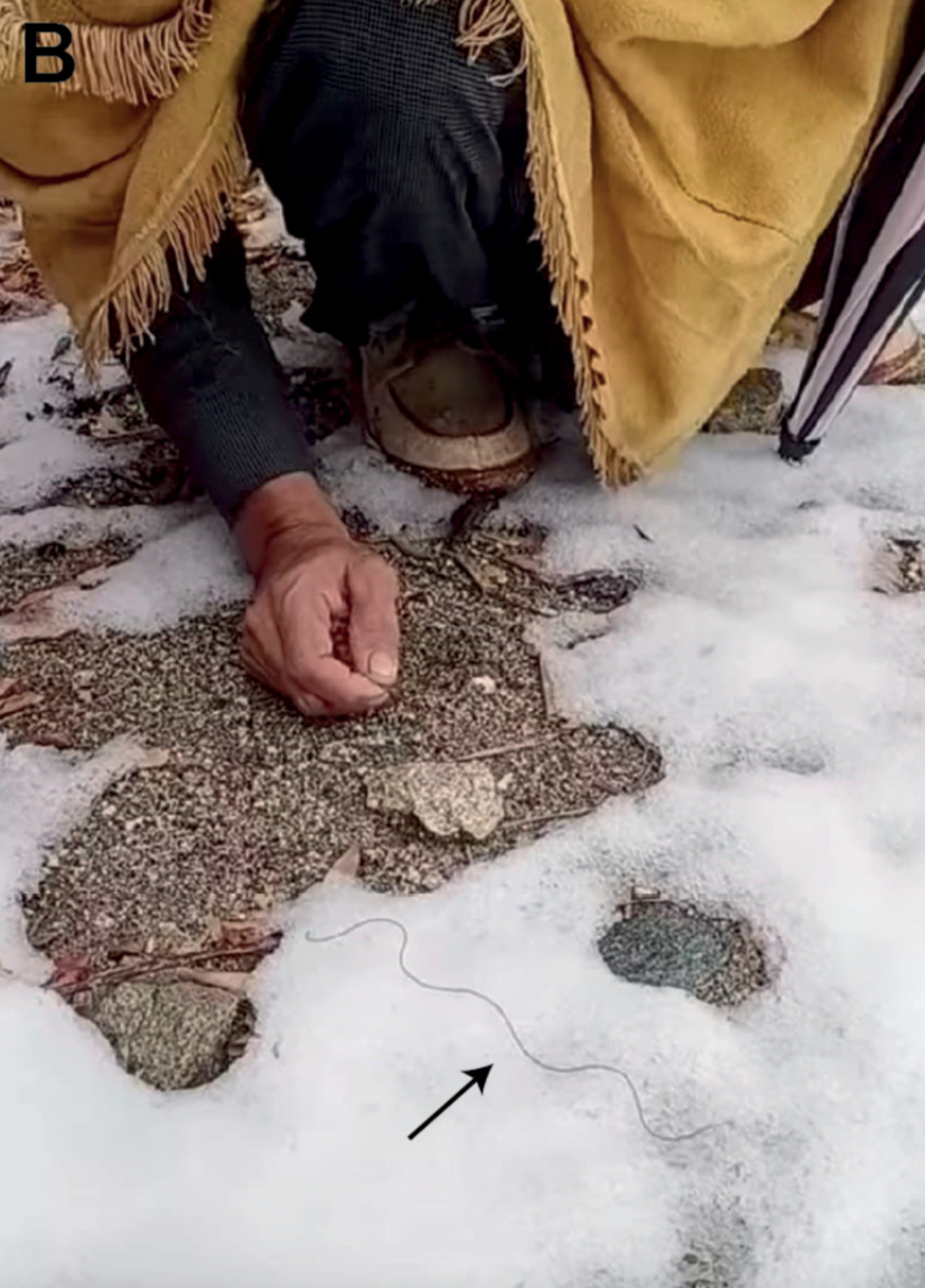
But what makes this species particularly “remarkable” is its association with snow, according to the study.
Horsehair worms are most often found near freshwater where they emerge from their hosts, but Gordius nixus’ discovery on snow is “a new and exceptional phenomenon,” researchers said.
Despite thoroughly searching bodies of freshwater in the village where the new species was discovered, no worms were found. There were also no bodies of host creatures in the vicinity of the worms, according to researchers.
The worms were “observed repeatedly” on snow, leading experts to conclude this is a natural occurrence or part of its poorly understood life cycle, and not an anomaly, according to the study.
The new species measures up to 10 inches long and its body has a “dense covering of spines,” researchers said.
Additional research is necessary to better understand the lifecycle and “unusual” habitat preference of Gordius nixus, according to the study.
The species was named after the Latin word for snow, which is “nix,” researchers said.
The research team included Qaisar Jamal, Muhammad Riaz, Moeen Uddin and Andreas Schmidt-Rhaesa.
This story was originally published October 6, 2025 at 3:50 PM with the headline "‘Remarkable’ parasite found ‘wriggling’ in the snow in Himalayas is new species."