
Double nuclear warning issued as Chernobyl threatened
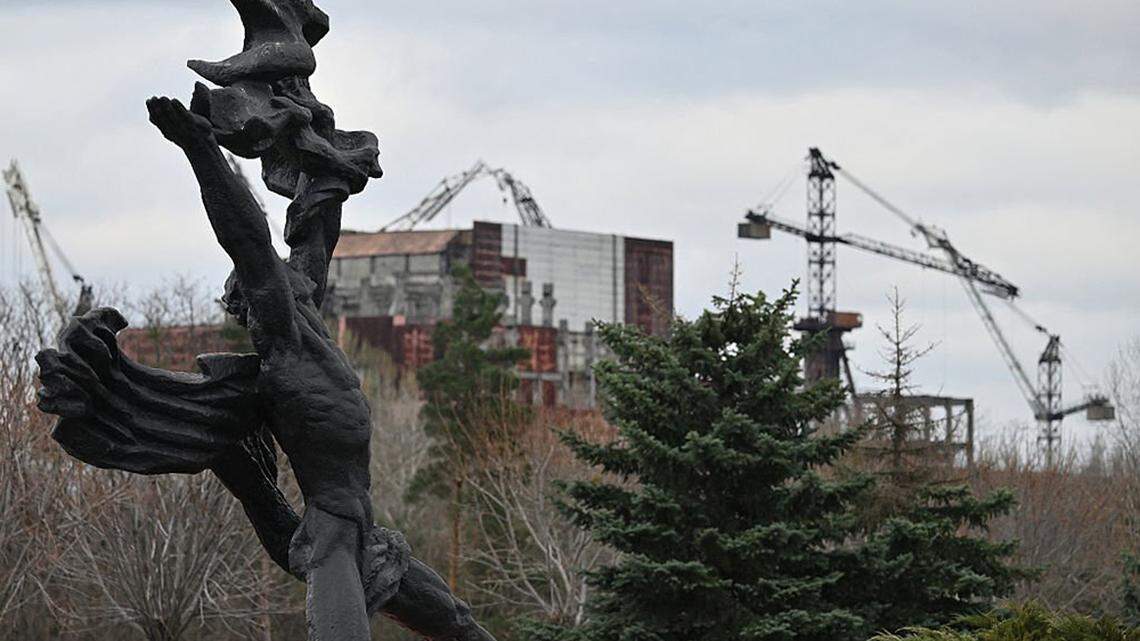
Damage to a huge structure preventing radiation from escaping from the ruined Chernobyl nuclear power plant could lead to a collapse at the site, a new report has warned, as international experts said another Ukrainian nuclear site had temporarily lost access to all off-site power.
Ukraine said in February 2025 that a Russian explosive drone had struck and damaged the protective shelter housing the destroyed nuclear reactor at Chernobyl, the site of the world’s worst nuclear disaster in 1986.
A fire at the site in northern Ukraine was quickly extinguished, Ukrainian President Volodymyr Zelensky said at the time. Russia denied targeting the site.
The protective shell, known as the New Safe Confinement (NSC), no longer effectively stops radiation leaking out, the United Nations’ nuclear watchdog, the International Atomic Energy Agency (IAEA) said in December.
The NSC was erected to support the rapidly constructed Soviet-era sarcophagus that had covered the nuclear disaster site for years. The NSC is taller than the Statue of Liberty and was built to last for a century.
Despite this, the NSC, which was completed within the last decade, is in urgent need of repair, and unless action is taken, the sarcophagus risks falling apart, Greenpeace‘s branch in Ukraine said in a report on Tuesday.
Greenpeace said the report was penned by Eric Schmieman, an engineer described as involved in designing and constructing the NSC.
The non-profit said the document would be submitted to Ukrainian prosecutors as evidence for cases of alleged Russian war crimes.
Sunday will mark the 40th anniversary of the Chernobyl nuclear disaster. At least 30 people died in the immediate aftermath of the Reactor 4 meltdown at the site located north of Kyiv, near the border with Belarus, with millions more exposed to radiation.
Nuclear radiation leaks are very difficult to contain, with the sarcophagus - and later, the NSC - intended to make sure radiation doesn’t spread across the area and beyond to other parts of Europe.
Separately on Tuesday, the IAEA said the Zaporizhzhia nuclear power plant (ZNPP) had lost all off-site power when it was disconnected from its last remaining external power line.
Ukraine’s energy ministry said the cause of the power loss was under investigation. The plant is not currently operational but needs access to off-site power to keep it safe.
Emergency diesel generators kicked in right away to keep the facility safe, the IAEA said. The watchdog later said power had been restored to the ZNPP via a lower-voltage back-up line about 90 minutes later.
“Off-site power loss once again highlights nuclear safety risks during the conflict,” IAEA chief Rafael Grossi said in a statement.
The ZNPP has lost off-site power more than a dozen times since the start of Russia’s full-scale invasion of Ukraine in February 2022, consistently raising fears of a nuclear disaster. The site in the city of Enerhodar has long been on the very front lines of fighting in southern Ukraine.
“Each instance of loss of external power imposes thermal and operational stress on safety systems, increasing the chance that at some point the on-site backup systems will not perform as designed,” Vitaly Fedchenko, a senior researcher with the Stockholm International Peace Research Institute’s weapons of mass destruction program, previously told Newsweek.
The facility is one of the most contentious points in long-running peace negotiations led by Washington with Kyiv and Moscow. Most countries recognize the plant as Ukrainian, although it’s currently run by Russian authorities.
Before the start of the war, the ZNPP was thought to have generated more than a fifth of Ukraine’s energy.
2026 NEWSWEEK DIGITAL LLC.
This story was originally published April 14, 2026 at 11:08 AM.