
Coming to Charlotte: A frank talk on race
South African Bishop Desmond Tutu has called him “America’s young Nelson Mandela.” Others say he’s a real-life, modern-day version of Atticus Finch, the lawyer hero in Harper Lee’s “To Kill a Mockingbird.”
Bryan Stevenson, attorney and civil rights activist, in the last few weeks has been spotlighted on TV’s “60 Minutes,” lauded in the magazine Vanity Fair and named one of TIME magazine’s “100 Most Influential People.”
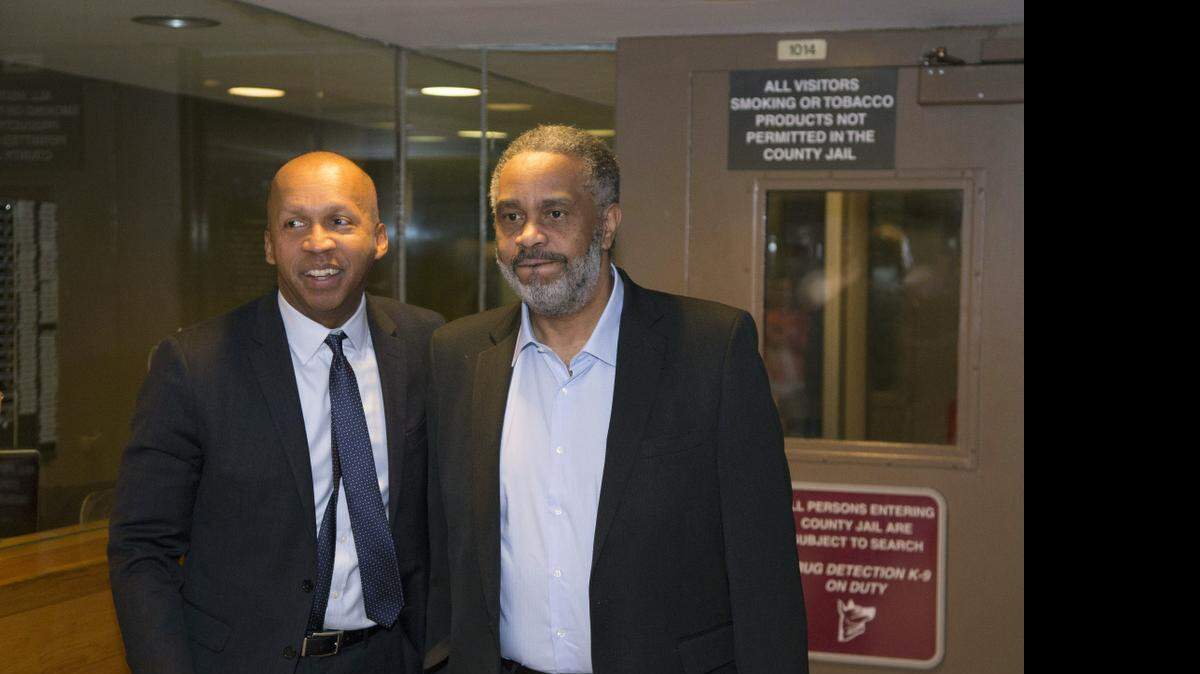
And early this month, Stevenson was all over news channels as he walked out of an Alabama jail with his client, a black man freed after 30 years on death row for a crime he didn’t commit.
On Wednesday, Stevenson will be in Charlotte to talk about racial injustice.
“The narrative of racial difference that we created to sustain and legitimate slavery has compromised almost every institution that we’ve created and continues to haunt us,” Stevenson told the Observer in an interview. “It continues to infect relationships and compromise our ability to be the shining example of democracy and justice that we want to be.”
Stevenson is part of Our Times Re-Imagined, a speaker series co-sponsored by The Charlotte Observer, Bank of America and the Levine Museum of the New South. He’ll also sign copies of his bestseller, “Just Mercy: A Story of Justice and Redemption,” which chronicles his defense of death row inmates.
He grew up in rural Delaware. But like novelist Harper Lee, whose classic novel centers on Atticus Finch’s defense of a falsely accused black man, Stevenson, 55, is based in Alabama. In 1989, the Harvard Law School graduate founded the Equal Justice Initiative in Montgomery, the first capital of the Confederacy in the 19th century and, in the 20th, gave birth to the civil rights movement.
Early in his career, Stevenson met civil rights pioneer Rosa Parks, whose famous refusal to give up her seat to a white passenger precipitated the 1955-56 Montgomery bus boycott.
“Now Bryan, tell me what the Equal Justice Initiative is,” she asked Stevenson. “Tell me what you’re trying to do.”
He ticked off a list that included helping people wrongly convicted, barring life without parole sentences for children, ending mass incarceration and doing something about the bias in the criminal justice system.
“I gave her my whole rap,” Stevenson remembered, “and when I finished she looked at me and said, ‘Mmm mmm mmm. That’s going to make you tired, tired, tired.”
What keeps Stevenson going in 2015?
“I sit here in my office in Montgomery and we’re on the street where tens of thousands of enslaved people were brought here 160 years ago,” he said. “I’m on a street where, during the first half of the 20th century, people often had to flee for their lives because of some perceived crime or slight or indiscretion. And I’m on a street where people fought for civil rights. That’s what keeps me going. I believe I’m surrounded by this crowd of witnesses who are still waiting for justice.”
There’s plenty to spend it on. Stevenson’s Montgomery-based group plans to erect markers at sites around the South where blacks were lynched between 1877 and 1950.
Over the years, Stevenson’s work for death row inmates has drawn criticism from groups representing victims and their families, including the Montgomery-based VOCAL – Victims of Crime and Leniency.
The group’s founder, Miriam Shehane, whose daughter was raped and murdered in 1976, said she wishes Stevenson was as sensitive to victims as he’s been to the accused.
“He always says (the death penalty) is cruel and unusual punishment,” she said. “Their death is easy: The state gives them a shot and puts them to sleep. What they have done to the victim – that’s cruel and unusual.”
Stevenson’s own family was victimized by violence: When he was 16, his grandfather was murdered by four juveniles in south Philadelphia.
But in 2012, it was Stevenson’s work on behalf of two convicted 14-year-olds that led to the Supreme Court’s landmark decision barring mandatory life-without-parole sentences for murderers under 18.
“Those cases led to legislative changes to bring North Carolina law into compliance with the constitution,” said Charlotte attorney Henderson Hill.
The high court also played a role in Stevenson’s latest victory: The April 3 release of Anthony Ray Hinton.
Last year, the court ruled that Hinton had not received effective counsel in his 1985 trial for two murders. An Alabama court dismissed the charges after prosecutors admitted that they could not match the crime bullets to a gun allegedly linked to Hinton.
Stevenson says Hinton’s case was both a triumph and a tragedy.
“It was painful because we had presented the evidence of his innocence 16 years ago. … (But) state officials here would rather risk the execution of an innocent person than risk the perception that they’re soft on crime,” he said. “Walking out of a Birmingham jail with an innocent man who’s lost 30 years of his life is absolutely exhilarating. … But I also think that the rest of us should be ashamed, that we should be demanding change and reform of a system … that allowed this man to almost be executed.”
Funk: 704-358-5703
Want to go?
Bank of America, Levine Museum of the New South and The Charlotte Observer are sponsoring the discussion with Bryan Stevenson and UNC-Chapel Hill’s Ted Shaw.
Details: 6:30 p.m. April 29, McGlohon Theater; reception 7:45 p.m.; $10, free for students; CarolinaTix.org or 704-372-1000
This story was originally published April 25, 2015 at 5:23 PM with the headline "Coming to Charlotte: A frank talk on race."