
NC bills would ease environmental policies
To some Republicans, the bills are a responsible response to what they call redundant and often onerous government regulations.
To environmental advocates, they’re a further retreat from long-established policies that have helped clean up North Carolina’s air and water and made it a national leader in solar energy.
“I was sort of dumbfounded that there was even more (Republicans) could do to erode environmental protections,” said Rep. Pricey Harrison, a Greensboro Democrat. “But they found other opportunities.”
State lawmakers have introduced several measures that give environmentalists heartburn. Some, like this week’s sweeping bill on state regulations, have passed either the House or the Senate. Others are still in committee.
Sponsors say the bills are designed to restore balance to a system grown tangled in government regulation.
When the General Assembly was under Democratic control, said Republican Rep. Mike Hager of Rutherfordton, “the pendulum had swung way too far at the risk of hurting business and jobs. We’ve felt there is a happy medium.”
Unlike last session, when the legislative response to Duke Energy’s coal ash spill on the Dan River dominated the environmental agenda, this year’s issues haven’t generated the debate or the headlines.
“I don’t think any one individual piece (of legislation) is overly onerous or has a significant negative impact,” said Republican Rep. Charles Jeter of Huntersville. “The cumulative total of what we’re changing gives pause to the environmental community.”
One bill would raise the threshold for projects required to have an environmental impact statement, or a detailed study of its effect on environmental quality. How many projects that would affect is unclear.
Before the House passed the bill, it was endorsed by the House Environment Committee, where only one opponent was allowed to speak, and only for a minute.
“There just seems to be too little or no discussion about the legal or practical impact of these projects,” said Robin Smith, an environmental lawyer and former assistant secretary at the Department of Environment and Natural Resources. “What’s striking are the questions not being asked.”
Molly Diggins, state Sierra Club director, said proposed changes to regulations on water, air and renewable energy put the state at a crossroads.
“These aren’t small tweaks,” she said. “These represent a significant change in direction.”
This week’s bill changes the state’s green-energy mandates, first adopted in 2007. The mandates – shepherded largely by then-Democratic Sen. Dan Clodfelter, now Charlotte’s mayor – helped make North Carolina the nation’s fourth-largest solar state by setting targets for the use of solar energy.
Another bill would make significant changes to the 34-year-old State Environmental Policy Act, or SEPA. Last month, Rep. Chuck McGrady of Hendersonville, a former national Sierra Club president, was one of a handful of Republicans who voted against changes to the act, which requires a study of a project’s impact on the environment.
“I’m concerned,” he said of the environmental measures. “I voted against the SEPA bill because I view it as really a SEPA repeal.”
Money on both sides
Groups that the progressive Democracy North Carolina calls the “Pollution Lobby” gave lawmakers more than $1.5 million in the last election. That includes political action committees representing Duke Energy, the N.C. Farm Bureau and the Carolina Asphalt Pavement Association.
Three other groups, the American Petroleum Institute, the North Carolina Chamber and the N.C. Homeowners Alliance made $900,000 in independent campaign expenditures.
At the same time, three environmental groups spent $1.5 million against Republicans. One, the N.C. League of Conservation Voters, spent over $540,000 trying to unseat three Buncombe County lawmakers. Two lost their seats.
McGrady said it’s premature to give a final grade to environmental legislation, particularly with the state budget still being drafted. But some environmental advocates are less cautious.
“We used to be the beacon of enlightenment in the Southeast,” said Rep. Harrison. “Now we’re emulating South Carolina and Georgia.”
Morrill: 704-358-5059
Proposed state environmental changes
Air: Limit state enforcement of federal EPA regulations.
Water: Change regulations for buffers on waterways.
Solar: Freeze targets on growth of solar energy.
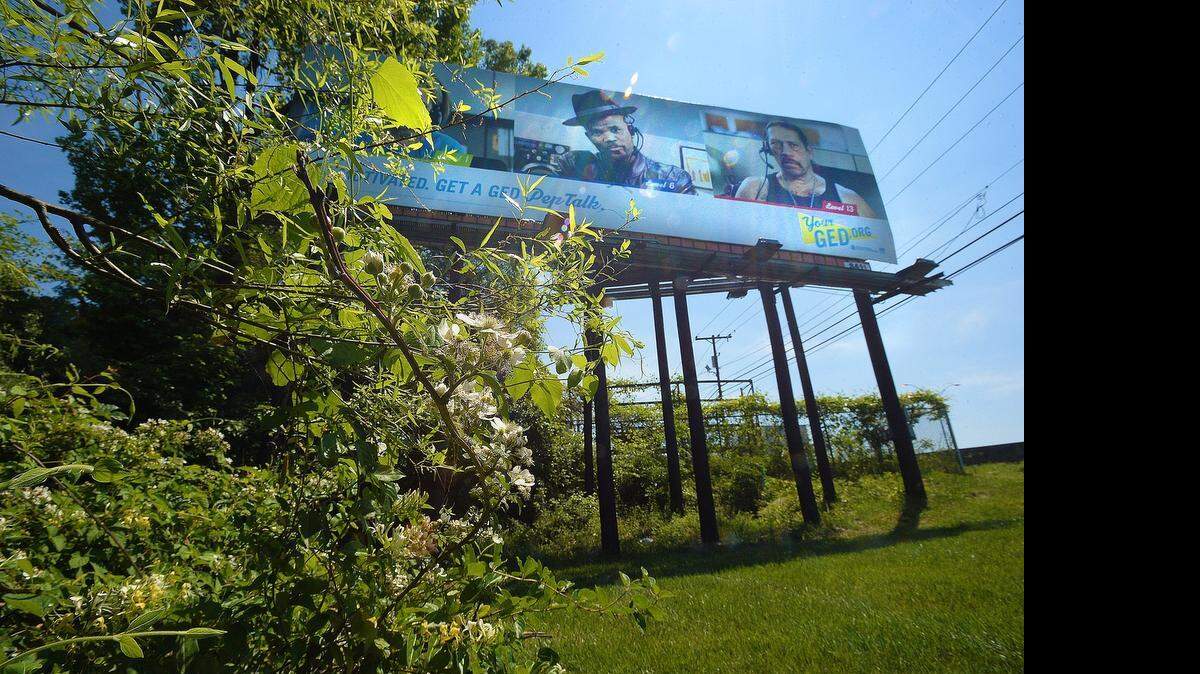
Billboards: More flexibility for billboard companies.
Impact statements: Higher triggers for environmental studies of proposed developments.
This story was originally published May 8, 2015 at 7:13 PM with the headline "NC bills would ease environmental policies."