
A record number of pedestrians are being killed. The city took action this week.
Last year there were the most pedestrian deaths — 27 — since the city began keeping records in 2002.
The City Council on Monday voted for two provisions to build more sidewalks, a change that could make the city safer for people walking.
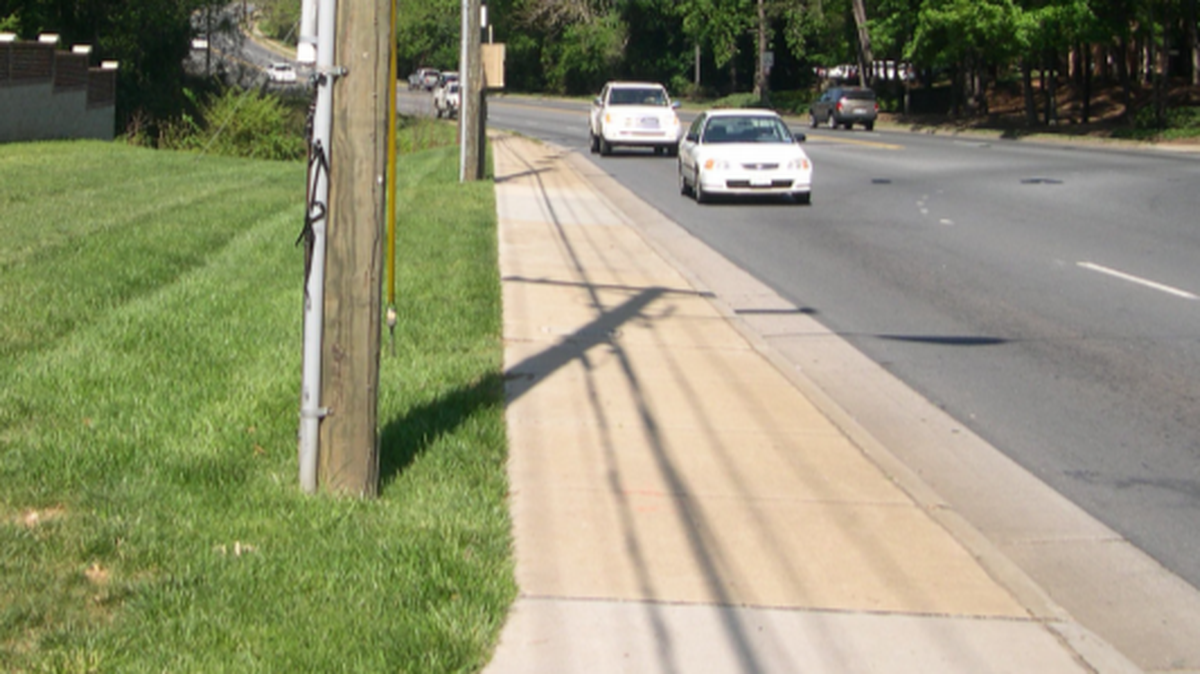
Council members voted 8-2 to close two loopholes in the city's sidewalk ordinance, one of which allowed developers to keep what the city considers inferior sidewalks when redeveloping a site. If developers didn't need a rezoning, they could keep narrow sidewalks that are adjacent to the street.
The Charlotte Department of Transportation pointed to a Wal-Mart built on W.T. Harris Boulevard near Albemarle Road, where the old sidewalk adjacent to the street had been ripped up during construction. But the developer then built the sidewalk in the exact same spot, because there was no ordinance requiring it to be separated from the road.
The new rule will require a six-foot sidewalk that's set back from the road with an eight-foot strip of grass, trees or plants.
The Wal-Mart is an area heavily used by pedestrians. It’s also dangerous. Within 1,000 feet of the new Wal-Mart, there were four non-fatal accidents where cars hit pedestrians or bicyclists in 2016. On Albemarle Road near the Wal-Mart, there were five crashes in 2016, including one fatality.
“It happens all the time,” said Scott Curry, the city's pedestrian program manager, about developers not upgrading old sidewalks during construction.
The city said it's much cheaper to replace so-called "back-of-curb" sidewalks when a site is being redeveloped, rather than later. CDOT said it costs about $60 a foot to rebuild a sidewalk during construction, as opposed to $315 a foot after.
Having “back-of-the-curb” sidewalks is arguably less safe than having sidewalks feet from a major road.
In February 2017, a driver was leaving an Exxon gas station, waiting to make a right turn onto North Tryon Street. A woman was walking on a sidewalk that’s adjacent to the street.
As the driver started the turn, she “never saw the pedestrian walking near her vehicle,” according to the police report. The driver felt “like her vehicle was going over a speed bump.”
The woman was killed. She may have been protected if the sidewalk had been set back from North Tryon.
Council members debated closing the loopholes in November, but declined to do so. The Real Estate & Building Industry Coalition, along with affordable housing developers, said the new rules could be too costly.
After months of discussion with low-income housing developers, the city created a plan that would reimburse them for the extra costs, if any, of building what the city considers proper sidewalks.
But the council's two Republicans, Ed Driggs and Tariq Bokhari, voted against the revisions. They felt it could place too much of a burden on business and that the city hadn't vetted the changes enough.
"I've heard objections from the developer community that there wasn't adequate consultation," Driggs said. "I support our sidewalk policy, I'm not sure this was handled in the best way. In some cases putting 14 feet on the edge of a property can have a substantial impact."
Curry said the city met with the development community six times about the changes. He said affordable housing developers were OK with the changes, after the city said it would reimburse them for extra costs.
The other loophole closed Monday allowed developers to not build sidewalks if they built a project in phases.
The city's increase in pedestrian deaths has mirrored a national trend. It's not clear what's driving the increase in accidents. Some have suggested it's due to an increase in people walking, or that more people are walking or driving while distracted by cellphones.
The city said there are still missing sidewalks on about 370 miles on thoroughfares in the city, which is about 34 percent. Smaller streets have more missing sidewalks, with 1,500 miles missing, or 54 percent.
The City Council has approved "Vision Zero," a goal of having no vehicle, biking or pedestrian fatalities. CDOT said closing the two loopholes would be a part of reaching that goal.
Last year was also the second-most dangerous year in terms of overall pedestrian-vehicle crashes, with 379. The year before, 2016, had the most pedestrian-vehicle crashes, with 392.
This story was originally published April 25, 2018 at 3:05 PM with the headline "A record number of pedestrians are being killed. The city took action this week.."