
Could one I-77 toll lane be free? NC weighs in today, but the debate won’t end.
One of the longest-running controversies in Charlotte could be entering its final phase this week as the N.C. Secretary of Transportation details what his agency plans to do with the Interstate 77 toll lanes — and how the state might get out of the project.
Jim Trogdon is expected to present options Wednesday at the Lake Norman Chamber of Commerce for changing the two toll lanes running from uptown to Mooresville, which are under construction and could open as early as the end of the year.
But there are still plenty of question marks about what’s emerged as the most popular option: converting one of the toll lanes in each direction to a general purpose, free lane. Those include how much such a move would cost, where that funding would come from, how soon the state could alter or buy out the contract with the Spanish firm that’s building the project and how much such a change would push back the new lanes’ opening date.
In May, 10 of the 12 members of a local advisory group agreed to recommend the state make one toll lane free. Trogdon told the advisory group the state would look at different ways to finance possible changes.
“My goal is to solve the problem,” he said. The N.C. Department of Transportation hasn’t released any details about Trogdon’s presentation this week. Spokeswoman Carly Olexik said the secretary will “provide an update after our analysis of those options.”
Several members of the advisory group interviewed by the Observer said they expect Trogdon will outline a similar plan to their recommendation on Wednesday. Mecklenburg County commissioner Jim Puckett, a toll lane opponent, said the group has received conflicting information on what it will take for the state to execute such a plan.
“There are an awful lot of unknowns,” said Puckett. “We aren’t sure what that dance will look like.”
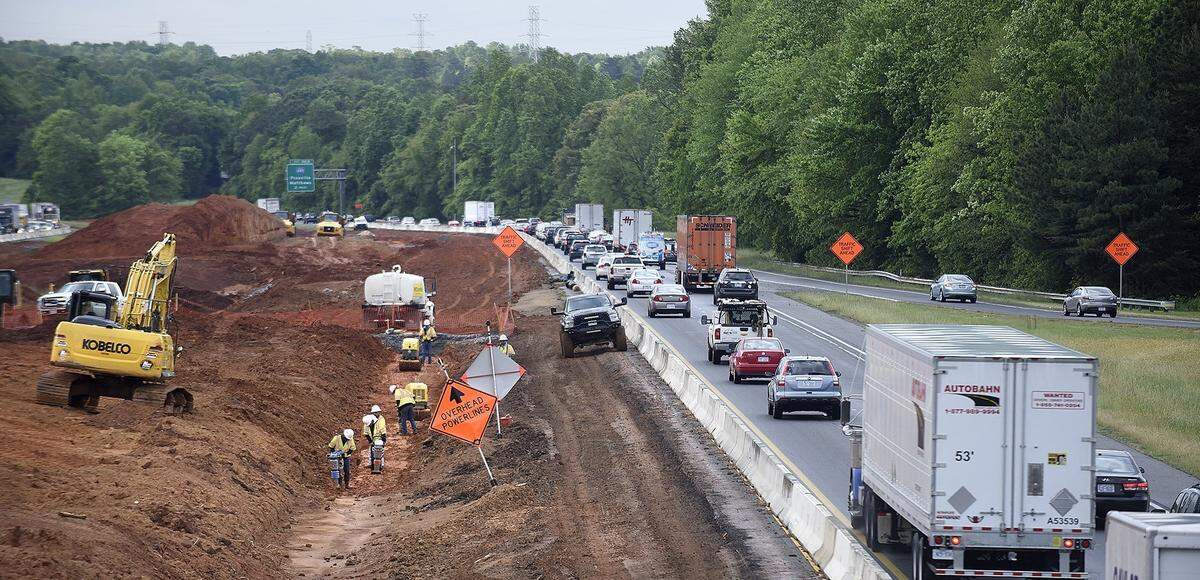
The $647 million project will add two toll lanes in each direction from uptown to Exit 28, in Cornelius, and one new express toll lane in each direction from Exit 28 to Exit 36. The tolls have spurred fierce opposition from residents in Mecklenburg and south Iredell counties, who think the interstate should be expanded with free lanes to counter growing congestion.
Cintra is building the lanes and, under the current plan, will collect toll revenue for 50 years. Toll rates haven’t been set, but they would use “dynamic pricing” and vary based on congestion, increasing as traffic worsens during the day and decreasing as traffic eases.
I-77 Mobility Partners, the Cintra subsidiary building the highway, has said the lanes will open by the end of 2018. Several major bridges and access points for the toll lanes are still under construction, however, leading state Sen. Jeff Tarte to speculate that the lanes won’t open until next summer. That could give the state more time to negotiate an exit, Tarte said.
“Based on what I know, there is no reason funds aren’t available to shift that contract,” said Tarte. “I don’t think it’s a money issue at all. ... I’m confident there’s four or five sources that can fund this.”
A spokeswoman for I-77 Mobility Partners said the group hasn’t been invited to participate in the local advisory group’s meetings and still expects to open the toll lanes on time.
“We remain focused on construction progress and preparing to open the express lanes later this year,” said Jean Leier.
The DOT would have to give the legislature at least 60 days’ notice of any changes to or cancellation of the contract with Cintra, Olexik said, and any cancellation fees, penalties or other payments would be “subject to specific appropriation” from lawmakers. Such costs could total hundreds of millions of dollars.
Tarte said sources of funding could include the state’s rainy day fund, money shifted from other funds or bonds repaid with toll lane revenue. But with the project’s completion looming, Tarte — who said he thinks Trogdon will support converting one toll lane to a free lane — said it’s imperative to reach a final decision soon.
“We need to finish that now,” he said. “A decision needs to be made so we can modify the final construction.”
By partnering with Cintra and letting the Spanish company foot most of the bill, the NCDOT said the I-77 widening project would move forward years faster than if the state waited to fund the expanded lanes. The state and the private infrastructure company signed a deal in 2014.
Cintra would manage the lanes and collect the revenue, with an eye to maximizing the firm’s revenue. Toll lane opponents have long hoped the state would cancel the contract and make all the new lanes free. But most now say that’s not realistic. Puckett said he’s OK with the state buying Cintra out, keeping one toll lane through Exit 28 and using that revenue to pay off associated debt.
“We’ll deal with a toll lane if that’s what it takes to pay our way out of this thing,” said Puckett. “We’ll pay the state back via tolls, however long it takes. ... At least we’re not paying profits to Spain.”
Kurt Naas, a businessman who started the anti-toll group Widen I-77 and is now a Cornelius commissioner, said he’s not expecting an immediate solution from Trogdon on Wednesday.
“My expectations are pretty low,” said Naas, who anticipates months of additional negotiations between the state and Cintra. Other stopgap measures, such as hardening parts of the shoulder along I-77 to allow motorists to drive on it during peak rush hours, could also be discussed.
“I think it could kind of fall anywhere along that continuum,” said Naas. “The most he could say is we’re going to enter negotiations to terminate the contract.”
Regardless of the I-77 outcome, tolls will become a regular fact of life for many Charlotteans over the next few years. The state is planning other toll lanes on I-485 between I-77, U.S. 74, on U.S. 74 and on Interstate 77 south of uptown. A new toll highway, the Monroe Expressway, is also scheduled to open this year.
This story was originally published August 14, 2018 at 7:00 AM.