
Half of all renters spend 1/3 of paycheck on housing in Mecklenburg
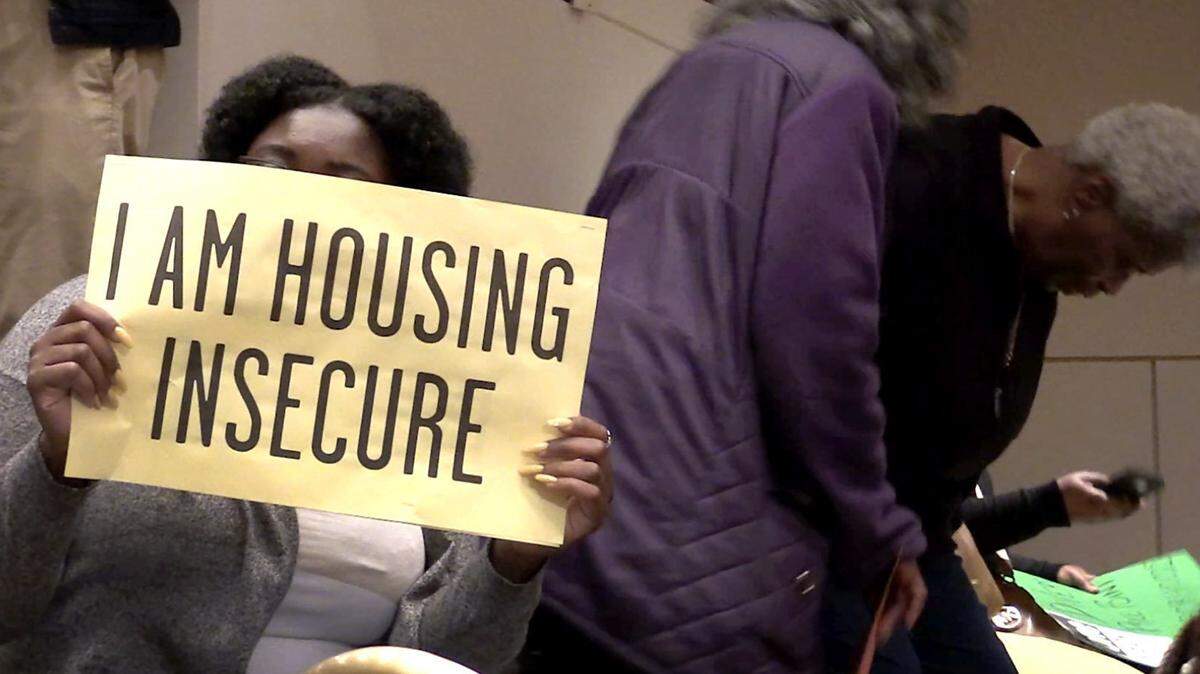
More than half of Mecklenburg County’s black and Latino renters — and 46% of renters overall — may face difficulty buying groceries, gas and medicine because they’re spending nearly one-third of their monthly income on housing, a new report found.
The report shows the scope of the area’s housing instability and homelessness, with details of how low-income and minority residents, especially, fare amid a shortage of affordable housing in the Charlotte region.
Bridget Anderson, the report’s author and a social research specialist with the Urban Institute at the University of North Carolina Charlotte, said the data shows “a clear shortage in units that are affordable for the lowest income households.”
That’s especially true for households making up to 30% of the area median income, or $23,700 for a family of four. While there are nearly 32,400 households at that income level, there are only about 5,300 units available at that price.
“Households may be forced to stay with family or friends, or rent units that are more than they can afford,” Anderson said. “Both of those are contributors to housing instability.”
Those who spend more than 30% of their gross income on housing — which includes rent or mortgage payments, plus utilities — are considered to be “cost-burdened” under federal criteria. That means they will likely struggle to pay for other necessities such as food and health care, according to the U.S. Department of Housing and Urban Development.
Median rent in Mecklenburg County has increased 18% since 2005 while median household income rose only 4% during that time. Minimum wage in North Carolina has been $7.25 — also the federal minimum —for a decade.
“It makes sense why we’re seeing some of the trends we are seeing,” Anderson said.
Eviction filings in the county were up 12% over last year. Anderson said more research study is needed to understand the reasons behind the increase.
Other key takeaways from the report, which was funded by the county, focus on homelessness:
▪ More than 2,100 people were identified as actively homeless last year, according to a new metric used in the new report. The new method is believed to be more accurate than the traditional “point-in-time” count, which includes those identified as homeless on a single day.
▪ About one-quarter of the homeless population locally are families.
▪ The average stay in a shelter increased to 105 days — 28 days longer than last year’s average stay.
The numbers reflect the reality Deronda Metz sees every day as director of social services at the Salvation Army Center of Hope.
“Nothing about the report surprised me, to be honest,” she said. “We know it all too well.”
Consistently full beds mean some families are left sleeping in their car or elsewhere, while low supply for affordable housing makes it difficult for people to leave the shelter for long-term stable housing.
“So many people who grew up in this city are having to struggle so hard. That makes me sad,” Metz said.
This work was made possible in part by grant funding from Report for America/GroundTruth Project and the Foundation For The Carolinas.
This story was originally published September 30, 2019 at 4:40 PM.
%20Cropped.jpg)