
Animal rights activists want to ban dog tethering. Why Charlotte may still allow it.
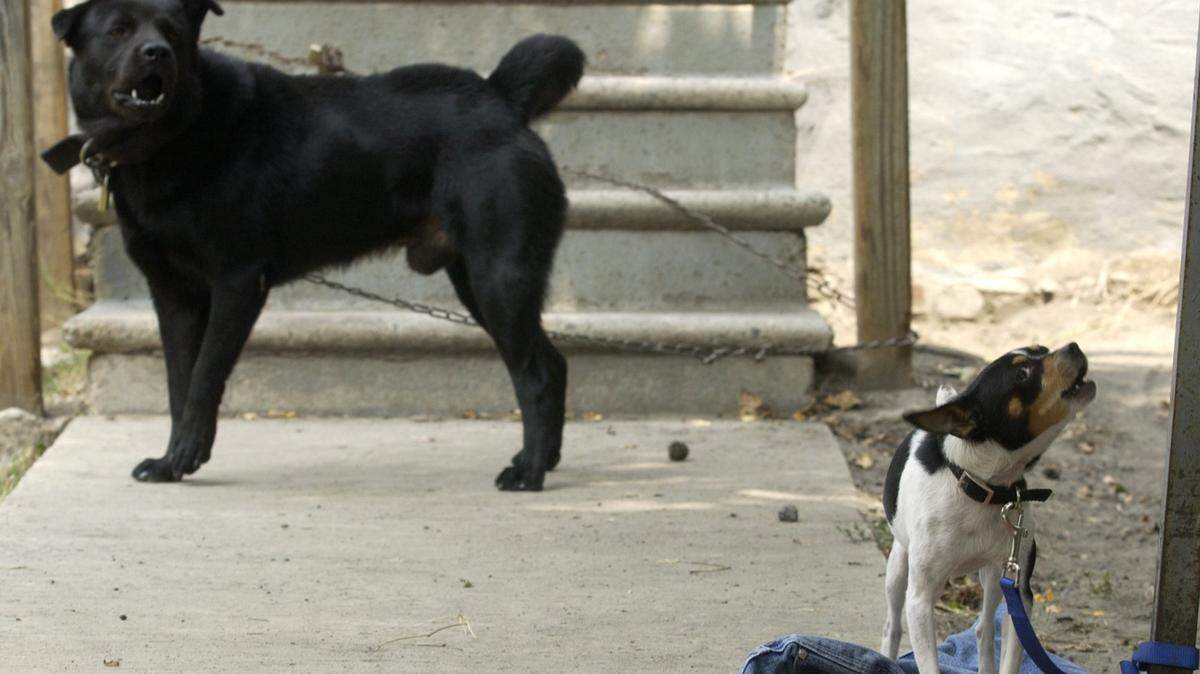
Despite adamant pleas from animal rights activists, Charlotte should not ban dog tethering because it could pose equity concerns, especially for residents who can’t afford to build fences on their properties, according to a Dec. 31 special report to City Manager Marcus Jones.
City Council members will likely be told to maintain the status quo for dog tethering ordinances in Charlotte — and to not impose time restrictions on the practice — according to the report prepared by the city’s Strategy and Budget Department.
The report, obtained by The Charlotte Observer recently, was supposed to be made public at Monday night’s City Council strategy session.
Mayor Vi Lyles said the findings on tethering — in addition to a separate report that explores banning wild and exotic animals in circuses visiting Charlotte — will instead be discussed at the council’s Feb. 3 meeting.
According to the tethering report, more restrictive ordinances could also be unfair to residents who don’t have flexibility in their work hours to come home and care for pets, as well as those who lack “access to alternative means of maintaining a pet.”
Current tethering protections in Charlotte regulate the type of tether that can be used. For example, the tether must be at least 10 feet long and allow the dog “a reasonable and unobstructed range of motion without the possibility of entanglement, strangulation or other injury.”
Dogs can be tethered for only “temporary exercise and relief,” though Charlotte’s ordinance doesn’t include a specific time limit.
“Tethering is all about responsibility...there’s a moral obligation to take a stand for the sanctity of animal life,” City Council member Matt Newton told the Observer in November. “The studies are really clear that placing animals in an isolated setting leads to aggressive and anti-social behavior.”
How Charlotte compares to other cities
Upgrading the tethering ordinance, according to the report, could have “unknown” fiscal impacts to the city — and potentially result in more dogs ending up in shelters. And the prospects of Animal Care and Control finding a way to effectively monitor and enforce a time regulation on tethering may not be feasible, the report claims.
But animal rights activists in recent months have urged local leaders in a series of public forums to rethink Charlotte’s humane protections.
“For us to be so behind on basic animal treatment is unacceptable,” Holly Newton, a local activist, said in an interview Monday.
In the last two years, cruelty-related complaints surrounding dog tethering have doubled from 30 to 60 annually, according to data compiled by the Charlotte-Mecklenburg Police Department. In that same time period, Animal Care and Control received an average of 110 restraint-related complaints about tethering.
Almost half of Charlotte’s 20 peer cities across the country have banned tethering, including Arlington, Texas; Long Beach, Calif.; and San Diego.
Among Charlotte’s peer cities in North Carolina, Asheville and Durham have banned tethering, according to the report. Meanwhile, Raleigh allows tethering but has passed time restrictions.
“Overall, the city has strong ordinance language in place to protect and safeguard the well-being of animals while still allowing tethering,” Charlotte’s report reads. “This provides for equitable options for pet ownership that also maintain standards in place to ensure the safety of the public and the well-being of pet animals.”
This story was originally published January 7, 2020 at 2:46 PM.