Coronavirus fears spark ‘striking surge’ of mail-in ballot requests
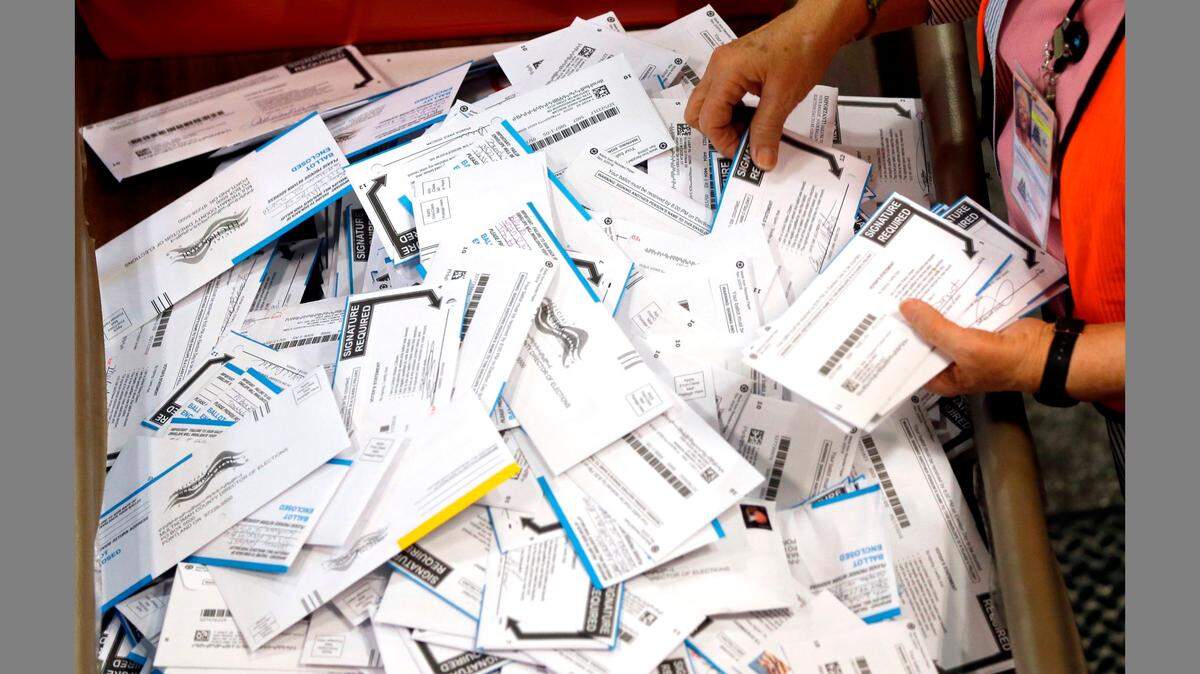
A new report shows “a striking surge” in the number of absentee ballot requests in North Carolina, reflecting patterns seen across the country amid the COVID-19 pandemic.
State election officials say as many as four of 10 voters, or more than 1.5 million, could cast mail-in ballots this fall. That’s 10 times the usual number.
Michael Bitzer, a political scientist at Catawba College, analyzed more than 65,000 absentee ballot requests made through Friday. Weeks before ballots are even printed, that’s a four-fold increase from the number requested at the same time in 2016.
“We all were expecting a run-up in mail-in ballots,” Bitzer said Monday. “I don’t think anybody would have expected that rate at this point.”
Lawmakers and the N.C. State Board of Elections are making it easier to cast absentee ballots this year.
Last month Gov. Roy Cooper, a Democrat, signed a law that among other things allows voters to request absentee ballots online. It also cuts the number of required witnesses from two to one. And by Sept. 1, the state elections board will have a special portal at www.ncsbe.gov.
Absentee ballots for the November election will start being mailed to voters Sept. 4.
But three lawsuits could bring even more changes.
Democracy North Carolina and the League of Women Voters as well as the National Redistricting Foundation and Right to Vote Foundation all have filed suit to make voting by mail easier. Last week the ACLU joined in. The suits seek changes such as eliminating the witness requirement altogether and having pre-paid postage.
“In virtually every election that’s taken place during the pandemic . . . we’ve seen very real challenges and issues,” said Hilary Klein, counsel to the Southern Coalition for Social Justice, which brought the suit on behalf of the League of Women Voters. “We’re looking for ways to prevent that from occurring in North Carolina . . . and one of the ways is by making absentee voting easier.”
According to the ACLU, North Carolina is one of only 12 states that require somebody to witness an absentee ballot and one of only three that require two witness signatures on a ballot.
Last year state election officials ordered a new election in the 9th Congressional District after allegations of ballot harvesting in Bladen County. The ACLU lawsuit says the witness requirement does little to prevent such scandals. ”As a practical matter,” it says, “the witness requirements pose no obstacle to deter an individual who is willing to commit perjury and cast an absentee ballot fraudulently.”
Political advantage?
Republicans have often relied on absentee ballots more than Democrats.
According to Bitzer, in 2008 54 percent of all absentee requests came from Republicans, who made up less than a third of registered voters. Four years ago that fell to 40 percent, though that was still more than Democratic and unaffiliated voters. Partisan breakdowns of this year’s absentee requests were not yet available.
But Bitzer found that while the number of requested ballots had doubled in rural counties, they jumped nearly five times in urban and suburban counties.
While President Trump has been openly critical of mail-in voting, both major parties plan to make it an important tool in North Carolina.
“We always have a plan for absentee voting and obviously we’re going to have to ramp it up this cycle,” said Tim Wigginton, a spokesman for the N.C. GOP. “This is really an area where the Republicans’ edge in data really shines. We’re able to micro target individuals on a granular level in order to more effectively target our resources.”
State Democratic Party spokesman Austin Cook called absentee voting “a huge priority.”
“Voting by mail is safe, secure and convenient, which President Trump and Vice President Pence can personally attest to,” he said. “Our education efforts continue to evolve and include digital outreach and advertising as well as virtual community meetings and events to make sure North Carolinians across the state have access to the resources they need to vote by mail.”
Postmark by Election Day
The new state law allows county election boards to begin counting absentee ballots five weeks before the election. Before, they couldn’t start until two weeks before. The law also appropriated money that will allow the state to buy a dozen high-speed scanners to help count the ballots.
Ballots for the Nov. 3 election that are postmarked by Election Day can be counted if they arrive up to three days after the election.
“The only thing that worries me is if you have a close race and if you get 10,000 (ballots) in that Friday night and a race within 200 votes,” said Michael Dickerson, Mecklenburg County’s election director.
Dickerson said the anticipated surge of mail-in voting, along with 17 days of early voting, should reduce crowds voting in person on Election Day.
It’s that fear of crowded lines that is pushing up the number of absentee requests.
“(I)t would appear,” Bitzer wrote, “that a substantial number of North Carolina’s voters are starting to prepare for using a vote method that would keep them from having to stand in line and potentially confront COVID-19.”
This story was originally published July 13, 2020 at 5:49 PM.