Cunningham says during US Senate debate he’d be ‘hesitant’ to take COVID-19 vaccine
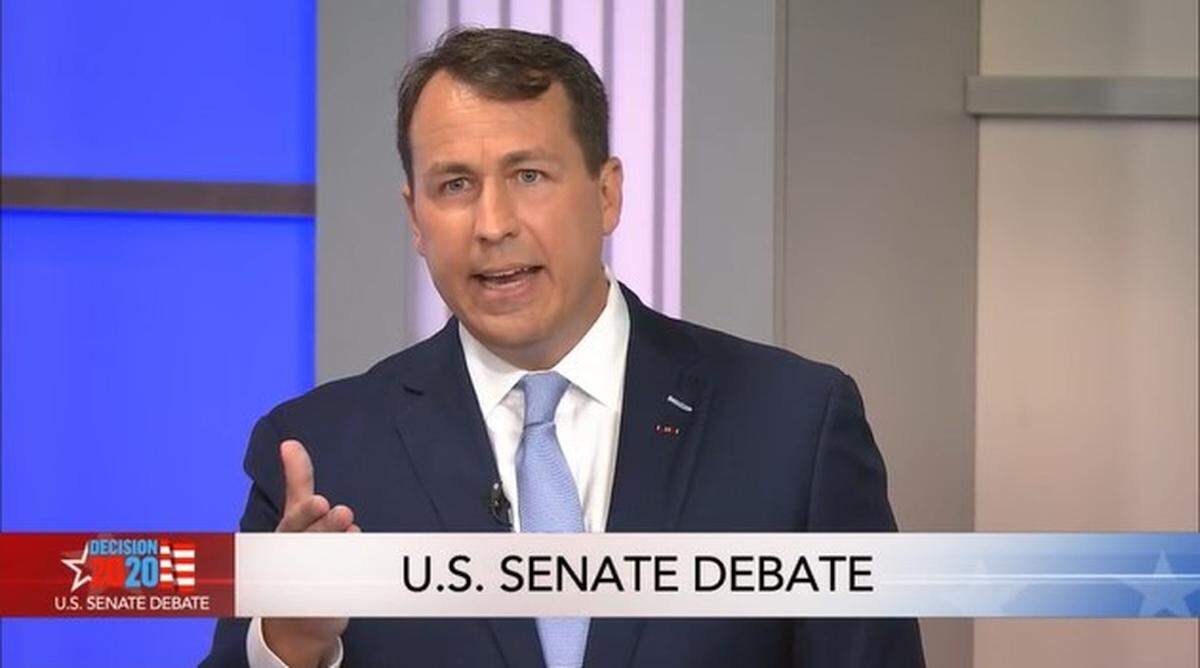
Democratic U.S. Senate candidate Cal Cunningham said Monday that he would be “hesitant” to take a coronavirus vaccine if it were developed by the end of the year, saying he would have a lot of questions about the “political and financial corruption” in Washington.
“I’m going to ask a lot of questions,” he said. “I think that’s incumbent on all of us right now with the way we’ve seen politics intervening in Washington.”
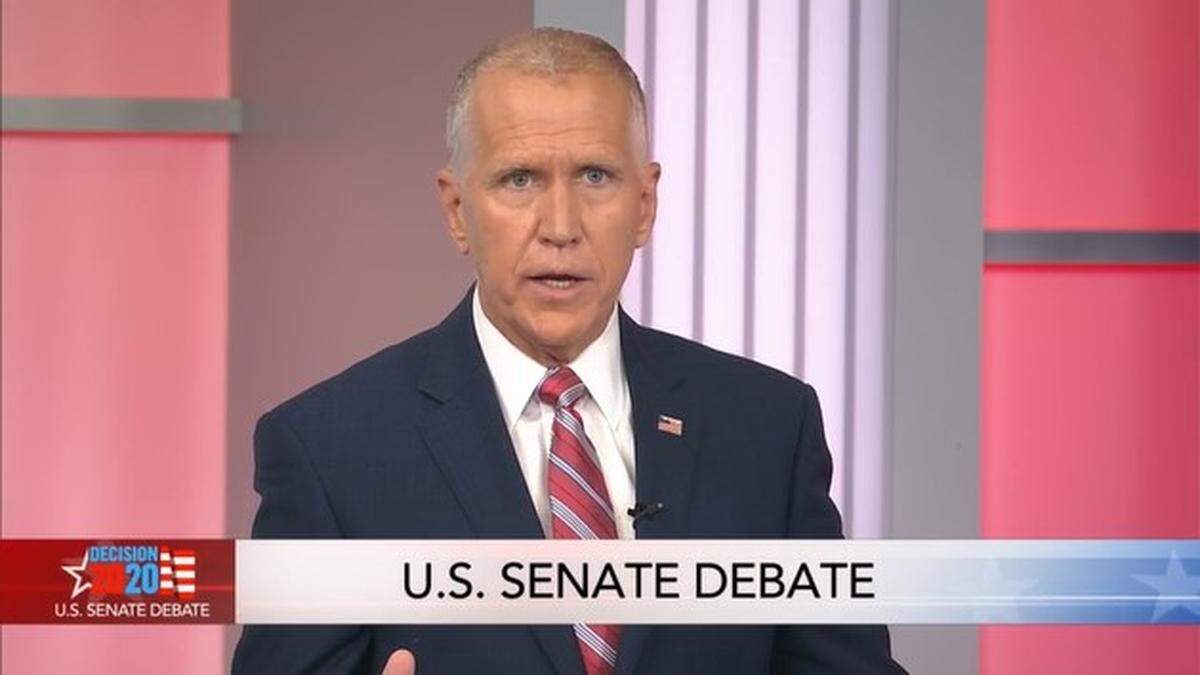
Republican incumbent Sen. Thom Tillis called Cunningham’s response “irresponsible.”
“That statement puts lives at risk and it makes it more difficult to manage a crisis that he presents to say he’s up to the task to manage,” Tillis said. “We just heard a candidate for the U.S. Senate look into the camera and tell 10 million North Carolinians he would be hesitant to take a vaccine. I think that that’s irresponsible.”
Cunningham and Tillis met Monday night in the first of three U.S. Senate debates. It was moderated by WRAL anchor David Crabtree at the TV station’s Raleigh studio.
After the debate, Cunningham said, “If public health professionals sign off, then I will not hesitate and I would encourage others to do so.”
Over an hour, they addressed a flurry of issues, from the handling of the coronavirus pandemic and its effects on North Carolina residents to the military and systemic racism. Without strict time limits on answers, the candidates packed attacks into answers, blended in parts of their qualifications and engaged in back-and-forth dialogue on several topics.
President Donald Trump, who is also on the ballot on Nov. 3, was hardly mentioned — though his response to the coronavirus and his comments about absentee-by-mail voting were discussed.
It was the pandemic, which has dramatically altered the country over the past six-plus months, that dominated the conversation. The pandemic has claimed lives, upended the economy, cost millions of jobs, closed schools and transformed nearly every part of American life.
In North Carolina, there have been more than 185,000 lab-confirmed cases and more than 3,000 deaths. In the U.S., there have been more than 6.5 million cases and more than 194,000 deaths.
The Trump administration launched Operation Warp Speed to produce a vaccine in record time. The federal government is funding production of several vaccine candidates even as they go through clinical trials — so that if one is found to be effective, its distribution can be sped up.
Trump has suggested in recent weeks that a vaccine could be ready by Election Day, Nov. 3. The Centers for Disease Control and Prevention asked the nation’s governors to prepare vaccine distribution sites by Nov. 1, McClatchy first reported.
Tillis defended the Food and Drug Administration, calling it “the gold standard.” He said that it would not approve a drug that was not safe for use by Americans.
“No doubt in my mind the vaccine would be safe,” Tillis said.
Cunningham, however, said he would have questions about the political influence behind the vaccine’s approval.
“Corruption — financial and political — in Washington are a major problem right now,” he said. “I think the American people have a lot of questions about the governance of this country. Not only about this vaccine, but also about the underlying political and financial corruption.”
.JPG "Election2020-Senate-NorthCarolina (1).JPG")
First of three debates
The debate was the first of three scheduled debates between Tillis and Cunningham. Cunningham has maintained a small polling edge throughout the summer. The race, considered a toss-up, could determine which party controls the chamber in January.
Libertarian Shannon Bray and Constitution Party nominee Kevin E. Hayes will appear on the Nov. 3 ballot. Neither appeared in Monday night’s debate.
Tillis repeatedly said that when Cunningham was a state senator in the early 2000s, he broke his promises, including a no-tax pledge, and did not listen to voters.
“He will say anything to get elected. The reality is, it is only to get elected. He has broken pledges in the past,” Tillis said.
Cunningham criticized Tillis as part of the problem in Washington.
“We have seen from him a failure of leadership that is part and parcel with the failure in Washington,” Cunningham said.
Administration influences
Immediately after the debate, Cunningham and Tillis took part in Zoom interviews with members of the media. Cunningham said that he would take the vaccine if the medical community said it was safe without political influence.
Politico reported earlier this week that Trump officials interfered with reports on COVID-19 from the CDC. CNN reported in August that the CDC was pressured to change testing guidance. Trump told veteran reporter Bob Woodward that he downplayed the virus’ severity in public in January and February rather than create a panic.
“Month after month in America today, we are learning about the political influences on our public health professionals coming straight out of the administration, coming from Capitol Hill,” Cunningham said. “When we see the corrupting influence of political decision making in our public health professionals, we should ask questions. We should as American people do our homework and our due diligence.
“The point I was making was in the corrupting environment we have seen in Washington, even public health professionals have been influenced in this environment,” he said. “We need to make sure there is integrity in the process and once the FDA signs off with integrity, free of political influence, I’ll make sure that loud and clear, my voice to North Carolinians will be to take the vaccine.”
Throughout his presidency, Trump and his administration have been accused of politicizing parts of the government to meet his needs by Democrats, including most notably the Justice Department and, most recently, the United States Postal Service.
Tillis said he is not worried about any influence from the administration in pushing a vaccine to market.
“There are so many checks and balances in the process,” Tillis said after the debate. “No organization, AstraZeneca, any of the companies that are moving into Phase Three clinical trials, they’re not going to bow to political pressure to authorize a drug that could harm someone. They would do it for business reasons if not for compassionate reasons. The FDA is not going to be in a position to where they would do that. We have the gold standard for drug approval in this country.
“When the FDA approves a drug, there’s no one in the world who would not want to get access to that vaccine. There’s just no doubt in my mind. The process is fair. The clinical trial process is not being short-circuited.”
In an August poll by NBC News, fewer than half of Americans said they’d get a government-approved coronavirus vaccine. Just 44% said they’d get the vaccine, with 22% saying no and 32% saying they weren’t sure. More Democrats (58%) said they’d get the vaccine than Republicans (36%).
A September poll by Morning Consult found 51% of adults said they would get a vaccine, down from 72% in April.
Money in the race
In 2014, Tillis, 60, defeated then-Sen. Kay Hagan by fewer than 50,000 votes. At the time, it was considered the most expensive U.S. Senate race in history with candidates spending $124 million.
During the 2020 election cycle, the North Carolina race is currently the most expensive Senate race in the country, with all candidates and outside spending at nearly $68 million so far — a figure that will balloon in the coming weeks.
Both candidates made references to outside money throughout the debate, insinuating that their opponent is or would be beholden to donors or their party.
“I believe in the people of our state,” said Cunningham, 47, who lost his bid for the Democratic nomination for the U.S. Senate in 2010. “And making sure the voices of the people of our state are heard in Washington. And that frankly stands in contrast to some of what we’ve seen out of Sen. Tillis. If it’s a choice between his Washington friends and North Carolinians, North Carolinians are in trouble.”
Tillis tried to tie Cunningham to national Democrats throughout the debate. He once called Democratic presidential nominee Joe Biden, Cunningham’s “running mate.” He said Cunningham’s comments about the coronavirus vaccine were the same as Democratic vice presidential candidate Kamala Harris’ recent remarks about not trusting Trump on the vaccine.
Tillis repeatedly referenced U.S. House Speaker Nancy Pelosi and Senate Democratic leader Chuck Schumer, saying Schumer and his allies had invested $75 million in the race.
“Getting ready for that rubber stamp to be put in your hands, Cal,” Tillis said.
The next debate between the two is Sept. 22.
For more North Carolina government and politics news, listen to the Domecast politics podcast from The News & Observer and the NC Insider. You can find it on Megaphone, Apple Podcasts, iHeartRadio, Stitcher or wherever you get your podcasts.
This story was originally published September 14, 2020 at 8:17 PM with the headline "Cunningham says during US Senate debate he’d be ‘hesitant’ to take COVID-19 vaccine."