How GOP star Madison Cawthorn polarized the battle for Asheville’s seat in Congress
At the Republican National Convention in August, Madison Cawthorn cast an image of hope.
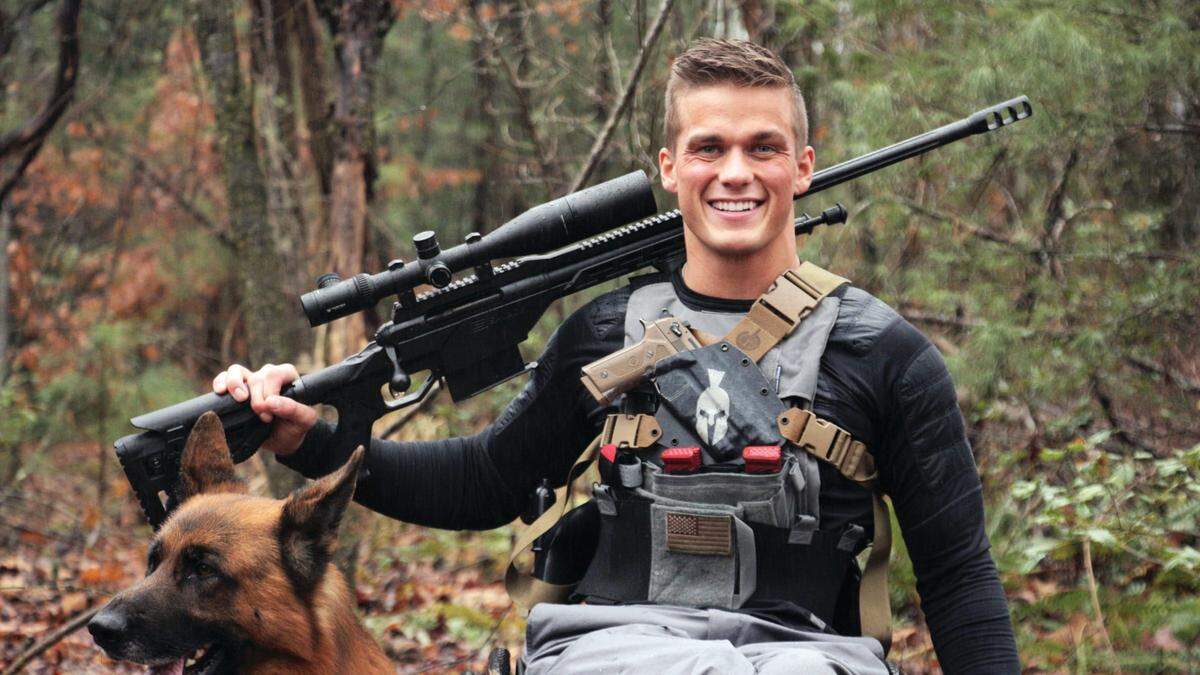
In an upset victory in June, the 25-year-old Cawthorn had defeated the candidate President Donald Trump endorsed in a GOP primary runoff for Western North Carolina’s 11th Congressional District. And as the RNC was broadcast on live television, he once again drew the national spotlight, grabbing hold of a walker and pushing himself up from his wheelchair.
Cawthorn, who was in a car accident when he was 18 that left him partially paralyzed, has made his subsequent recovery the centerpiece of his campaign. He has sought to inspire a new generation of Republican voters, as the party suffers from a demographic shift.
Cawthorn is running in a high-profile race against Democrat and 62-year-old retired Air Force colonel Morris “Moe” Davis. In the contest for the newly-redrawn district in the North Carolina mountains, once all but a guarantee for the GOP, both candidates have generated controversy.
Still, Cawthorn has become the polarizing figure driving much of the race.
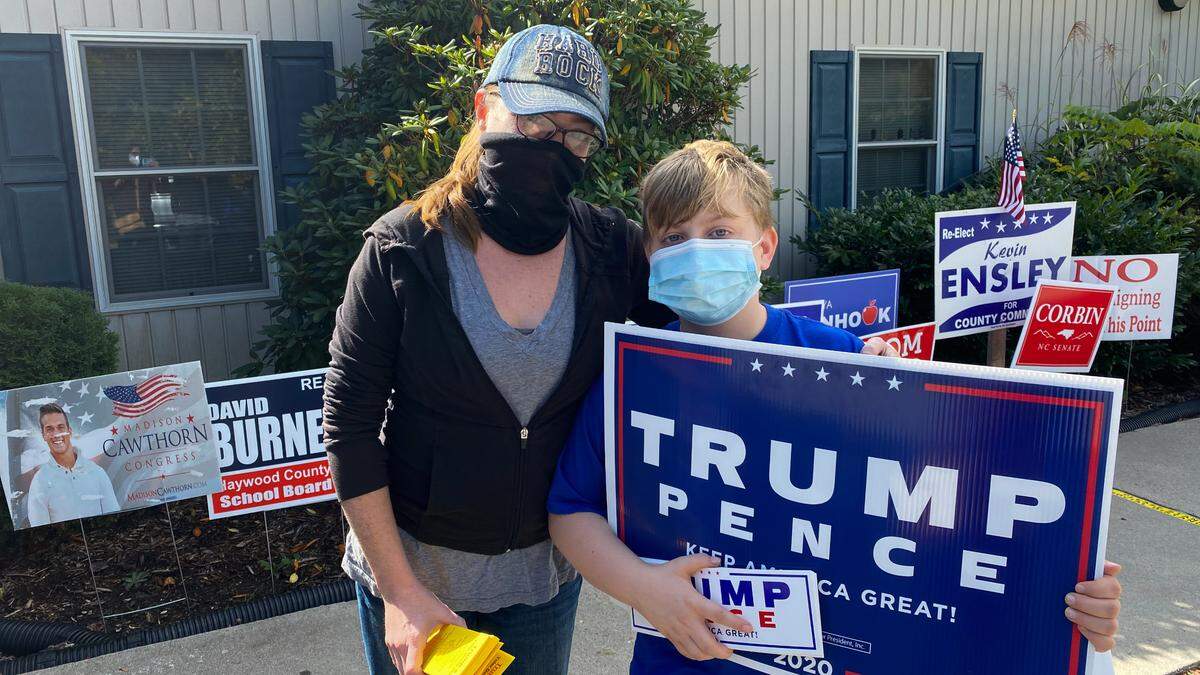
His persona resonates with voters like Kelsi Williams, a 35-year-old stay-at-home mom in Waynesville. Williams was handing out “Trump’s Voter Guide” and Trump/Pence bumper stickers with her 12-year-old son in front of an early voting site for the Haywood County Republican Party on a recent Friday.
“His strength and resilience, I think it’s really amazing,” she said. “That this is what came out of that — public service is what came out of that.”
But that image has cracks. Cawthorn has been accused of racism, sexual misconduct and ties to white supremacy. Cawthorn has said he condemns racism and defended himself against a number of the allegations.
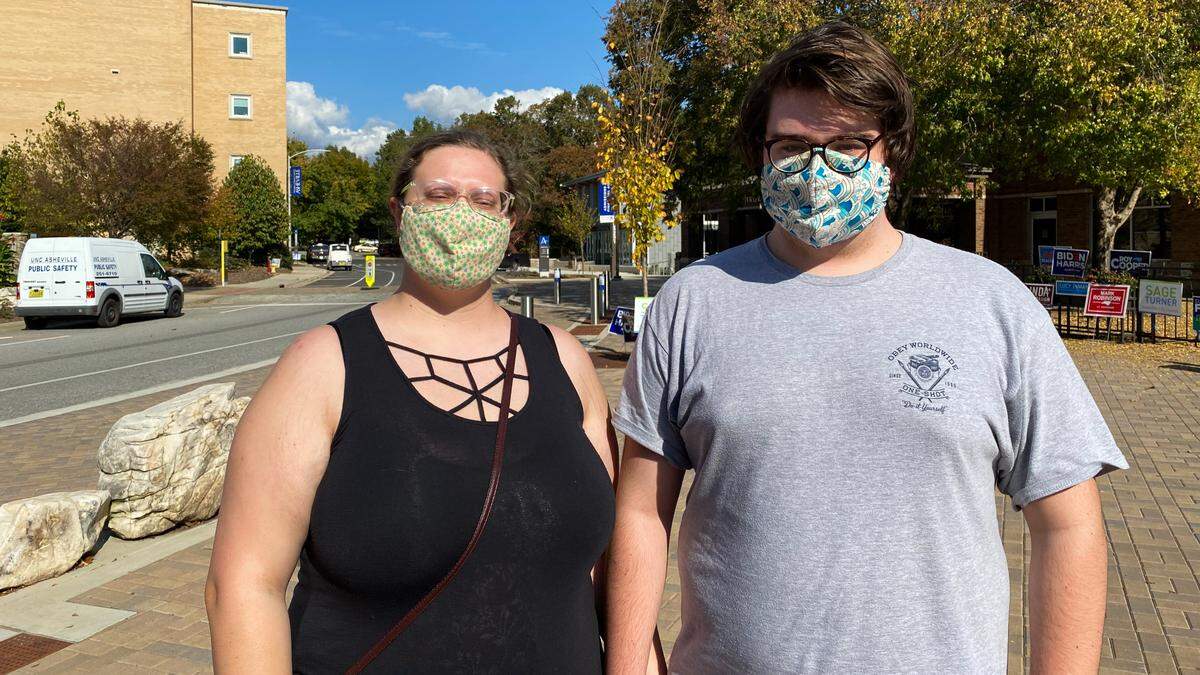
Young voters on the liberal UNC Asheville campus say their opposition to Cawthorn drove their vote for Davis. They say that, in spite of a series of aggressive, sometimes profane tweets that Davis posted before he was a candidate, they fear what they say Cawthorn represents — a Republican party shifting further to the right, courting white nationalist ideologies.
“It really feels like kind of a struggle between good and evil, and what this district will look like,” said Wyatt Mrozkowski, an 18-year-old student voting in his first general election. “And that’s why I voted for Moe Davis.”
The district is an uphill battle for any Democrat, even under the new map, which includes all or part of 17 western counties, and the left-leaning city of Asheville. But the national attention Cawthorn has garnered has infused vigor, and cash, on both sides of the ticket.
Cawthorn has raised more than $3.6 million as Republicans try to hold onto the coveted seat, once held by Mark Meadows before he resigned to become Trump’s chief of staff. Davis has been slower to receive national party recognition, but has nonetheless attracted over $1.8 million as Democrats seize a chance to rebuke the president and his allies in a district that voted 57% for Trump in 2016.
The Cook Political Report, a nonpartisan election forecaster, recently changed its rating for the race from likely Republican to lean Republican. A poll released by the Davis campaign Oct. 21 shows him ahead 45-42, while Cawthorn’s campaign has not released its own polling.
Both candidates are lobbing sharp attacks against the other, as each tries to energize his base, despite the fact that a victory could hinge on unaffiliated voters.
“It’s a district that should not be that competitive,” said Chris Cooper, a political scientist at Western Carolina University. “And I think because of the nature of the candidates, and the year, has become competitive.”
A string of scandals
Cawthorn has faced several accusations of unwanted sexual behavior, most recently in a letter authored by alumni of Patrick Henry College in Purcellville, Virginia, where Cawthorn briefly enrolled in 2016 before dropping out. They allege he engaged in “predatory behavior” toward women while attending the small, Christian school.
The letter, signed by 181 current and former students as of Thursday, urges voters not to support his candidacy.
A number of alumni also created a PAC to advocate against Cawthorn. Giovanna Lastra, one of the authors of the letter and an organizer of the PAC, says it is not affiliated with or promoting Davis in any way.
Cawthorn’s campaign did not make him available for an interview despite repeated requests from the Observer.
A statement on Cawthorn’s Facebook page in response to what he describes as attacks from “discontented PHC alumni” says he has the backing of a “significant” number of former students who knew him well at the college.
It was originally posted without signatures, but updated to include the names of six people, two of whom work on his campaign, Federal Election Commission reports show.
And last week, he came under fire for a racist post on a website he created. The site describes Pulitzer Prize-winning Asheville journalist Tom Fiedler, who has written investigative pieces about both Cawthorn and his opponent, as leaving a job in academia to “work for non-white males, like Cory Booker, who aims to ruin white males running for office.”
Cawthorn called it a “syntax error” and said that it “unfairly implied” he was criticizing Booker. He has since updated the website to refer to Fiedler as an “unapologetic defender of left-wing identity politics.”
“Madison Cawthorn has disavowed this erroneous statement, which did not reflect his views, and repeatedly used the national stage to condemn racism, promote equality and defend the American and MLK’s dream,” John Hart, a spokesman for the campaign, said in an email.
Former presidential candidate Sen. Cory Booker has denounced Cawthorn for making an “explicitly racist attack” against him.
The incident follows a string of accusations from Cawthorn’s opponents that he is sympathetic to white nationalists, pointing to his appearance next to a Betsy Ross flag, which is used by extremist groups, as well as the name of his company, SQPR, an abbreviation of a Latin phrase often utilized by white supremacists.
And he’s come under fire for a social media post from a visit to Eagle’s Nest, Hitler’s former mountain retreat, in which he referred to the dictator as “the Fuhrer” and said the trip had been on his “bucket list.”
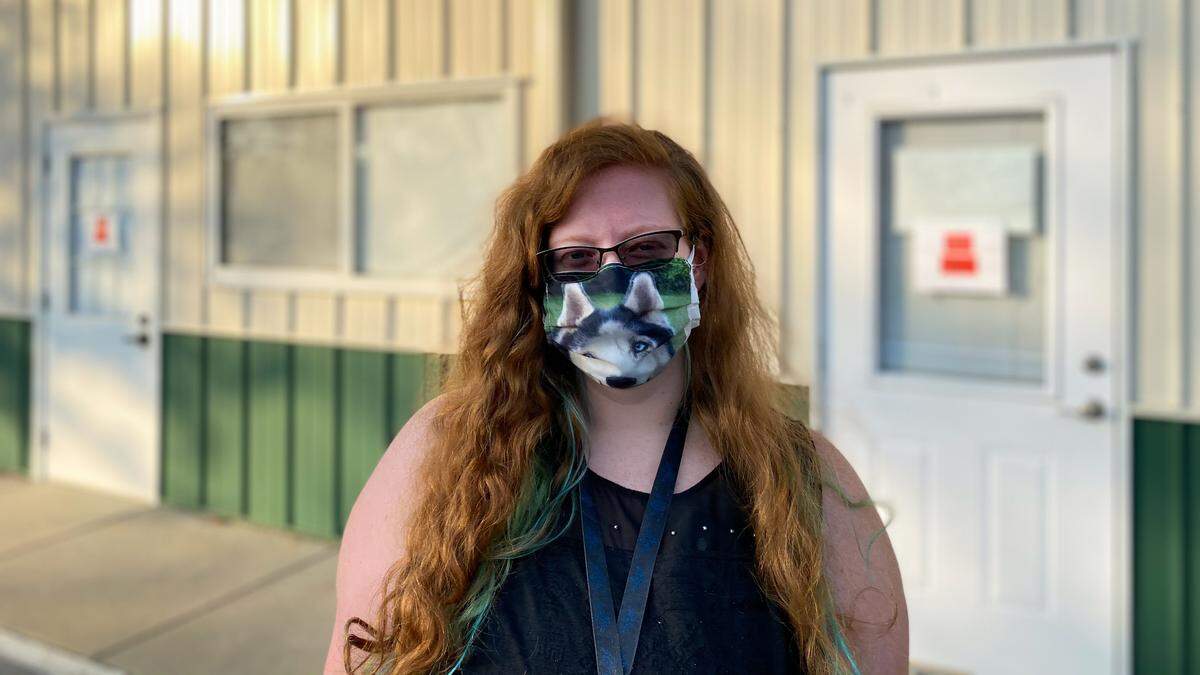
“It just did not rub me the right way,” said Jordan Garren, a 23-year-old Democratic voter from Hendersonville. “And with all of the fascism problems and the Proud Boys ... we don’t need anyone who would encourage that.”
Cawthorn has denied claims that he is tied to white supremacy and noted that he is engaged to a biracial woman. But Davis has been using it as ammunition for his campaign.
“It’s one of those things if that was the only incident you can kind of write it off as a fluke,” Davis said. “But it’s part of a pattern if you look at all the other indicators of his alt-right, white supremacist leanings.”
Impacts on voters
Meanwhile, Republicans have pointed to a string of aggressive, sometimes profane tweets Davis sent before he was a candidate, which include references to stomping on the necks of Republicans.
Jordan Perry, a Democratic voter and 35-year-old staff member at UNC Asheville, said Davis wasn’t her first choice, and she would have preferred to vote for a woman or candidate of color. But she said he was the “lesser of two evils” compared to Cawthorn.
“I think given the context and given what’s at stake I’m going to forgive things like tweets when you’re comparing that with using symbols of white supremacy or allegations of sexual assault,” she said.
Other voters said they were not as concerned about the allegations against Cawthorn.
“I know that most of the media puts out there that he is a strict, hard-line conservative but actually he’s a very level-headed young man,” said Kevin Marino, a 44-year-old Hendersonville resident. “I think he has a lot to offer as far as role modeling for other young folks that are coming up through the ranks.”
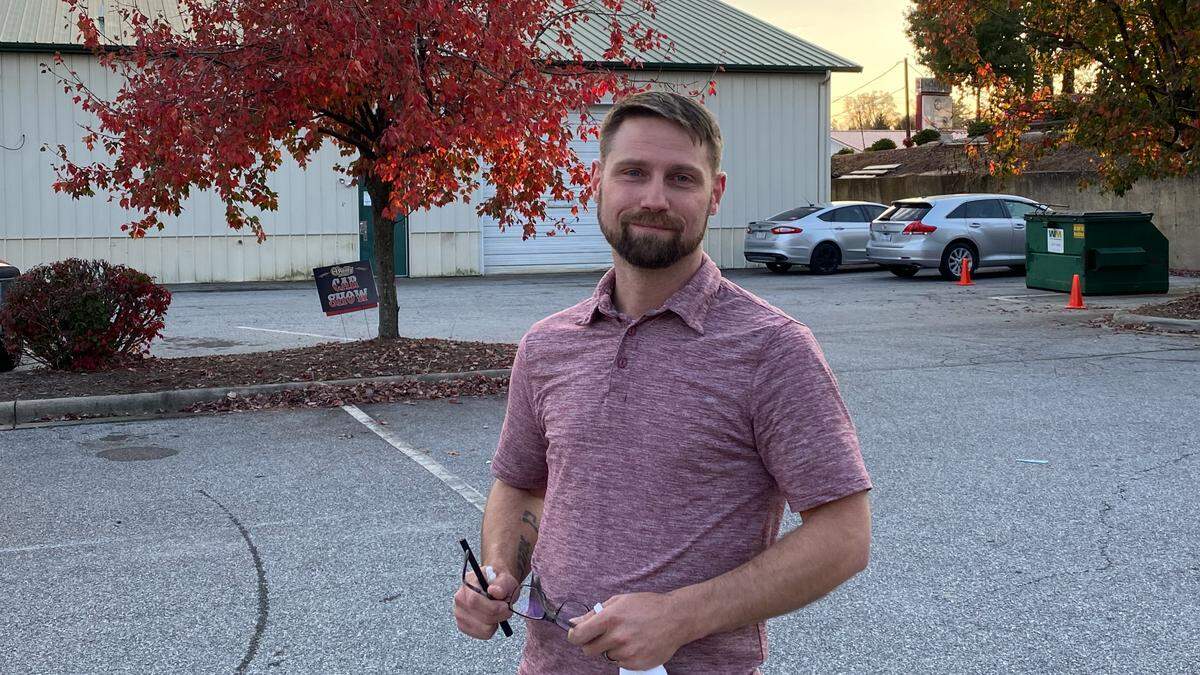
Cawthorn has tried to paint Davis as a far-left candidate, pointing to his positions on policies like the Green New Deal and arguing that his tweets advocate violence toward Republicans.
“Moe Davis decided to run a character assassination campaign from the very beginning because he does not want voters to know how liberal he is,” Hart said.
Davis said that his tweets were “colorful” and “bombastic,” and not meant to be taken literally.
The self-described centrist said that he supports the premise of the Green New Deal, but won’t necessarily commit to voting for every provision.
“Some of the progressive groups don’t like what I’m advocating and a lot of the right-wing groups don’t either, which I think puts me somewhere in the middle,” he said.
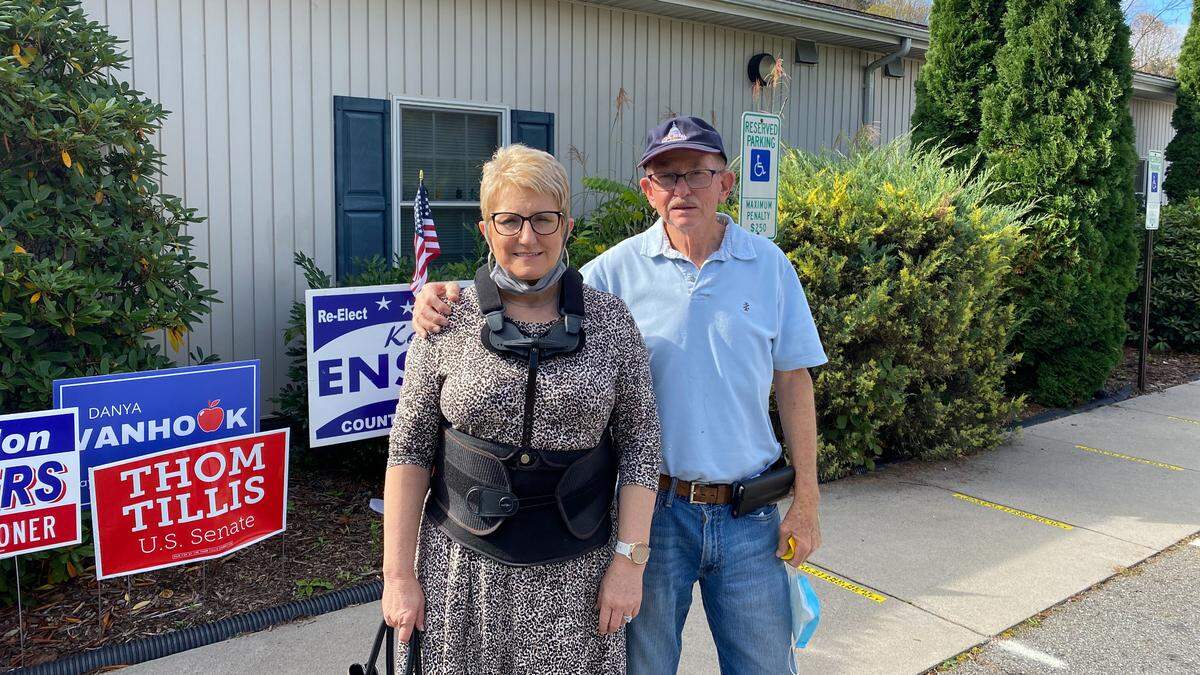
Sharon Walls, 63, who owns a salon in Waynesville, said she was raised a Democrat, but started voting Republican in 2012. She said she is drawn to Cawthorn’s enthusiasm and his “Christian values,” and believes Democrats have shifted too far to the left.
“We need fresh, new people in Washington,” she said. “I like his enthusiasm, I like what he stands for, and I just think he’s very impressive.”
Courting the middle?
Amid such a polarized race, unaffiliated voters outnumber Democrats and Republicans in the district.
Davis, who is a former chief prosecutor for terrorism trials at Guantanamo Bay, said his focus on issues like preserving Veterans Affairs and expanding access to broadband appeals to voters in rural areas. He’s looking at those unaffiliated voters as key to boosting his chances.
Hart said Cawthorn is targeting unaffiliated voters by pointing out Davis’s “liberal” views on issues like packing the Supreme Court. In a Q&A with the Smoky Mountain News, Davis said that he wasn’t opposed to the idea of court-packing, noting that “Republicans have not been bashful about using the full scope of their power.”
Around 55% of registered voters in the district have already cast their ballots as of Wednesday, data show. Of those who have voted so far, 34% are registered unaffiliated, 32% are Republican and 33% are Democrat.
Former Republican state Rep. Chuck McGrady, who represented the district that includes Hendersonville before resigning in early October, said the candidates are drumming up enthusiasm for their bases, rather than trying to convince those who are unaffiliated.
“This campaign is sort of a hard one for people like that to judge because it’s just a lot of noise coming through from the campaign or the partisan supporter on both sides,” he said. “Unfortunately it’s sort of mirroring other campaigns that are going on nationally.”
The district, which was last represented by a Democrat in 2013, still has some pockets of purple. Jackson County, which voted both for Trump and Gov. Roy Cooper in 2016, is crucial to any path to victory for a Democrat, said Cooper, the political scientist.
Paul Kinville, a 50-year-old resident of Cullowhee in Jackson County, said he doesn’t consider voting for Republicans anymore, because of what he views as intolerance and racism in the right-wing. Kinville, who is registered as unaffiliated, said he voted for Davis because he’s “not Cawthorn,” and was concerned about Cawthorn’s social media post from Eagle’s Nest and other white supremacy allegations.
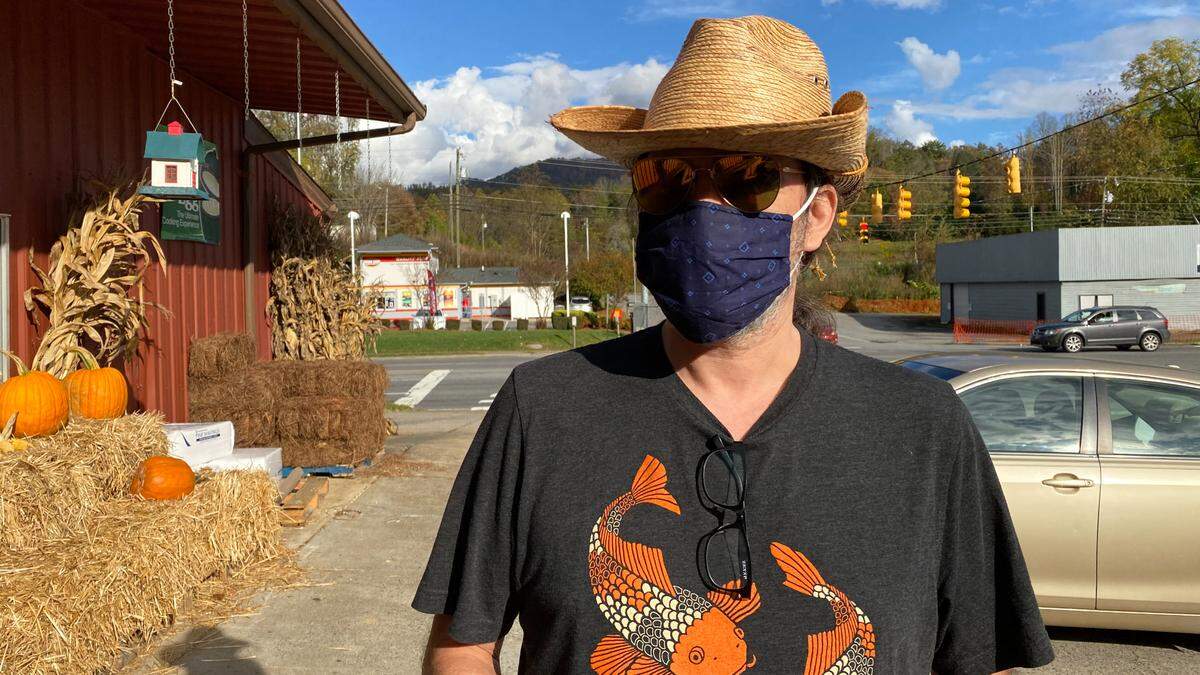
“When you refer to a visit like that as something on your bucket list ... that’s more than a dog whistle, that’s a dog foghorn,” Kinville said.
But at the nearby voting site in Sylva, the county seat, Republican voter Robert Corvin, 62, is enthusiastic about Cawthorn’s stance on conservative issues.
“He’s young, he’s vibrant, he’s got a good message,” he said.
State Sen. Terry Van Duyn, an Asheville Democrat who is retiring after an unsuccessful run in the primary for lieutenant governor, isn’t convinced there are many undecided voters left.
“Even those who call themselves independent, they don’t want to be labeled, but they’ve already made up their minds,” she said. “There’s really very little persuadable voters anymore.”
Hyper-partisanship has led to very few undecided voters, Cooper said, but where scandals can make an impact is with mobilization.
“That’s really where campaigns are won and lost,” he said. “If it’s a close election, are there some Republicans who are going to fill out the ballot but maybe skip over NC-11? And I think that’s possible.”
This story was originally published October 31, 2020 at 8:00 AM.