
Facing ‘COVID fatigue’ and polarization, NC governor balances restrictions, restraint
Nine months of coronavirus cases, hospitalizations and deaths in North Carolina. Nine months of rules governing how the state’s residents live their daily lives — of shutdowns and virtual school, of closings and cancellations, of curfews and stay-at-home orders.
And Friday, more than nine months into a pandemic that has killed more than 5,600 of the state’s residents, a new rule was put in place: At 10 p.m, you need to go home.
A modified stay-at-home order with a 10 p.m. to 5 a.m. curfew is Gov. Roy Cooper’s latest attempt to control the virus’ spread as the state breaks records, often daily, for cases, hospitalizations and deaths while waiting for vaccines.
“The virus is upon us with a rapid viciousness like we haven’t seen before,” Cooper said Tuesday in announcing the latest executive order. “Even though we’re all frustrated and wary of the fight, it’s more important than ever to take this virus seriously.”
Cooper, a Democrat, won a second four-year term last month in an election dominated by the coronavirus pandemic and his response. Voters in North Carolina also elected President Donald Trump for a second time, but a new poll from Elon University shows Cooper is seen as more trustworthy than the president when it comes to COVID-19.
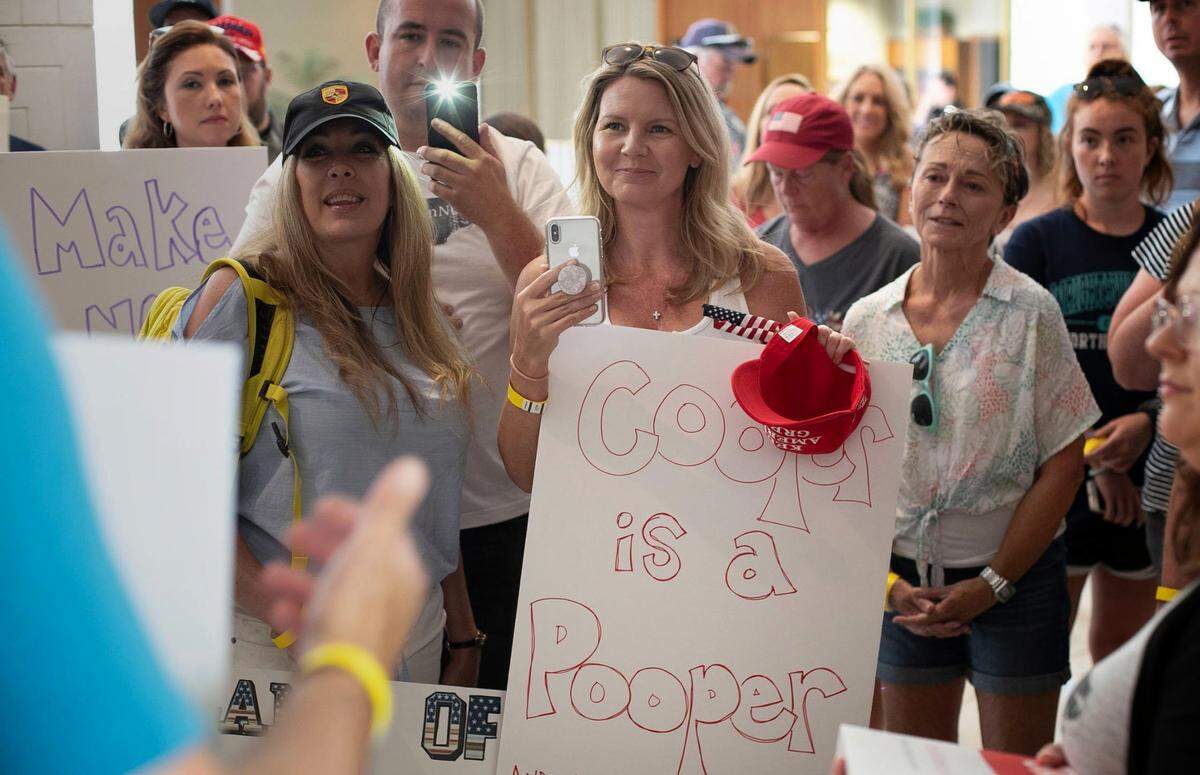
Still, a day after Cooper announced the curfew — the same day North Carolina reported a record 6,495 new cases — the state Republican Party tweeted out a meme depicting Cooper as “King Roy.” Another social media post showed Cooper as the Grinch, the small-hearted meanie attempting to steal Christmas.
But Cooper said he isn’t implementing capacity rules and seeking more enforcement to “get people in trouble.” For weeks, he has delivered increasingly dire reports on the effects of the pandemic, which has infected at least 416,000 people and sent thousands to the hospital. Friday, the state reported 7,540 additional cases, shattering the state’s previous record from Wednesday of 6,495 new cases.
“This is truly a matter of life and death,” he said Tuesday. “We’re trying to provide these important guidelines to tell people what they need to do in order to slow the spread of this virus, it’s what we’ve got to do.”
While Cooper may point to science and data, not everyone agrees. Nine months in, doubts remain about the virus’s potency. About its spread. About the benefits of wearing masks or going home early. About the health rewards vs. the economic and mental health risks.
There are also mixed messages and incorrect information being disseminated by the country’s president. Trump, who contracted the virus a month before the election, often offers advice at odds with his own public health experts and creates lingering distrust among supporters about mitigation effects, like masks and shutdowns.
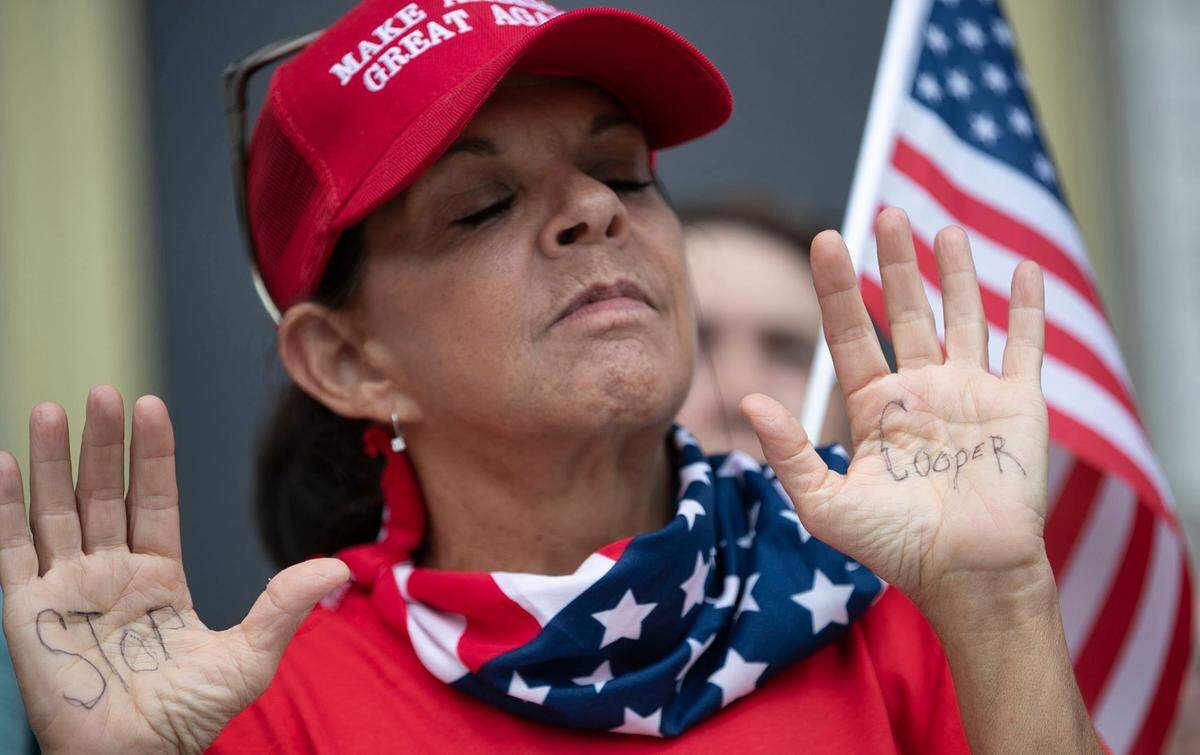
The rhetoric hurts public health efforts because it makes people feel the virus isn’t serious, when it really is, Cooper told CNN on Dec. 3.
“When you have a leader in the White House that’s encouraging people not to obey the rules, that causes significant problems for us,” Cooper told CNN. “When you have leaders that people follow that are telling them to do the opposite, that puts all of us in danger.”
During the presidential campaign, for example, Trump held dozens of crowded outdoor rallies, including several in North Carolina, where many were seen not wearing masks. He frequently criticized Cooper at those rallies for not reopening the state.
Lt. Gov. Dan Forest, who Cooper defeated in the gubernatorial race this fall, also held mask-less rallies and said he’d rescind the mask order if elected. Other state Republican leaders have been photographed at political gatherings without masks.
It “matters where the message is coming from and the consistency of the message,” said Lavanya Vasudevan, an assistant professor of family medicine and community health at Duke’s School of Medicine. She spoke Thursday during a virtual panel discussion on the challenges of convincing skeptics to get a COVID-19 vaccine.
“So if what the states are saying is consistently contradicted by other levels of government, I think that poses a challenge,” she said.
Striking a balance
Even with the election behind him and cases spiking, Cooper appears to be balancing economic concerns in the divided state while trying to protect people from a virus that can affect someone from any political persuasion.
Forty-eight of the state’s 100 counties now have critical community spread, according to the most recent report from the N.C. Department of Health and Human Services.
But Cooper hasn’t implemented a near-complete lockdown, such as California has done for certain regions. He hasn’t suggested a “two-week pause” post-Thanksgiving like Rhode Island. He hasn’t closed state buildings.
“He’s trying to walk it, I’m telling you,” said Yvonne Lewis Holley, a state representative and Democrat who lost her bid for lieutenant governor in November.
“Nobody wants any businesses to be shut down,” she said. “Nobody wants that. At the same time, you can rebuild a business, you can’t rebuild a life. I’m torn as well.”
Tuesday, Cooper cited two states with Republican governors — Ohio and Massachusetts — that have seen success with curfews. Both states instituted the same 10 p.m. to 5 a.m. curfew in November, but cases are continuing to rise in both states.
While his measures are too much for some, they’re not strong enough for others, who want stricter enforcement of the mask mandate and other measures to stamp out the virus.
“Politics is one thing, but mostly it’s just a cultural factor, too,” said Tim Wigginton, spokesman for the NCGOP, which has been critical of the governor’s handling of the crisis.
“Some people are going to do what they want to do,” Wigginton said.
Others are simply tired of a virus that has altered nearly every part of life, especially as it interrupts holiday traditions. A COVID fatigue, of sorts, has set in after months of working from home for many or missing milestones and in-person events.
Senate leader Phil Berger, a Republican in many ways as powerful as Cooper, said the public has been bombarded with numbers since March and “they’re almost numb to the data.”
“Large groups of people fit in two categories,” Berger told The News & Observer in an interview Thursday.
“One group: they’re scared to death and they don’t want to be close to anybody,” Berger said. “And another group: they’re not sure how really dangerous it is. And yet I think if you look at the numbers, there’s no question we’re seeing more people catch the virus, we’re seeing more people in the hospital with complications from the virus, and that’s a concern.
“I think the governor is trying to do something to keep people safe,” he said.
Berger said the new curfew and telling healthy twenty-somethings to stay home isn’t the answer to controlling the spread of COVID-19, saying there should be more focus on people at high risk for complications from the virus.
“There’s no question that the governor has had a difficult set of circumstances,” Berger said. “I believe he’s tried to do the best that he can. I have some differences in the way he’s come down on things.”
Republican criticism
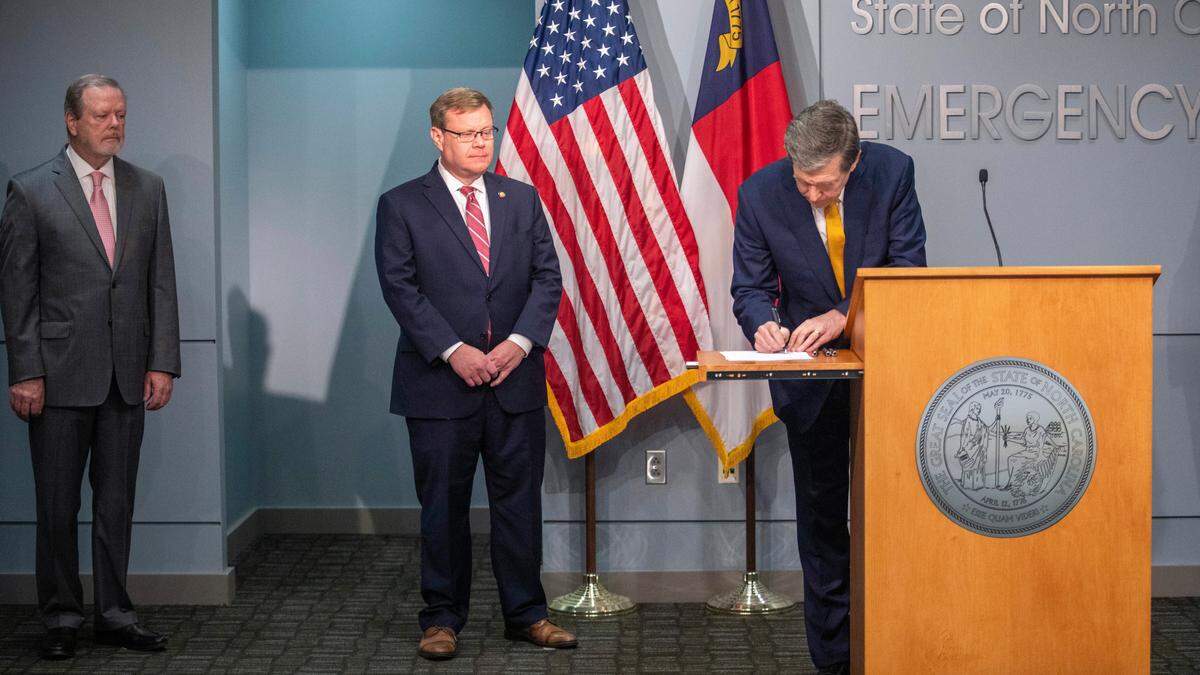
Berger, however, and other Republicans have disagreed with Cooper on major decisions. That includes Cooper not allowing all public schools to return to full-time in-person instruction and placing restrictions on businesses. They say the orders infringe on personal freedoms and have contributed to destroying small businesses and the economy.
Berger said it doesn’t help when leaders in other states have shown hypocrisy by issuing orders and then flouting them themselves.
Over the summer, the Republican-led General Assembly sent bill after bill trying to reopen businesses that Cooper’s orders closed. Cooper vetoed them all.
Forest sued Cooper over his authority to issue all the orders. The lawsuit failed, and Forest dropped it.
Wigginton said Republicans have legitimate concerns over Cooper’s transparency in making COVID-19 decisions, over infringing on other constitutional rights, such as religious services, and about the precedent being set by his use of executive orders and the governor’s powers.
That’s illustrated by the “King Roy” meme, which raises the question of government overreach, Wigginton said.
He noted the executive orders later included a religious exemption. That came after Cooper’s administration lost a summer lawsuit over part of an order that restricted the number of people in places of worship.
Even if one agrees COVID-19 is real and serious, Wigginton said, there can still be concerns about the precedent of a long state of emergency and the governor’s powers.
Asking, “How much do you think a government mandate is going to work?” is a deeper philosophical question beyond politics, Wigginton said.
Berger said Cooper should use the process in place to bring decisions to the rest of the Council of State for agreement on a statewide plan of action. State law requires agreement from the rest of the council of statewide elected officials for some orders, but not all.
As for whether people could expect to see Berger and Cooper sharing the stage at COVID-19 news conferences, the Senate leader said: “He and I have talked about trying to find ways to work together on certain things. I don’t want to stand next to him and have it misconstrued as to whether or not I fully support what he’s doing.”
State Sen. Jay Chaudhuri, the Democratic whip from Wake County, said Cooper’s latest decision to implement a curfew is consistent with what other states are doing.
“I think Gov. Cooper continues to be guided by Dr. Cohen, and a public health team that’s making decisions based on science,” he said, referring to Dr. Mandy Cohen, secretary of NC DHHS, who stands alongside Cooper when major decisions have been made.
“At the same time we’ve got to acknowledge we do have COVID fatigue, but we’re also entering into a deep winter where the coronavirus numbers are going up,” Chaudhuri said.
State Sen. Jim Perry, a Lenoir County Republican, said that COVID fatigue results in some people no longer paying attention to the orders. He said a different approach to get people to listen, especially in conservative areas, is for local leaders to present information about the direct impact on hospitals in their areas as opposed to overall case count numbers.
“I think people would be more willing to trust the message coming from locals versus what they view as big government,” Perry said.
Distrust and persuasion
Week after week since March 3 — when North Carolina’s first case was announced — Cooper and Cohen have addressed the public and taken questions from the media about the pandemic and the restrictions. They’ve repeated the 3 “Ws” of washing your hands, waiting six feet apart and wearing a mask as simple, inexpensive ways to prevent COVID-19.
The online Elon Poll done in partnership with The News & Observer, Herald-Sun and Charlotte Observer found 52% of respondents see Cooper as either “very trustworthy” or “somewhat trustworthy” on the virus while 36% say he’s either “only a little trustworthy” or “not at all trustworthy” on the subject.
Trump, by contrast, was seen as somewhat or very trustworthy by 38% of people and as a little or not trustworthy by 58%.
State officials have cracked down on several businesses for non-compliance, but have largely left enforcement to municipalities, local law enforcement and private businesses.
They have turned to messages of personal responsibility and kindness to others, repeating that working together now, as tough as it is, will bring a return to normalcy sooner.
Dan Ariely, a professor of psychology and behavioral economics at Duke, said personal interactions are the best way to encourage behavioral changes.
“We need people to say to each other, ‘Thank you for wearing a mask.’ And we need people to say to each other, ‘I’m sorry I don’t feel comfortable. Would you mind putting a mask on?’” Ariely said during a virtual panel discussion Thursday. “It has to be friendly enforcement of everything we do.”
Convincing people to wear a mask is one challenge. Getting a vaccine will present another. Distrust in American institutions, including government and the media, remains high, and nearly every aspect of the pandemic has been put through the partisan lens that dominates so much of the public discourse.
“Maybe we can stop talking red and blue,” Holley said. “That’s been a big part of the problem. They feel like if I’m red, I can’t be for it and if I’m blue, I’ve got to be for it.”
The Elon Poll released this week found 60% of North Carolinians either will not take or are not sure about taking a coronavirus vaccine when it becomes available.
“If 40 years ago we looked to political leaders as our primary leaders in American society, I think that that list is much more variable today,” said Gary Bennett, the director of Duke University’s Global Digital Health Science Center.
“I think politicians have an important role to play, but I think our corporate leaders have shown, particularly with some of the social unrest in the past nine months that when they stand up, they also have an important, important role to play. Civic leaders, religious leaders.”
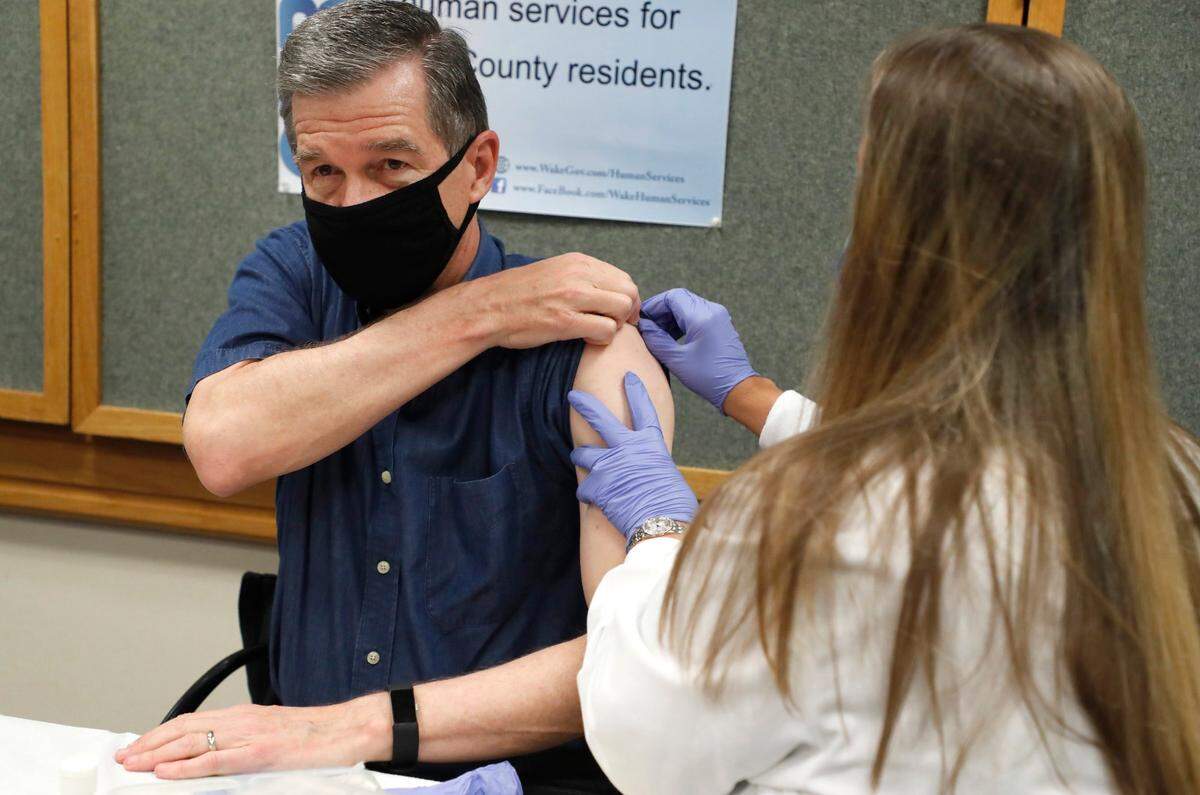
Cooper has said he’ll get the vaccine when it is his turn. Berger said he will also get the vaccine, just as he always gets a flu shot.
Looking ahead
Nine months in, the pandemic is worse than ever in the United States. More people have the virus. More people are hospitalized. More people are dying, more than 3,000 in a single day this week.
Unemployment benefits have expired for many. Millions remain out of work, putting pressure on individuals and families to choose between being exposed to others and providing for their family. Shutdowns earlier in the year helped flatten the curve and avoid some of the case totals in other states, but now North Carolina is experiencing its worse surge.
“It’s kind of amazing to say we did not have the willpower to wear masks, keep social distancing and wash our hands for a month,” Ariely said. “Like if we did it in a consistent way, things would have been very, very different. Thankfully a vaccination is coming, but it’s also a terrible admitting of our own failures as human beings that we were not able to defeat it.”
The trends in North Carolina, as they are in the rest of the country, are headed in the wrong direction, leaving Cooper to threaten to turn the “dimmer switch” lower and lower. He has used that metaphor throughout the pandemic to show that reopening a state has to happen in phases, not just with a flip of a switch.
“Let me be clear: We will do more if our trends do not improve,” Cooper said Tuesday, mentioning indoor dining, entertainment and retail facilities but saying small businesses need more federal help.
“None of us want to do that. .... However our top priority is and must be saving lives and keeping our health care system from being overwhelmed.”
This story was originally published December 11, 2020 at 3:17 PM with the headline "Facing ‘COVID fatigue’ and polarization, NC governor balances restrictions, restraint."

.jpg)