
Gaston County wants to pull ads from newspaper after backing off lawsuit over story
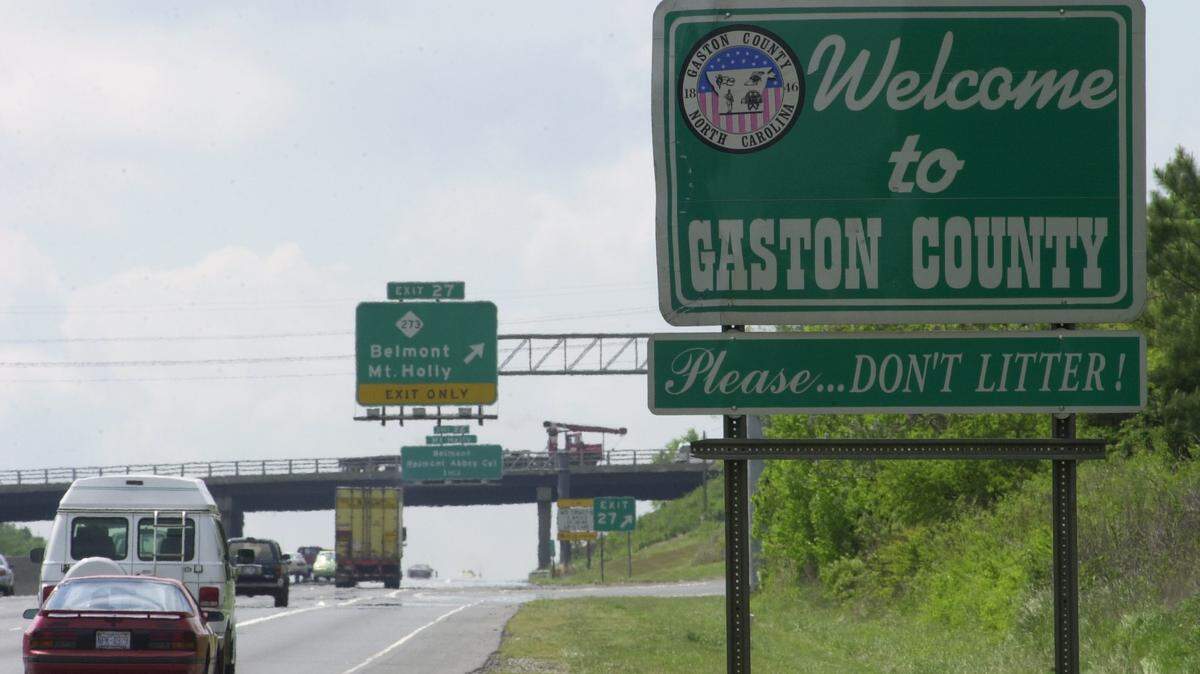
Gaston County said Friday that it plans to pull its legal notices and advertisements from the Gaston Gazette in retaliation for the newspaper publishing an article on alleged closed-door settlements voted on by the county. The newspaper had previously served as the county’s paper of record.
The move – which will likely face a legal challenge – is the culmination of a monthlong feud between the Republican-led county government and the Gazette. The end of revenue from legal notices could be devastating for a paper that has already seen its staff shrink dramatically in recent decades. The county says the notices cost between $70,000 and $100,000 each year.
The article in question, published on Nov. 12, is only 600 words. The story detailed the settlement of roughly $400,000 in county workers’ compensation claims behind closed doors.
“Commissioners settled these claims without a record of a vote being taken while meeting in closed session,” wrote reporter Adam Orr, who did not respond to a request for comment.
The county disputed the article, saying that all claims were voted on in an open session and that it would never settle a legal matter behind closed doors or in a closed session. Then-county chair Tracy Philbeck, a Republican, called it “another instance of where the fake news media seeks to make news rather than to report the facts.”
When the piece was initially published, Gaston County demanded an apology and a retraction. The paper did not budge. Then, on Nov. 19, the county sued. The Gazette stood by its reporting, and on Thursday the county decided to direct the county attorney to drop the suit and, instead, explore pulling its legal notices from the paper, which was first published in 1880. The county made the decision to drop the legal dispute on closed sessions itself in a closed session.
Despite dropping the suit, a press release from county spokesman Adam Gaub said that the county’s commissioners stand by their position that the article is “libelous, reckless, and irresponsible.” Gaston County said it will look for another paper of record instead.
“Under our constitutional system there is an absolute privilege under the First Amendment to criticize a governmental body or actor, which is prohibited from commencing a defamation action based on such criticism,” said Mike Grygiel, an attorney for Gannett, which owns the Gazette.
It is unconstitutional, too, to retaliate against a newspaper by threatening to withhold advertising revenue, Grygiel said. If Gaston County follows through on the move, Grygiel said Gannett will “inform the county board of commissioners what our legal position will be.”
Gaub directed all comments to county attorney Jonathan Sink. Sink did not reply to requests for comment as of Friday evening.
Financial impacts
Legal notices, a relic of a time where newspapers were one of a few forms of mass media, are often an important revenue stream for small newspapers. Cities, courts and other institutions are often required to find a paper to publish notices of events like public hearings.
In an era where many sources of revenue for newspapers have dried up, Gaston County’s move has the potential to be devastating. Legal advertising is often the difference between being profitable and unprofitable, particularly at smaller newspapers, according to Penny Abernathy, a UNC Chapel Hill journalism professor and former media executive.
The Gazette’s owner, Gannett, is the largest newspaper chain in the U.S. with over 250 daily newspapers. As newspaper advertising revenues have vanished over the past two decades, Gannett has laid off thousands of journalists, including some earlier this year.
The COVID-19 pandemic has furthered worsened the financial health of the newspaper industry. The Charlotte Observer’s owner, McClatchy, filed for bankruptcy earlier this year.
Despite the ramifications for the survival of local news, it’s not the first time that the notices have been used as a political tool in North Carolina. In 2017, the state General Assembly passed a measure that forced Guilford County governments to publish notices on their own websites rather than on newspapers’ print and online pages.
The measure, which passed the state House by one vote, was criticized by opponents as retribution for the political coverage by Greensboro’s News & Record.
While Guilford’s measure remains in effect, Gaston County’s move will likely face a legal challenge.
“Pulling legal advertising in retaliation for news coverage is a flagrant violation of the newspaper’s First Amendment rights,” said John Bussian, counsel for the North Carolina Press Association.
Bussian pointed to a case from the late 1980s, where a Broward County sheriff in Florida was ordered to pay $22,700 for illegally retaliating against a newspaper. The newspaper, the Broward Review, published an article about alleged corruption at the Sheriff’s Office, after which the sheriff directed his office to stop putting legal advertisements in the paper, according to the South Florida Sun-Sentinel.
The Gaston County Board of Commissioners is scheduled to meet again on Dec. 29, but the Gazette dispute does not appear on its agenda.
This story was originally published December 21, 2020 at 6:30 AM.