
As NC Gov. Cooper starts second term, a call for the state to ‘roar back’ from COVID-19
The first week of 2021 included a failed insurrection at the U.S. Capitol incited by President Donald Trump and aimed at President-elect Joe Biden’s election win. Four hours south of Washington, in the North Carolina state capital, the governor was sworn in for a second term with little fanfare.
North Carolina Gov. Roy Cooper was sworn in Saturday in front of the Executive Mansion in downtown Raleigh.
The inauguration of the governor and the rest of the Council of State was held outside on a sunny morning amid the coronavirus restrictions that meant limited attendance to family and staff, leaving the public to watch remotely. Most of those sworn in by North Carolina Chief Justice Paul Newby wore masks. Republican Lt. Gov. Mark Robinson made history as he was sworn in as North Carolina’s first Black lieutenant governor. Robinson did not wear a mask. Auditor Beth Wood wore a face shield with a sparkly “B” on it.
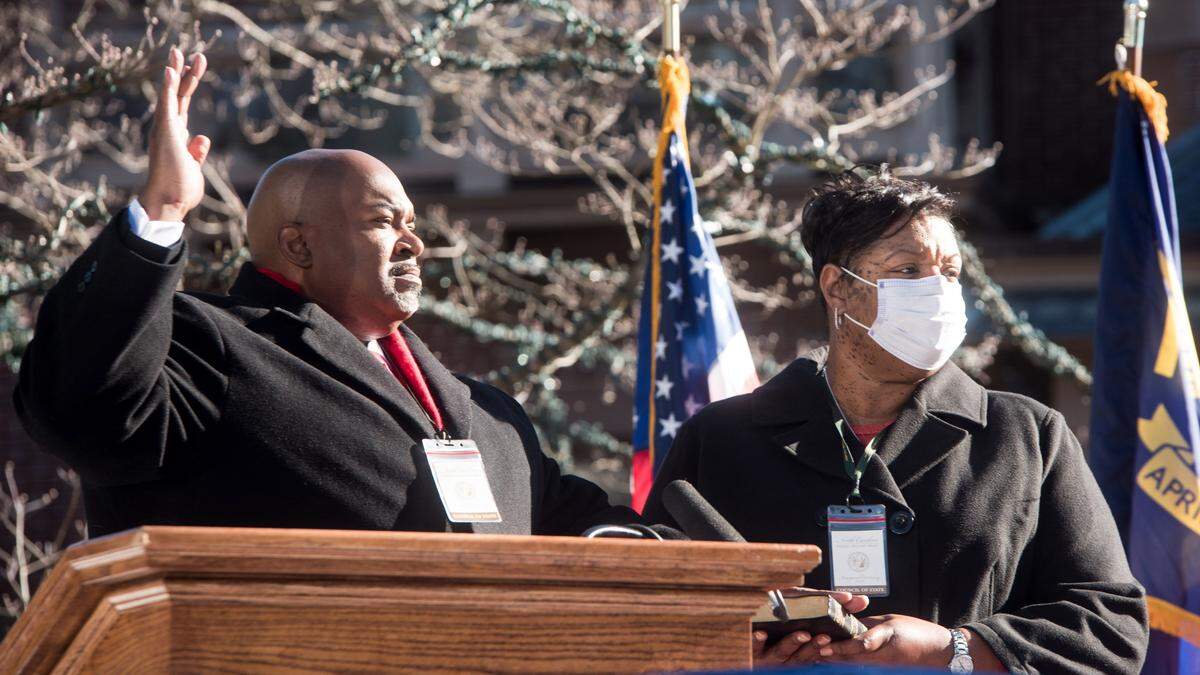
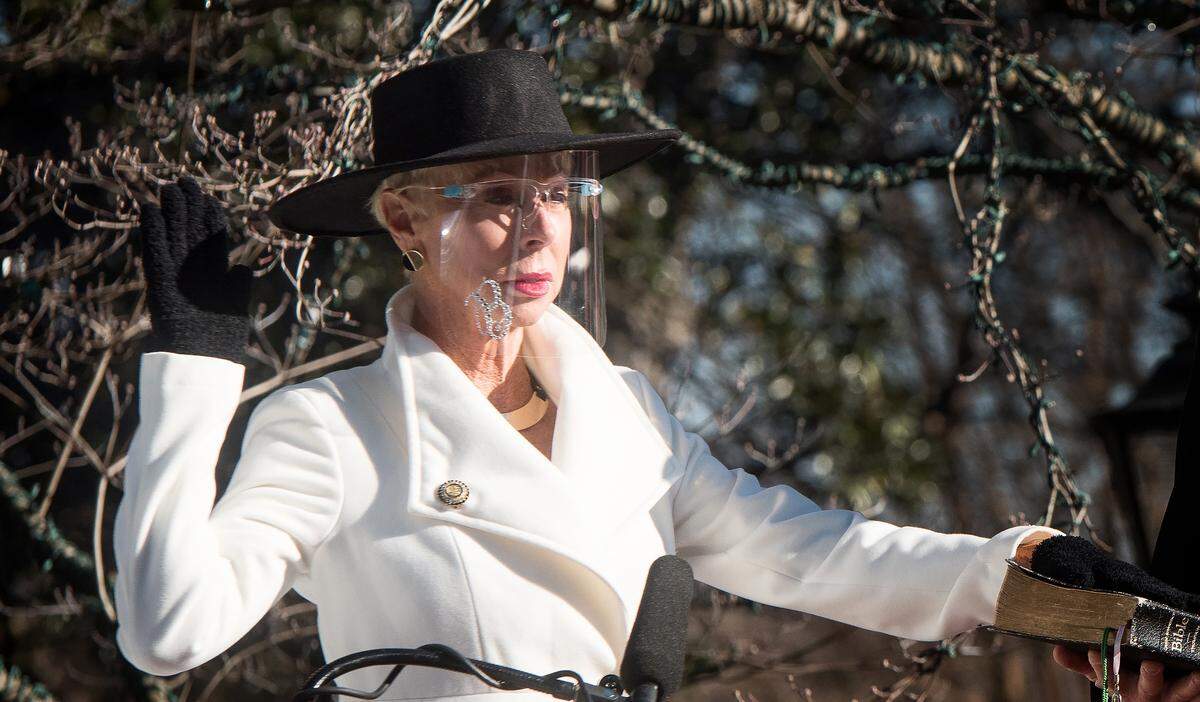
Most of the ceremony was pre-recorded, including the national anthem sung by jazz singer Nnenna Freelon and musical performances including the bluegrass band Steep Canyon Rangers. Agriculture Commissioner Steve Troxler was not sworn in during the ceremony — instead the event showed the recording of his swearing in a few days prior by Newby at the N.C. State Fairgrounds in Raleigh. New Labor Commissioner Josh Dobson was also sworn in before Saturday, but participated in the ceremony at the Executive Mansion.
Cooper, a Democrat, defeated Republican Lt. Gov. Dan Forest in the November election. He’s the first governor to serve a second term since former Democratic Gov. Mike Easley, who won in 2000 and 2004. Democratic Gov. Bev Perdue did not seek reelection, and Republican Gov. Pat McCrory was narrowly defeated by Cooper four years ago.
Cooper’s first inauguration, four years ago, was different because of snow. This time the coronavirus pandemic derailed a public ceremony. His inaugural ball has been postponed to an indefinite date. Instead, the inauguration was watched by most people from home on television or a livestream.
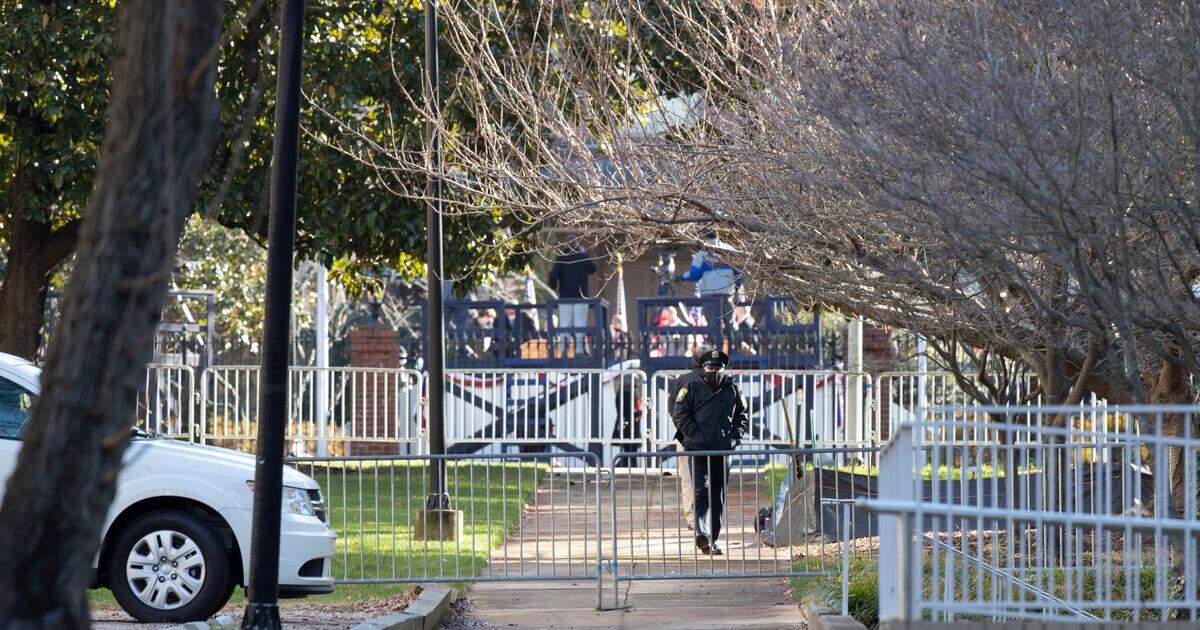
The last year of Cooper’s first term was dominated by COVID-19 response, and he starts his second term with the same pandemic. Cases, hospitalizations and deaths in North Carolina from COVID-19 repeatedly break daily records, but vaccinations are underway. The state remains under a modified stay-at-home order with a 10 p.m. to 5 a.m. curfew and restrictions on gathering size, restaurant and retail capacity and bars.
Cooper’s inaugural address Saturday focused on the future of North Carolina and its resilience, and lessons learned from the past year. He compared it to the state’s renewal after 14,000 deaths during the 1920 flu pandemic, saying how the state “roared back” with new roads and manufacturing jobs.
Cooper said he will focus on the state emerging from the pandemic. He didn’t mention Trump’s invalid challenge of election results, but said they need to face the “challenge of overcoming disinformation and lies” and that people can disagree while cherishing their democracy.
“The lessons we’ve all learned must usher in a new era,” Cooper said. He highlighted affordable health care, education and justice for people of color.
“Let’s cast aside notions of red counties or blue counties and recognize these are artificial divisions,” Cooper said. He said the trials of COVID-19 show that North Carolinians “are more connected than we ever imagined.”
“North Carolina is ready to roar again, and we will do it together,” he said.
Cooper quoted from the Bible in the book of Ecclesiastes 4: 9-10, which says “Two are better than one, because they have a good return for their labor. If either of them falls down, one can help the other up.”
First term vs. second term
Cooper’s first term — at first — was defined largely by his push for Medicaid expansion and teacher raises, two issues that the Republican-controlled General Assembly pushed back on just as hard. In the 2019 budget battle, those were two sticking points. Unlike in the 2017 legislative session, Republicans did not have a super majority and ability to easily override the Democratic governor’s vetoes.
That doesn’t mean there wasn’t common ground — Cooper signed many bills into law.
The year 2020 in North Carolina changed drastically on the March 3 primary-election day, which was also the same day the state saw its first reported case of COVID-19. Everything about Cooper’s first term was affected. He was out in front of cameras weekly, with thousands of North Carolinians watching his regular COVID-19 press briefings alongside N.C. DHHS Secretary Dr. Mandy Cohen.
After the November election, Republicans in the state legislature maintained their control of both the House and the Senate. Again they have majorities but not supermajorities, setting up another two years of divided power in North Carolina.
In an interview with The News & Observer on the eve of his inauguration, Cooper said the people have spoken and want to continue divided government in North Carolina, “and so we owe it to them to work hard to find common ground.”
Cooper said they are “going to disagree on a lot of things. It’s OK to have those disagreements.” He said redistricting will be one of those things.
As far as Medicaid expansion and health care, Cooper said he is excited about the new Biden administration coming in and he will look for ways to leverage federal funding to expand health care coverage.
“I think we need to come into this session with an open mind,” he said in a phone interview on Friday. Cooper expects there will be a “real attempt” to find common ground on the state budget, health care issues and criminal justice reform.
Cooper told The N&O he wants to work with the House Speaker Tim Moore and Senate leader Phil Berger on economic development and recruitment, including incentives.
Council of State swearings-in
Along with Robinson, Dobson and Wood, other Council of State members — the 10 statewide elected officials — sworn in during the ceremony were Insurance Commissioner Mike Causey, Attorney General Josh Stein, Treasurer Dale Folwell, Superintendent of Public Instruction Catherine Truitt and Secretary of State Elaine Marshall. The Council of State is 6-4 with a Republican majority. Robinson, Dobson, Troxler, Truitt, Causey and Folwell are Republicans, while Cooper, Stein, Marshall and Wood are Democrats. Robinson, Truitt and Dobson are all starting their first terms. Everyone else was reelected.
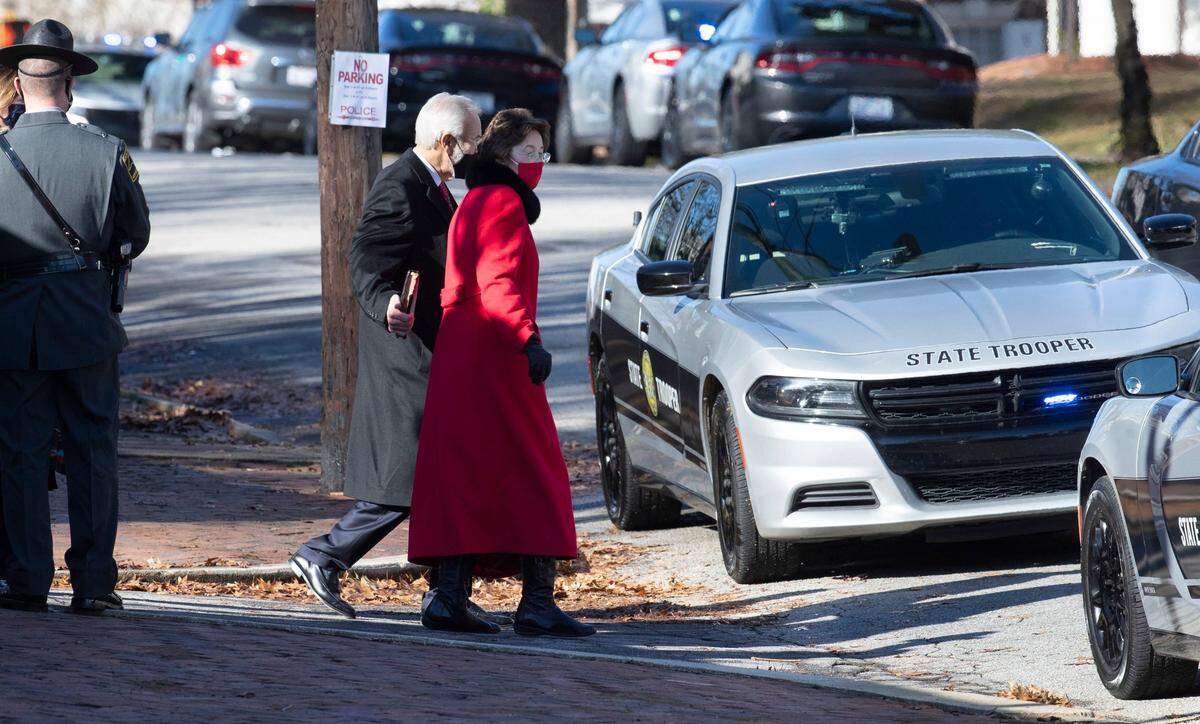
Robinson, a Greensboro gun rights activist, is the second African American to serve on the Council of State in North Carolina. The council is also majority men, with just three women of the 10. The first Council of State meeting since starting their terms is on Tuesday.
In the summer of 2020, Republican lawmakers led the passage of several bills that would have reopened businesses closed at the time because of COVID-19 restrictions in Cooper’s executive orders. Legislation also included changing state law to require agreement from the rest of the Council of State on some decisions the governor made. Cooper vetoed them all. More challenges to his power are expected in the upcoming legislative session, which starts Wednesday.
Cooper told The N&O on Friday that while “all things are on the table,” he has concerns about amending the Emergency Management Act during a pandemic.
“Our focus has been from the beginning to save lives, we do listen to the data and the science in making decisions and continue to do so. We’ve been communicating almost daily with the General Assembly about what’s going on with the pandemic. They know, I believe, how critical this situation is right now,” Cooper said.
“It may be as soon as we turn the corner on this pandemic, and later on in the summer and fall, that may be something we want to look at,” he said.
“Right now though, we are complying with the law, I think the court decisions have shown that. I think we should spend our time right now on prevention and slowing the spread of this virus, getting people vaccinated and really making sure we pay attention to our economic recovery,” Cooper said.
For more North Carolina government and politics news, listen to the Domecast politics podcast from The News & Observer and the NC Insider. You can find it on Megaphone, Apple Podcasts, iHeartRadio, Stitcher or wherever you get your podcasts.
This story was originally published January 9, 2021 at 11:45 AM with the headline "As NC Gov. Cooper starts second term, a call for the state to ‘roar back’ from COVID-19."