
Gov. Cooper and Republicans reach deal on how to reopen all NC schools
Democratic Gov. Roy Cooper and leaders of the Republican-led state legislature have reached an agreement that will allow for daily, in-person education in North Carolina school districts as soon as Cooper signs a bill into law.
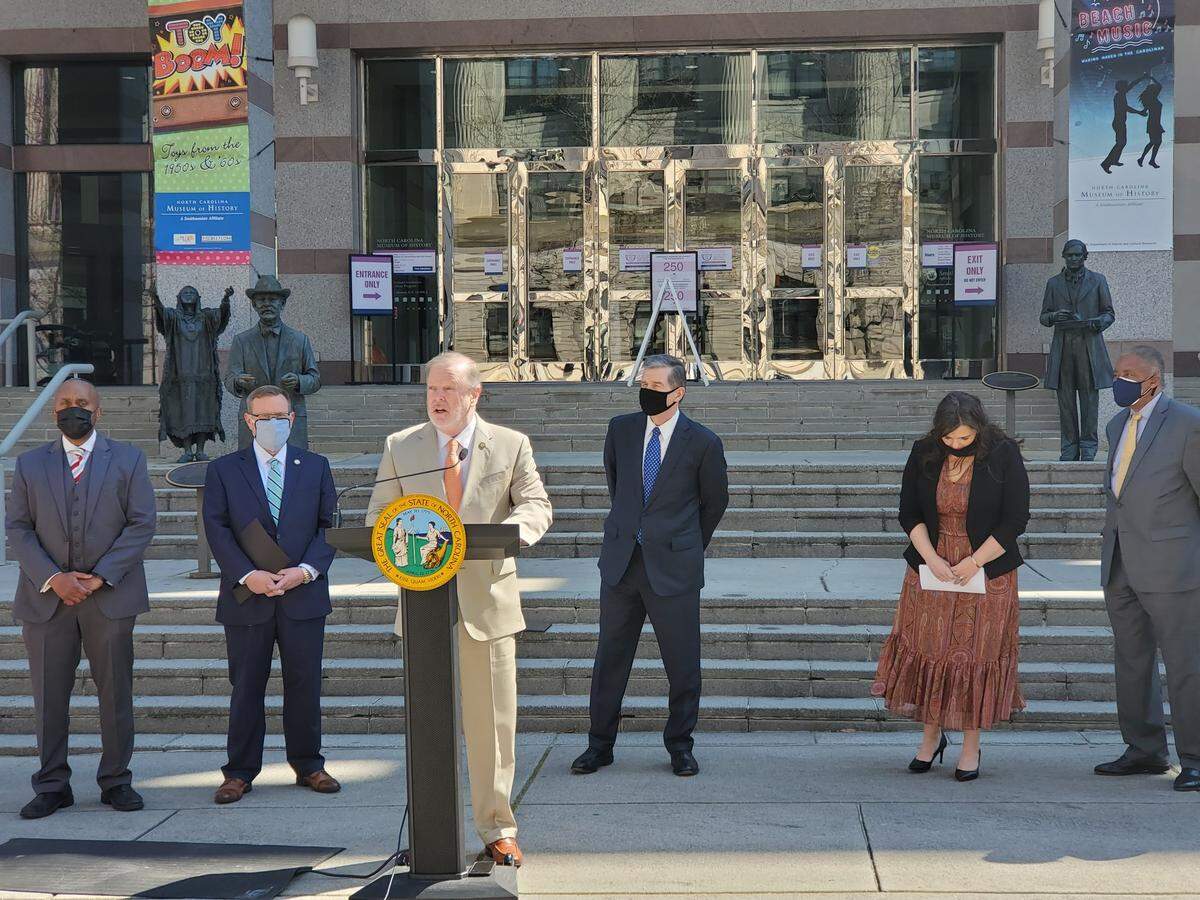
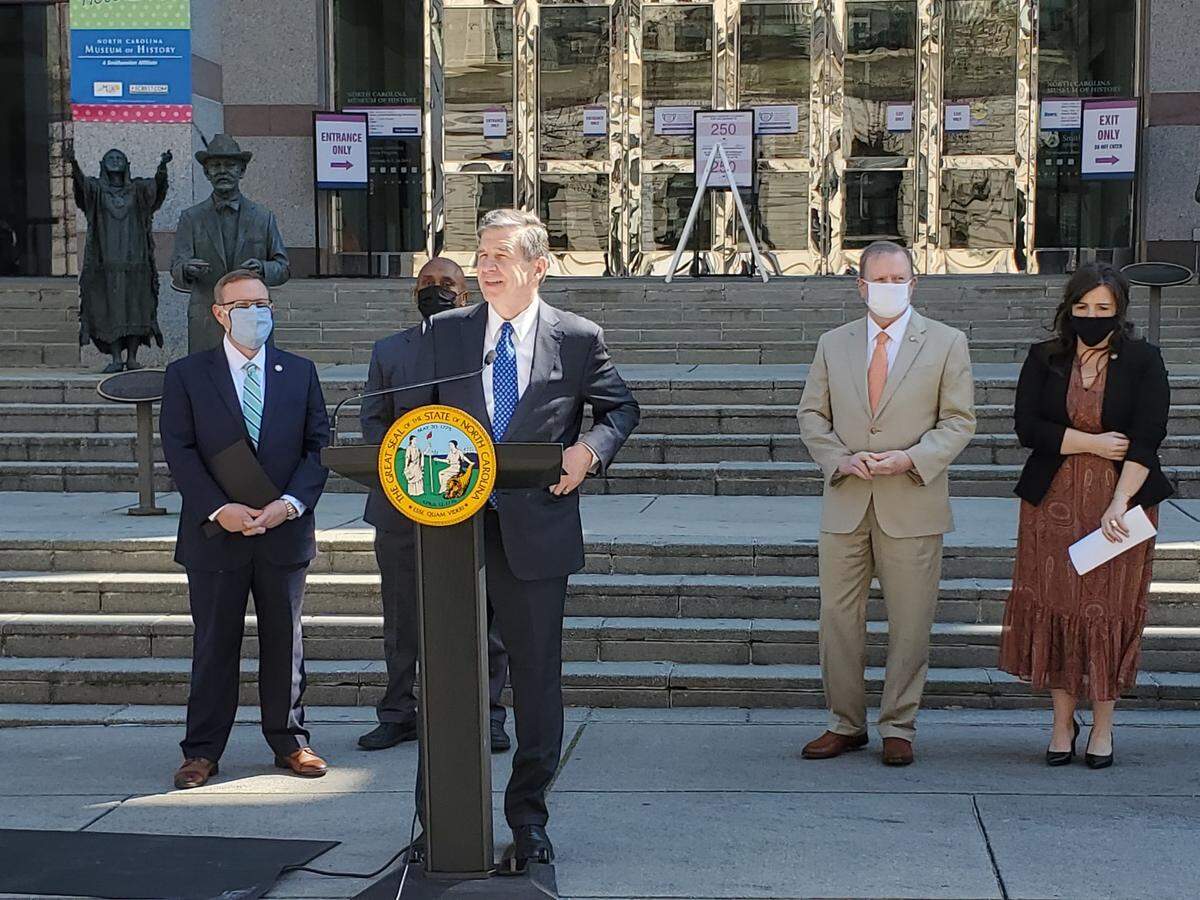
Cooper and state lawmakers made the announcement during an in-person press conference in downtown Raleigh Wednesday morning. The deal will require districts to provide full-time, daily in-person instruction to elementary school students and allow them to do the same for middle-school and high-school students.
The new legislation passed the Senate later on Wednesday, through a “gut and amend” process that fast-tracks the bill. The Senate revised an existing bill on graduation requirements, Senate Bill 220, into the reopening bill. It passed unanimously.
“We have reached what I think is a fair compromise that returns many students to full-time in-person instruction,” Senate leader Phil Berger, an Eden Republican, said at the press conference.
Daily in-person classes required for youngest students
Elementary schools will be required to open under Plan A, which is full-time, in-person learning. Legislative staff said schools that use Plan A can have days with no in-person classes if they are doing deep cleaning or offering asynchronous learning, which is instruction that is not live.
Middle schools and high schools will have the option to open under Plan A or Plan B, which has more social distancing. Previously, middle schools and high schools have been limited to Plan B, which school leaders say has prevented them from offering daily in-person classes to older students.
Sen. Deanna Ballard, a Watauga County Republican and co-chair of the Senate Education Committee, said the bill only applies to school districts and not to charter schools. She has previously said a reopening requirement isn’t needed for charter schools because families can leave to attend a traditional public school.
“This is good news a lot of parents have been waiting to hear around this state for months and that is the children of this state are going back to school,” House Speaker Tim Moore said at the press conference. “This compromise bill represents an opportunity for Democrats and Republicans to all agree on a process moving forward.”
While most K-12 public school districts currently offer at least some form of in-person education, most of the state’s middle-school and high-school students haven’t had daily, in-person instruction since March 2020 due to the pandemic.
Under the bill, Cooper will be able to put restrictions on a school district if needed in response to the coronavirus pandemic.
“We all want the same thing: to open schools to in-person instruction for all students and to do it safely with important emergency protections,” Cooper said. “I believe, and our public health leaders agree, that we can do that safely with precautions.”
Schools under Plan A will be required to partner with the ABC Science Collaborative to share anonymous data.
Special needs students will be able to choose Plan A or B. All students will continue to have a virtual option if their families choose it.
Minimal social distancing allowed
Under the bill, school districts that use Plan A will not have to provide the 6 feet of social distancing required under Plan B. The federal Centers for Disease Control and Prevention recommends 6 feet of distancing where there’s high community spread of COVID-19.
“This agreement between the governor and leaders in the state legislature will needlessly encourage school boards to push students, educators, and staff into school buildings that do not comply with CDC guidance during a pandemic, which has already claimed the lives of 11,000 North Carolinians,” Tamika Walker Kelly, president of the North Carolina Association of Educators, said in a statement.
The ABC Science Collaborative, which was formed by Duke University, says 3 feet of social distancing is safe in schools if proper safety measures are taken such as requiring face masks.
“It is deeply disturbing that the governor and legislative leaders failed to acknowledge the work that educators have been doing to keep students engaged and learning during the worst pandemic in a century while effectively absolving themselves of any further responsibility for the health and safety of our public schools and those who learn and work in them,” Walker Kelly said.
After the bill passed the Senate late Wednesday, it moves to the House. The House is expected to vote early Thursday on the bill, then send it to Cooper. Once signed into law, school districts will have a maximum of 21 days to open, but could also open immediately. Cooper plans to sign the bill this week and said schools could all be open around April 1, right after spring break.
The bill quickly was approved Wednesday by the Senate education and rules committees, where it drew bipartisan praise.
“I think it’s a great bill that is able to provide in-person learning for our children according to public health guidelines,” said Sen. Jay Chaudhuri, a Raleigh Democrat.
There have been months of disagreement between Cooper and Republican lawmakers about how to reopen schools that have been in remote learning. Berger said Tuesday that their new deal would make Senate Bill 37, the schools reopening bill that Cooper vetoed, moot.
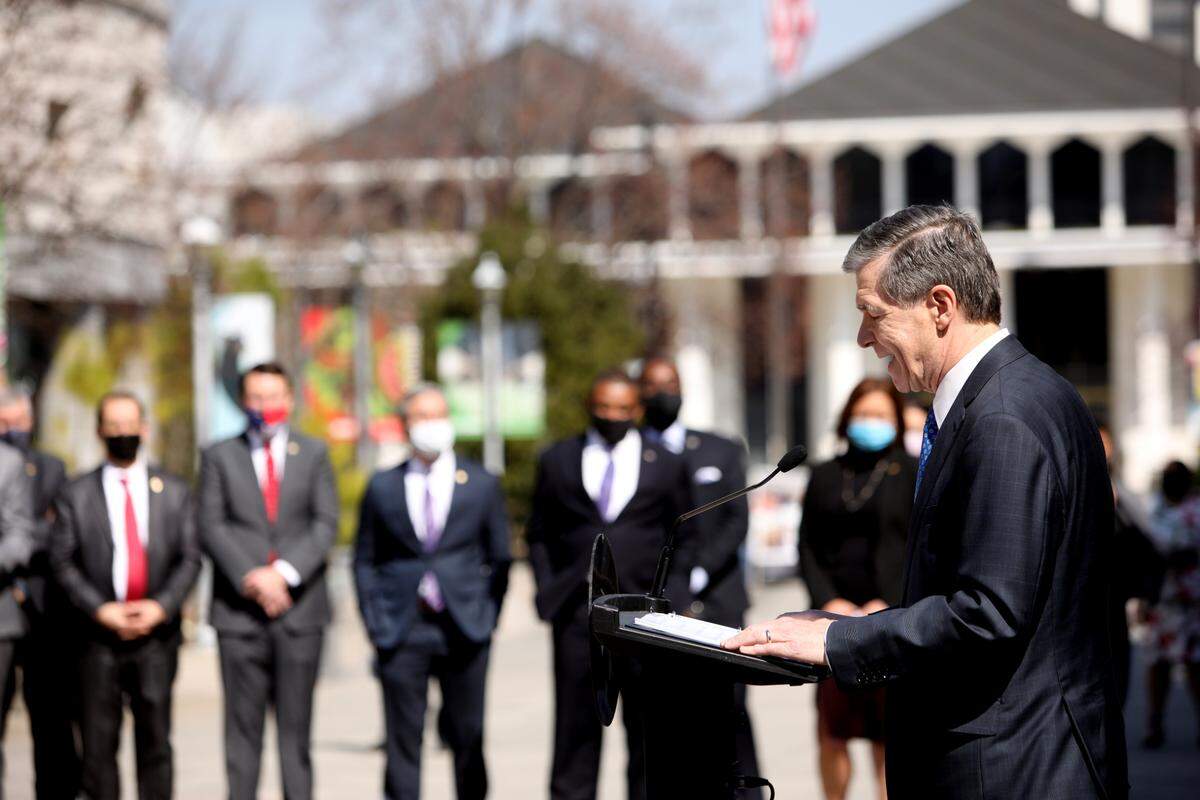
“Coming to agreement after acrimony isn’t always easy, but it’s the right thing to do for North Carolina,” Cooper said.
School districts must act
It has been nearly a year since Cooper first closed schools as the pandemic spread in North Carolina.
Cooper said he and lawmakers agreed they needed strong legislation to reopen schools now.
“We know that by the time this starts, teachers would have had more than five weeks getting vaccinations, all of the safeguards in place, I think the time is right now to try to finish out this year strong,” Cooper said.
He said students will need significant investment and they look forward to the latest federal COVID-19 relief money for schools.
Berger noted that the legislature had just appropriated $1.6 billion in federal funds to local school systems as they reopen. The bill also includes $500,000 for Plan A schools to work with the ABC Science Collaborative.
The legislation will force some districts, such as Chapel Hill-Carrboro and Orange County, to switch from offering limited in-person instruction to full-time in-person classes for elementary students.
School districts will now also have to decide whether they want to switch to Plan A for middle schools and high schools or stick with the hybrid of in-person and online courses on Plan B. Ballard said Plan B means students will have in-person instruction at school, not just via computer screens.
Wake County Superintendent Cathy Moore is scheduled to present a plan Tuesday to provide more in-person instruction on Plan B for middle schools and high school students. Now Plan A can be considered.
“Dealing with the COVID-19 pandemic has been a series of tough decisions for our leaders,” Keith Poston, president of WakeEd Partnership, a group that supports public schools in Wake County, said in a statement. “One of the most difficult of those decisions has been how to handle in-person instruction for pre-K-12 students.
“None of the choices were popular or universally equitable. However, making those decisions requires unity among our state’s leaders, and today we have that.”
On a day when state lawmakers praised their bipartisanship, Republican U.S. Sen. Thom Tillis also lauded the state for getting “students back to school safely and quickly,” and said school reopening should be decided by what scientists say, not unions.
In North Carolina, state employees do not have collective bargaining power. However, the NCAE pushed for prioritizing teacher and school staff vaccinations. Education and child care workers have been able to be vaccinated since Feb. 24.
For more North Carolina government and politics news, listen to the Under the Dome politics podcast from The News & Observer and the NC Insider. You can find it on Pandora, Spotify. Apple Podcasts. Stitcher. iHeartRadio. Amazon Music, Megaphone or wherever you get your podcasts.
This story was originally published March 10, 2021 at 11:10 AM with the headline "Gov. Cooper and Republicans reach deal on how to reopen all NC schools."