Policing dominated a key week for NC lawmakers. What it revealed about GOP priorities
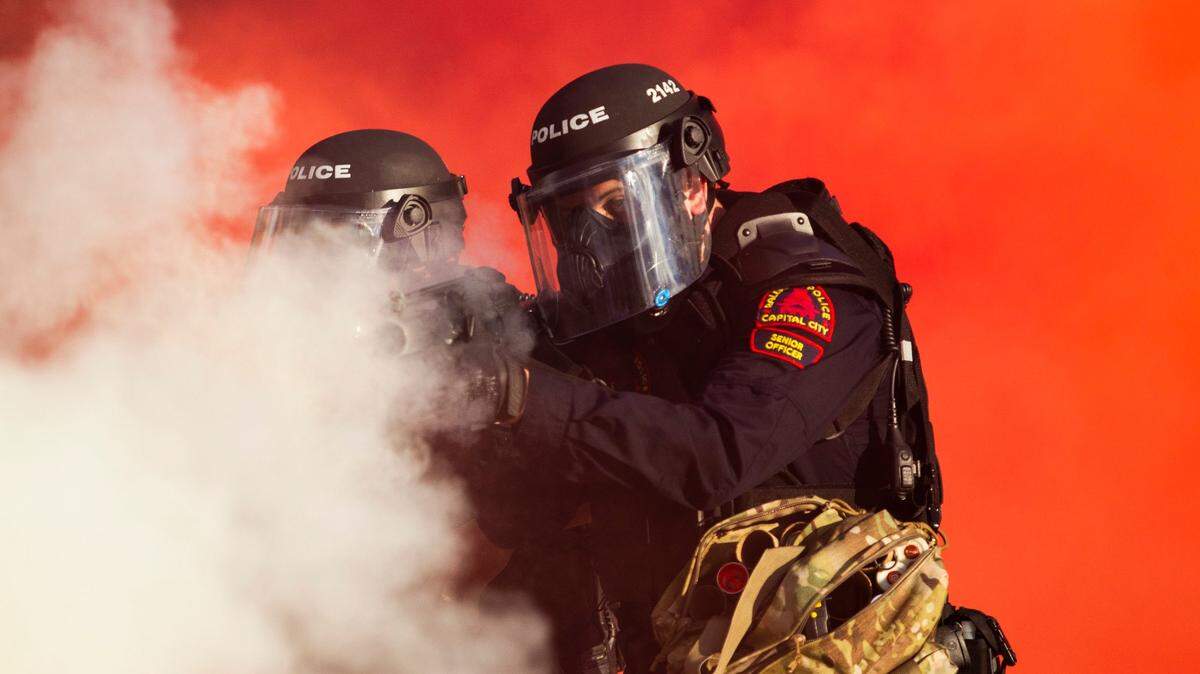
North Carolina state lawmakers wrapped up an unusually intense week, having rushed dozens of bills through the legislative process to ensure the survival of some Republican priorities.
The bills that met a deadline of being approved by at least one legislative chamber by Thursday, called “crossover,” offer a window into Republican legislative leaders’ focus so far this year and, in particular, how the party’s political views on policing have shifted.
In the days leading up to the Thursday cutoff, lawmakers passed a slew of criminal justice bills, including one that would create a new database tracking police use of force, and another that would pressure cops to intervene if they see a fellow officer using excessive force.
Compare that to 2013, when Republicans repealed a law that gave death-row inmates a new way to challenge their sentences on the grounds that race played a role. The Racial Justice Act had allowed appeals based on statistical evidence of racial bias in parts of the state.
One reason for this shift in views could be the recent evolution of the party’s base. Historically Democratic Robeson County, for example, which is both racially diverse and culturally conservative, turned a deeper shade of red last year as a majority of residents cast ballots for former President Donald Trump a second time.
Trump’s margin of victory also increased in many traditionally Democratic precincts across the state last year, helping him win North Carolina even as he lost the election.
“There are still a lot of very hard-line Republicans when it comes to law and order,” said Robeson County Sen. Danny Britt, a criminal defense attorney and a Senate Judiciary Committee chair.
But in Britt’s rural, poorer district, his constituents are more likely to have been affected by the criminal justice system, he said.
The Republican-led state legislature’s prioritization of criminal justice bills also comes as both state and national racial justice movements are underway. Just last month in North Carolina, police shot and killed Andrew Brown Jr. in Elizabeth City, sparking protests and debate about use of force and the state’s body-camera footage law.
Body cam video
Britt is spearheading a major piece of criminal justice legislation this year. Senate Bill 300, which is supported by Democrats, includes provisions that would create databases to track officer discipline and use of force, educate law enforcement on how to maintain their mental health and decriminalize violations of local ordinances.
In light of Brown’s death, the bill was also amended this week to include a provision that would change the state’s 2016 law on body- and-dash-cam footage. If signed by the governor, the bill would allow family members of people killed or injured by police to watch the footage unless law enforcement convinces a judge it shouldn’t be viewed.
Families would be able to watch footage within five days instead of having to wait weeks, as Brown’s family did. The bill wouldn’t change the general public’s limited rights to see such footage, however.
Republicans and Democrats agree that a host of changes need to be made to laws pertaining to body cams, police use of force, bail and nonviolent drug offenses, but conservative lawmakers who sponsor the bills often don’t go as far as some Democrats hope.
Democrats sponsored their own legislation that also proposed changes to the state’s body-cam law. Their efforts, which went further than the provision added to SB 300, didn’t make this week’s deadline.
Still, the Senate passed Britt’s bill unanimously, and it now awaits a hearing in the House.
“There are reasonable policy changes that a lot of the Republican Party thinks need to be made,” Britt said in an interview Thursday. “I’m glad they’ve trusted me enough to kind of let me somewhat lead the charge.”
Rethinking NC sentencing
In the span of just eight years, Republicans have gone from repealing the Racial Justice Act to now invoking George Floyd’s murder at a press conference about their criminal-justice proposals. At the same time, they haven’t restored the death-row law, or stopped defending its repeal in court. And they still aren’t willing to go as far as Democrats would like — or, on some topics like mandatory minimum sentences, not even as far as Trump went as president.
Britt championed legislation in the last session, a watered-down version of a bill signed by Trump in 2018, that gave judges more discretion in sentencing people in the future, rather than being constricted by mandatory minimums. The legislature passed Britt’s bill just weeks after Derek Chauvin knelt on George Floyd’s neck in Minneapolis, killing him.
Both state and national Republicans have used their criminal-justice efforts as a way to lessen Democratic voters’ enthusiasm for politicians who were active as lawmakers during the tough-on-crime 1990s, like President Joe Biden and North Carolina’s Democratic Gov. Roy Cooper.
Britt noted last year that Cooper personally sponsored some of the state’s mandatory minimum laws when he was a top state senator, saying a vote for his legislation was a “vote against many of Roy Cooper’s mandatory minimum policies.”
Fayetteville Rep. John Szoka, the top House Republican on criminal justice issues, is also sponsoring three bills that made the deadline. If signed into law, the legislation would crack down on bad officers and require cops to intervene if they see a fellow officer using excessive force.
Lawmakers said those bills strike a balance of supporting good cops while also cracking down on bad ones, The News & Observer reported, but that similar legislation sponsored by Democrats went too far.
What else made the cut
A few of the many measures that passed either the House or the Senate and are still alive in the other chamber:
School curriculum: The House voted to limit the use of “Critical Race Theory,” barring schools from advocating that people are inherently racist or sexist or that the United States was created to oppress people. That came a week after the House passed a bill requiring many schools to post a list of the instructional materials their teachers use.
Abortion: Two abortion restriction bills, one in the House, and another in the Senate, passed through their chamber ahead of the deadline. Passing anti-abortion legislation is a high priority for Republicans, who could score points with their political base even if the governor would likely veto the bills.
Child marriage: This bill made the deadline by the skin of its teeth, passing the Senate Wednesday. If signed into law, 14- and 15-year-olds would be banned from marrying, and 16- and 17-year-olds could not marry anyone more than four years older than them. Lawmakers faced pressure from multiple groups to water down or strengthen the legislation in recent weeks.
Daylight savings time: In late April, weeks ahead of the deadline, the House passed a bill that would adopt daylight savings time year round.
Guns: The House voted Wednesday to allow lawmakers to carry concealed guns inside the General Assembly, saying they need to be able to protect themselves. The vote mostly fell along party lines.
What missed the deadline
A few of the bills that stalled:
LGBTQ rights: Republicans sponsored at least eight bills targeting transgender-rights issues, including a bill to stop schools from allowing transgender girls to play women’s sports, and a bill to require school officials to out kids who might be transgender to their parents. But GOP leadership killed both those bills, signaling their unwillingness to go far right on some social issues.
Distracted drivers: The Hands Free Act would’ve banned use of handheld phones while driving, but it hasn’t advanced so far this year. The House passed a similar version of the legislation in 2019, but the measure died in the Senate.
Whistleblowers: House Bill 7 would protect city employees from retaliation after they report wrongdoing. The North Carolina Police Benevolent Association supports the legislation, saying it could make officers feel more comfortable turning in bad cops in their ranks. But city leaders and others oppose it, saying bad cops could avoid being fired by claiming to be whistleblowers. Ultimately, the opposition was somewhat successful: the House did not pass the legislation Wednesday, but the language could be tacked onto a related bill.
Guns, again: The House did not pass a different gun rights bill that would have allowed people to get permanent concealed-carry permits, rather than continuously having to reapply.
What’s next
Legislation that can be tied to state finances or can be placed in the budget is still eligible to advance this year and next, even if it hasn’t been passed by one chamber. There are also other pathways to advance legislation that didn’t make the cutoff but that leadership sees as a priority.
“There’s more than one way to skin a cat,” said Senate leader Phil Berger, a Republican from Eden, in reference to the many ways a bill can bypass the crossover deadline.
Here are some bills that haven’t moved ahead, but could still pass this year or next:
Marijuana: One Republican-supported medical marijuana bill in the Senate, as well as several Democrat-backed bills in both chambers that propose decriminalization, legalization of medical marijuana or full legalization, haven’t passed. But all have financial implications because they involve taxes or propose changes to the budget surrounding courts and prisons, so they’re not subject to crossover rules.
Sports gambling: Gambling on professional, college, electronic and amateur sports would be authorized under Senate Bill 688, and because it would raise revenue for education, the bill didn’t have to meet the crossover deadline.
This story was originally published May 14, 2021 at 7:00 AM with the headline "Policing dominated a key week for NC lawmakers. What it revealed about GOP priorities."