
Controversy erupts in Western NC over $60M school construction near slave graves
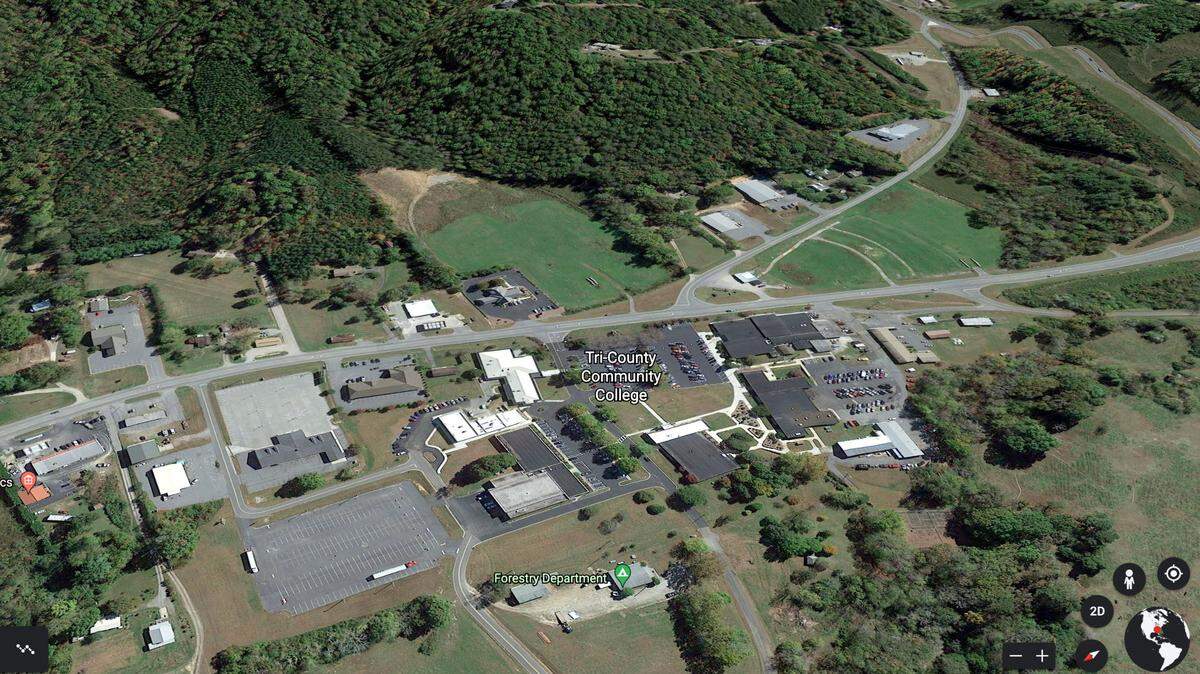
In North Carolina’s western-most county, some worry that a school construction project could disturb a nearby abandoned slave cemetery.
What’s more, previous archaeological investigations of the area also yielded Native American artifacts, according to the N.C. Office of State Archaeology. And a Civil War campground may have been in the area where the project is going up too.
The project is led by the Cherokee County School District, in a mountain community several hours west of Charlotte, close to the border of Tennessee and Georgia.
“We definitely don’t want to disturb the grave site of African Americans, Native Americans or anyone,” said Mike Stiles, a county resident opposing the construction. “Do any other places put (in) a school to destroy our history in America?”
School officials emphasized that they are following state guidelines in the design and construction process. They are confident that the development will not disturb any historic artifacts or graves that may be at the site.
In addition, a state archaeological survey indicated that the abandoned slave graves are away from the school development site, a school attorney said during a school board meeting on March 11.
Last year, as part of the school district’s long-range plan, the school board proposed two projects to be completed in phases, costing a combined $60 million. Both are slated to sit on the 27.4-acre school property off of U.S. Highway 64, along McCombs Road in Murphy.
The Cherokee County Schools of Innovation, the first part of the plan, is under construction and expected to be finished by the fall of 2022, according to the school board. Next to that campus, the board has proposed building a consolidated high school.
NC recommendations for the board
On March 2, the school board learned from a resident that a former slave graveyard could be on the property that is part of the development for the two schools, according to Superintendent Jeana Conley. The construction of the Schools of Innovation had just begun at the time.
The board immediately stopped construction and contacted the North Carolina Department of Transportation as well as the Office of State Archaeology, to verify whether there was a graveyard or historical artifacts on the site, Conley said. State archaeologists, along with preservation experts, visited the site in early March.
The slave graveyard is on the property where both schools are going up, but does not sit on the part of the site where any construction is to occur, school attorney Dean Shatley said during a board meeting the following week, after the school’s initial contact with the OSA.
The same location was excavated in the 1990s prior to NC DOT’s US 64 Bypass construction, according to an OSA email sent to the school board from state archaeologist John Mintz in March.
Recommendations for the board
In his email, Mintz detailed recommendations that the school board should consider before proceeding with construction.
Those recommendations included performing an archaeological survey and follow-up excavations on the site. If the district finds archaeological deposits, it should avoid construction surrounding those deposits. OSA also recommended consulting with specialists and tribes close to the area prior to construction.
Previous investigations identified three archaeological sites on the property, according to the email. But none was listed on the National Register of Historic Places, which contains an official list of historic places “worthy of preservation” across the U.S., according to the National Park Service.
One of the sites was determined to potentially be eligible for listing since it “has yielded, or may be likely to yield, information important in history or prehistory,” Mintz wrote.
He said that the site is believed to be property owned by Robert Dale (or R.D.) McCombs and Anne Sudderth McCombs in the 1860s, who enslaved as many as 19 people.
Previous excavations on the site recovered dwellings associated with enslaved individuals, Mintz wrote, as well as Native American artifacts such as carved stone pipe fragments. The email did not reference a cemetery on the McCombs’ property.
And research in the early 2000s indicated that the Aquohee District Courthouse could have been on the McCombs’ property too, Mintz added. The courthouse was the Cherokee judicial and administrative center during the 1820s and 1830s. However, prior surveys recovered no materials of 19th century Cherokee Indians’ occupation on the property.
OSA representatives did not conduct new excavations or surveys during their site visit in March but based their recommendation on previous survey results.
“There is potential for significant archaeological resources to be present on the property,” Mintz wrote, “particularly in areas that were outside of the area surveyed for the NCDOT US 64 Bypass project.”
As a result, Mintz suggested the school board conduct archaeological surveys on the land that was not previously surveyed by NCDOT. But neither the OSA, nor Mintz in his email, prohibited the school district from continuing with the construction.
The state archaeologist has jurisdiction over proposed undertakings on historical property listed in the national register, according to NC statutes.
The school district does not have the financial capacity to conduct an archaeological survey as recommended by the OSA, Conley said. Architects estimated that it would cost from $1 million to $6 million to complete, she told the Observer.
The Observer had asked Mintz for an interview, but that request was forwarded to the NC Department of Natural and Cultural Resources, which responded to the paper’s questions on behalf of Mintz.
‘It’s on the other side’
Within the seven-member school board, members had been divided over whether to move forward with construction since first identifying the abandoned cemetery. In June, the construction resumed.
During the group’s March 11 meeting, board attorney Dean Shatley said the McCombs plantation site was not directly interfering with the school’s construction.
“What we have learned, thank goodness, is that the abandoned graveyard is on the other side of 64 from our property. So that is a positive thing,” Shatley said. The Observer reviewed a video of the meeting that was posted by local radio station WKRK.
While the OSA had recommended that the board further review the property, Shatley said there was no compelling reason to do so.
The school board also contacted the U.S. Army Corps of Engineers to ensure that all environmental guidelines were being followed, Superintendent Conley said. Construction resumed on June 1, when the Army Corps granted the district clearance to proceed.
While contractors were made aware that construction would need to be paused again for further excavation if they ended up finding artifacts or a burial site, Shatley said during the March 11 meeting that there was a “very small likelihood of that occurring.”
While the abandoned graveyard is not on the construction site, there is the possibility of a Civil War campground nearby, school board member James Ellis said during that meeting. OSA confirmed the existence of the campground to WLOS News 13.
Ellis said construction should not continue until the board gains sufficient understanding of the site with further excavation.
“We (might) spend $25 million on a piece of property that ends up turning into (something that) we can’t complete,” he said. “I can’t imagine the PR — if we get a few weeks, a few months into it — and dig up, what?”
Cherokee County Commissioner Jan Griggs was also concerned that the school board was continuing construction without conducting a ground survey.
“One of my biggest concerns is that we did not take any of the recommendations from the state archaeologist,” she told the Observer.
During a March 15 meeting, county commissioners voted to fund the school consolidation plan at a maximum cost of $40 million; Griggs was one of two no votes. That money has not been allocated to the district yet.
Before that vote, the commissioners had designated $5 million for the Schools of Innovation, which cost $20 million in total.
Tribal concerns
The OSA, in its email, also recommended consulting with local tribes prior to construction.
The United Keetoowah Band of Cherokee Indians, Eastern Band of Cherokee Indians and the Catawba Indian Nation are listed in the email as having preservation interests in the property, among others.
Whitney Warrior, director of the Historic Preservation Office at the United Keetoowah Band, expressed the tribe’s concern over the potential for Native American remains to be in the property.
While the OSA did not find remains of Black slaves on the site, “that doesn’t exclude Native American remains, so we want to check [for] our tribal ancestors that potentially could be ours or any other tribes for that matter,” she said in an interview.
“The importance of protection and conservation is high among Native Americans,” Warrior said. “It’s a part of our history.”
Conley said she reached out to Stephan Yerka, an historic preservation specialist with the Eastern Band of Cherokee Indians who was also present at the OSA visit on March 23, for a consultation in June. Yerka did not respond to Conley’s request, Conley said.
The Eastern Band is the closest tribe to Cherokee County. It did not respond to multiple requests for comment. The Catawba Indian Nation declined to comment.
Community concerns
Some residents continue to raise concerns over the school system’s decision to move forward with the project.
“There’s only one family here that had slaves, (which) means that there’s only one slave graveyard in this county,” Murphy resident Margaret Ackiss said in an interview. “It means that there is one set of people that were brought here involuntarily, who will have no way to memorialize their families.
“What a slap in the face,” she said.
Like Ackiss, fellow resident Stiles believes that the community needs a clear understanding of what is in the area before the school district proceeds.
“If I were them, I would be doing everything possible to make sure that I didn’t get $50 million in this project and dig up a Native American grave, and now you’d have to shut (down) the whole thing,” he said.
Stiles told the Observer that many other parts of Cherokee County would be better suited for the consolidated school, since the area on McCombs Road was not the center of the county. In addition, residents worry about the extra tax burden.
Defending the project
In an email to the Observer, Conley raised issues with residents’ concerns.
“It may be a coincidence, but the controversy of the property surrounding the Native American history only became relevant once consolidation (of the three high schools) became a reality,” Conley wrote.
“The research indicated that having all CCS high school students on one campus — divided between 3 schools — would be the most cost efficient model,” Conley wrote. “This is when the history of the property suddenly became an issue.”
She stressed that the history of the property — that a plantation along McCombs Road also had potential Native American artifacts — was public knowledge because there had been multiple archaeological excavations on the site.
“In decades, no group or entity has attempted to preserve or further research the property — the DOT even put a highway through the property,” she wrote.
The board worked with architects and tribal leaders before the OSA recommendations, prior to the construction, to incorporate cultural components in its work, Conley added.
Stiles acknowledged that the history of the Native American community on the site has been known in the region, and argued that was why the school needs careful investigation before construction. Residents are drafting a petition for the school board to reconsider its consolidation plan.
“They continue to move forward (while) being defensive instead of working together,” Ackiss said. “I am not opposed to school consolidation. I’m opposed to the way they’re doing this, and the fact that they’re not taking into consideration the communities and how they’re affected.”