
Charlotte’s CFO resigned with little explanation. Her deputy takes over at a tough time.
Charlotte has a new chief financial officer, just days into the new fiscal year as the city looks to emerge from the coronavirus pandemic and secure funding for a controversial regional transportation plan.
New CFO Teresa Smith, a longtime city employee and a certified public accountant, is responsible for managing Charlotte’s $2.7 billion budget.
Smith replaced Kelly Flannery, who had held Charlotte’s CFO post for just over two years. She had overseen what was then a $2.6 billion budget.
Charlotte City Council members were told about Flannery’s resignation earlier this month via email during their Council summer break. Flannery’s last day was July 9, according to the email city officials shared with the Observer.
Smith most recently was Charlotte’s deputy chief financial officer, and that type of internal promotion is “not uncommon,” city spokesman Jason Schneider said.
“Deputies are prepared to be highly considered for promotion if an opportunity becomes available,” Schneider said in a statement, adding that Flannery had endorsed Smith’s promotion.
Flannery’s salary was $205,920, according to city data published in May. Smith made $172,813 in her prior job.
In a statement to the Observer, Flannery said she decided to “explore new challenges” after spending her entire career in the public finance sector. Flannery said she was “proud of all my team accomplished,” including modernizing the city’s debt management policy and creating a hospitality funding policy.
“As the first woman CFO of the City, I am thrilled that Teresa has been selected to continue to carry the baton,” Flannery said via text message Monday. She also thanked City Manager Marcus Jones for his support and guidance.
Tenure marked by COVID, MLS
Jones said Flannery told him about her decision to resign in May, according to an email sent to assistant city managers and later shared with the Observer. But Jones had convinced Flannery to stay on through the rest of the fiscal year, which ended June 30.
The finance department maintains the city’s accounting records and manages Charlotte’s debt portfolio and long-term investments, among other responsibilities, according to the fiscal year 2022 budget book.
Charlotte’s budget grew by almost 6% over the last fiscal year — while keeping the property tax rate stable — and encompasses budget priorities such as affordable housing, police reform and economic development initiatives.
“Over the last two years Kelly has been a valuable member of the City’s leadership team, particularly as we developed the City’s response to the COVID-19 pandemic...” Jones wrote.
Kelly’s tenure prominently included Charlotte landing a Major League Soccer expansion team, lured partially through the promise of $110 million in city tourism tax dollars. She briefed the City Council and reporters on available hospitality tax revenue during MLS negotiations.
City Council member Ed Driggs told the Observer he was not aware of Flannery’s next career move, although he had expected the announcement about her resignation.
”From my conversations with her, she had decided to leave some time ago,” Driggs said.
City Council dynamics
Flannery had come to Charlotte after an “extensive national search” and 11 years working for the city of Chicago, according to a May 2019 Charlotte news release. At the time, Jones had touted Flannery’s “track record of principled financial discipline and success.”
Council member Tariq Bokhari said he thought Flannery left due to “what has become a pretty dysfunctional leadership team.” Bokhari has repeatedly sparred with top city officials this year, including the planning director.
“I think she knew for a while that she needed to get out,” Bokhari said. “The things that have been allowed to go on in senior leadership these last six months or so... there is a definite lack of trust.”
Flannery refuted Bokhari’s claims. She told the Observer that “there is no truth” she left Charlotte because of any perceived dysfunction.
In recent months, Flannery was tasked with helping develop financial models for Charlotte’s Transformational Mobility Network, an ambitious plan for light rail, commuter rail, greenways and bicycle routes throughout Mecklenburg County.
In emails published by WBTV, the Observer’s news partner, Flannery had clashed with Jones on the modeling and price tag for Charlotte’s surrounding towns over the transportation plan.
Charlotte’s new CFO
In the same July email to his senior leadership team, Jones announced Smith would lead the city’s finance department.
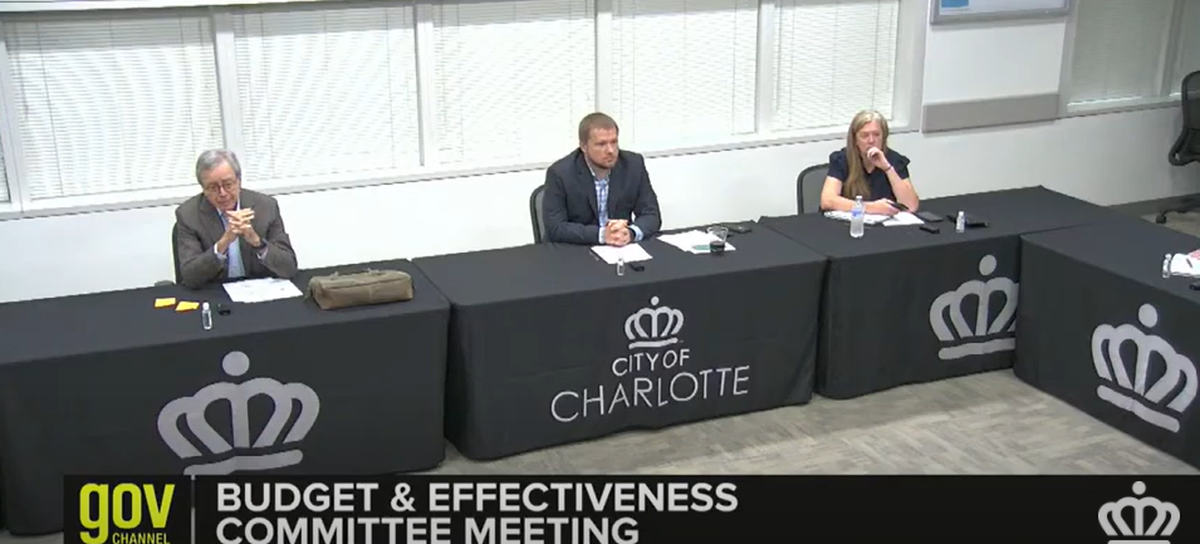
Several Council members told the Observer they do not know Smith, who’s had a 28-year career with the city. That includes Driggs, who is the chair of the City Council’s Budget and Effectiveness Committee.
Driggs said it is essential the CFO has expertise in financial policy, not just accounting.
Smith has dual degrees in accounting and business administration, with a concentration in international business, from UNC Charlotte, Jones wrote in his email. She first came to the city’s finance department as an intern.
According to her LinkedIn profile, Smith became a city accountant in August 1993, moving up the ranks to chief accountant in November 2005, assistant finance director in May 2016 and deputy chief financial officer in September 2019.
Smith, who grew up in Charlotte, told the Observer in a statement that she was involved with “financial aspects” for the Democratic and Republican national conventions in Charlotte, among other special projects.
“Charlotte is a growing and vibrant city that is known for being financially well-managed,” Smith said. “My goal is to continue building on that, so that the Finance department is known as a trusted partner.”
This story was originally published July 21, 2021 at 12:36 PM.