
Plans for new street names honor legacy of Black home ownership in Charlotte community
Three streets near a new community resource center in northeast Charlotte will likely be renamed to honor residents who helped create the legacy of a historically Black neighborhood now fighting the impact of rapid development.
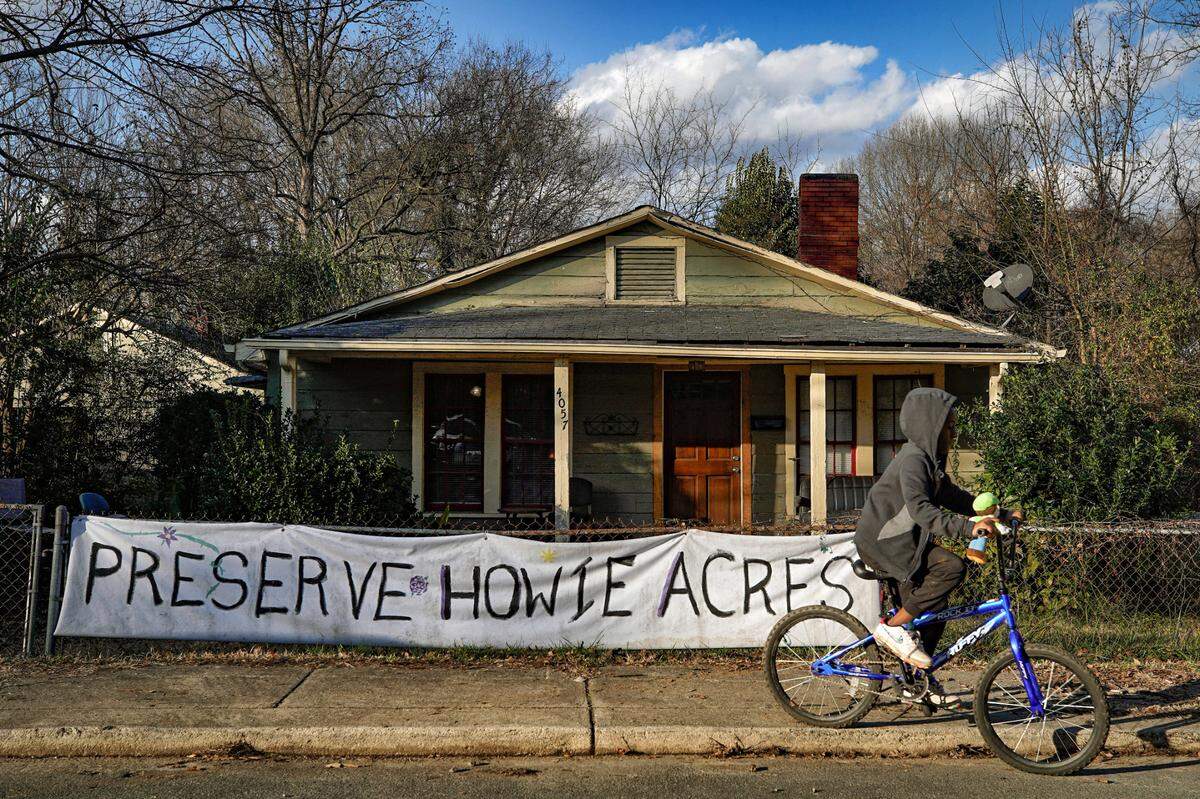
The new Mecklenburg County center, nestled between Eastway Drive and the CATS Blue Line Extension, represents the latest change to Howie Acres, a beacon for Black home ownership in the 1940s.
That came despite redlining and race-based covenants that barred Black residents from buying homes and building generational wealth elsewhere in Charlotte.
Community leaders want Howie Acres to be recognized as an historic district by the city, a tool available in Charlotte to address gentrification, the Observer reported this year. The goal is to preserve older buildings in Howie Acres and give the neighborhood more control over new development.
On Wednesday, Mecklenburg County separately began a symbolic step to preserving the character of Howie Acres and the surrounding area, after seeking public feedback last fall.
County commissioners were updated by staff about three potential street names that would pay homage to leaders from the neighborhood and Zion Primitive Baptist Church, which according to oral tradition was formed around the 1860s and was the mother church for other Black congregations.
Mecklenburg is responsible for naming new city streets at the development, and had wanted to explore historically significant options, said Steve Sweat, a senior project manager for the county.
Those street names under consideration are Stitt Road, Zion-Torrance Road and George Evans Drive. Commissioners will hold a public hearing on Sept. 8 and are then expected to approve the names.
The county received suggestions from several nearby communities, including Bridlewood, Hampshire Hills, Hidden Valley and Howie Acres.
Here are the stories behind those names near Mecklenburg’s Northeast Community Resource Center, at the former Northpark Mall site.
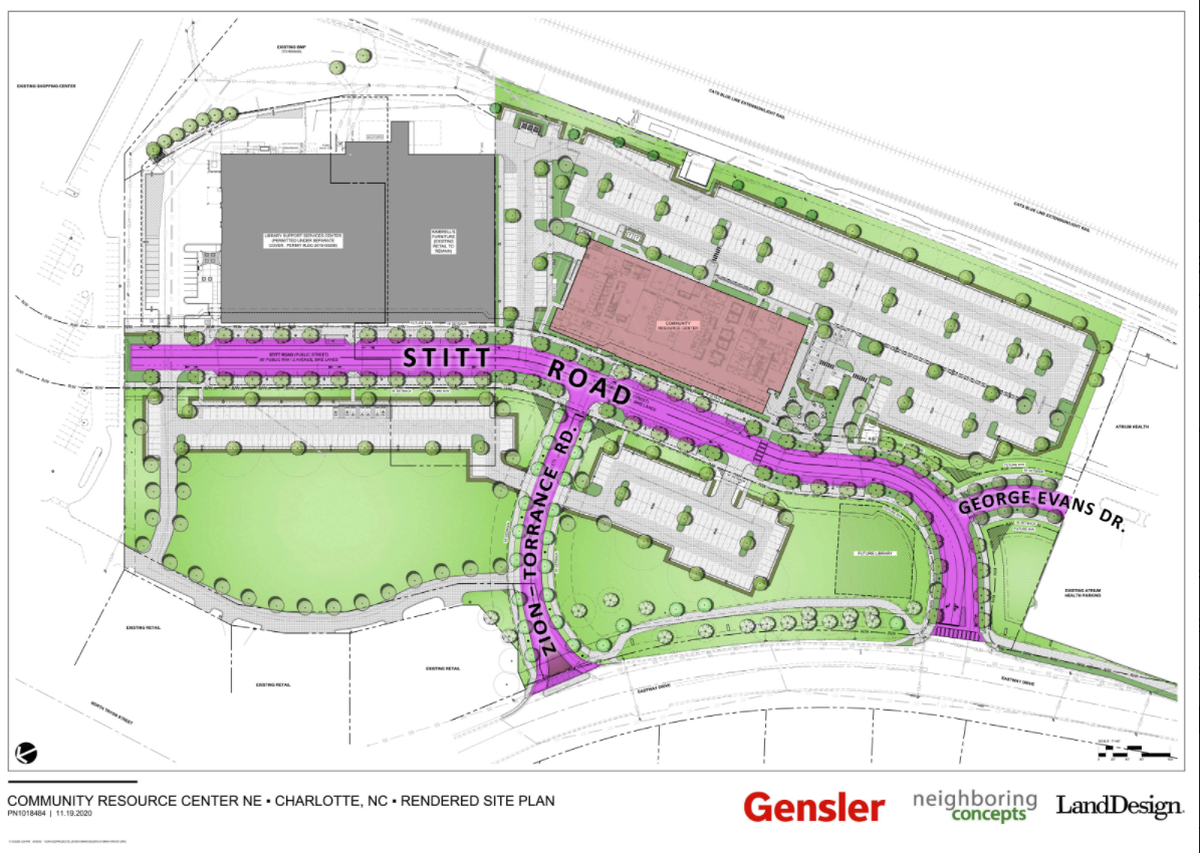
Stitt Road
The Stitt family name has deep roots in the area surrounding the new resource center, the county said.
For example, the Rev. James Stitt, born in 1860, became the pastor of Zion Primitive Baptist Church in 1916, the county said. By the 1920s, Stitt and his family lived along what is now The Plaza.
The Sitts were also “early settlers” in Howie Acres, the county said. The family tree can be traced to siblings Fred Stitt Sr. (born in 1906), James Stitt (born in 1916) and Mary Stitt Moore (born in 1919).
Today, members of the Stitt family still live in properties purchased by their relatives in the 1950s and 1960s, according to Angela Stitt. She filed the street naming application on behalf of the Howie Acres community.
Stitt descendants also live in or own properties elsewhere in northeast Charlotte, including Bridlewood and Citiside.
“Family members are actively fighting to keep the communities safe, clean and in compliance with the city of Charlotte and welcoming of diversity...” Angela Stitt wrote in the application. “This is a family that strives to bring people together in a positive light not only in the (northeast) community but the entire city of Charlotte.”
Zion-Torrance Road
The current building for Zion Primitive Baptist Church dates to 1972. But the church grounds and cemetery are far older, the county said.
”Although many generations have come and gone, the church is still reaching out to the neighborhood,” Rogerlean Hayden wrote in the street naming application, filed on behalf of the Howie Acres community.
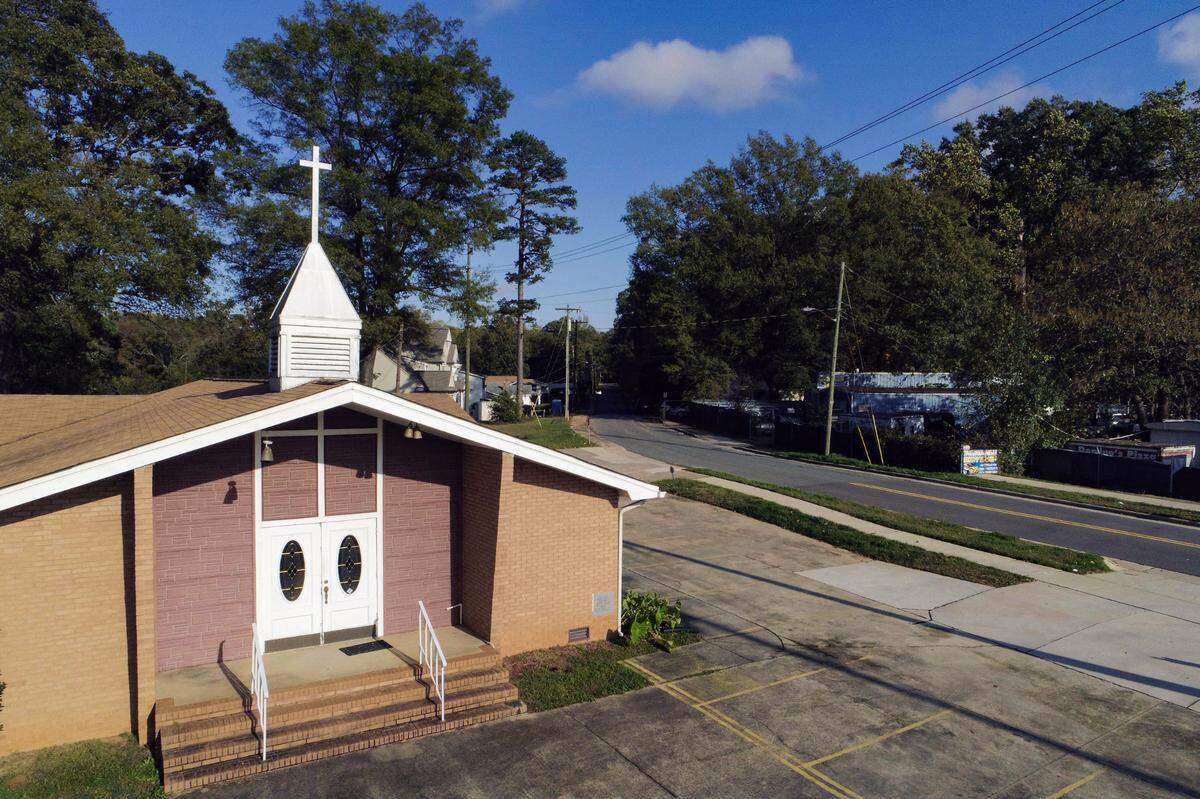
The Rev. Wallace Torrance, who was born in the 1842, founded the church as well as Greater Mount Moriah Primitive Baptist Church on Trade Street, the county said. Torrance was likely a former slave, a local historian told the Observer this year.
He is buried at Zion Primitive Baptist Church, where clergy today want the cemetery designated as a local landmark.
In 2015, several graves were dug up there, after the church sold part of their property on Sugar Creek Road to the North Carolina Department of Transportation, the Observer previously reported. The state was building a vehicle bridge over nearby railroad tracks.
George Evans Drive
George Evans was a city worker and grounds caretaker at the Southern States Fairgrounds in Charlotte, the county said. A leader of Zion Primitive Baptist Church, Evans was married to Hazeline Stitt Evans, who happened to be the daughter of Rev. James Stitt.
In 1946, when developers prepared to build new homes in Howie Acres, they excluded Black buyers. But the Evans managed to buy 10 acres, with the help of loans and private funding.
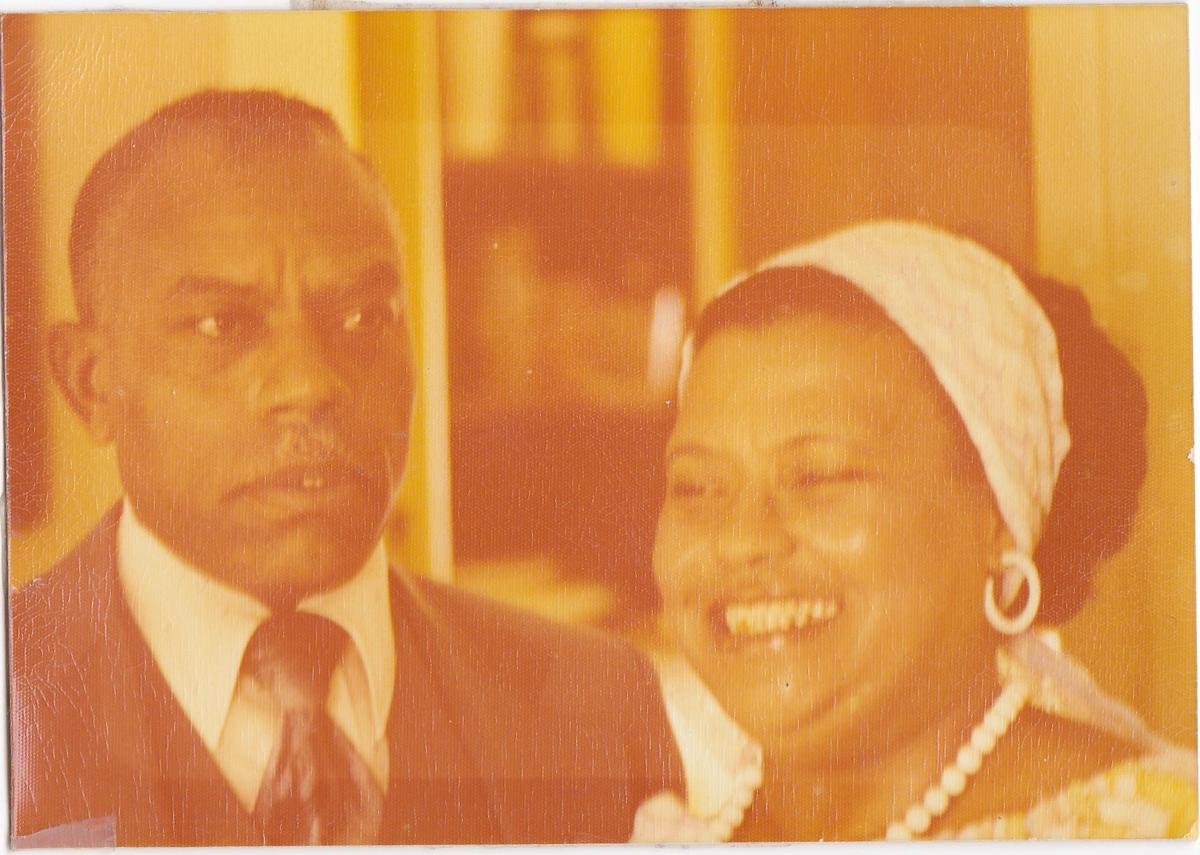
That led to Bearwood Avenue, where 15 Black families built their homes, according to Willie Mason, who filed the street naming application on behalf of the Howie Acres community. He is the grandnephew of George Evans.
“George Evans was a leader of the Howie Acres community who helped many of his neighbors realize the dream of homeownership when that dream was often out of reach for many African Americans,” Mason wrote in the application.
“George Evans persevered in the face of many obstacles... He grew up as one of nine children on a farm in the Mint Hill area,” Mason wrote. “He had little opportunity for formal education.”
George and Hazeline had to pay $20 per month for the land they purchased, until they officially owned it after five years, Mason wrote. They “dug deep,” Mason said, and “their commitment to the neighborhood inspired them.”
This story was originally published August 5, 2021 at 10:58 AM.