Biden housing plan includes first attempts to slow corporate landlords active in NC
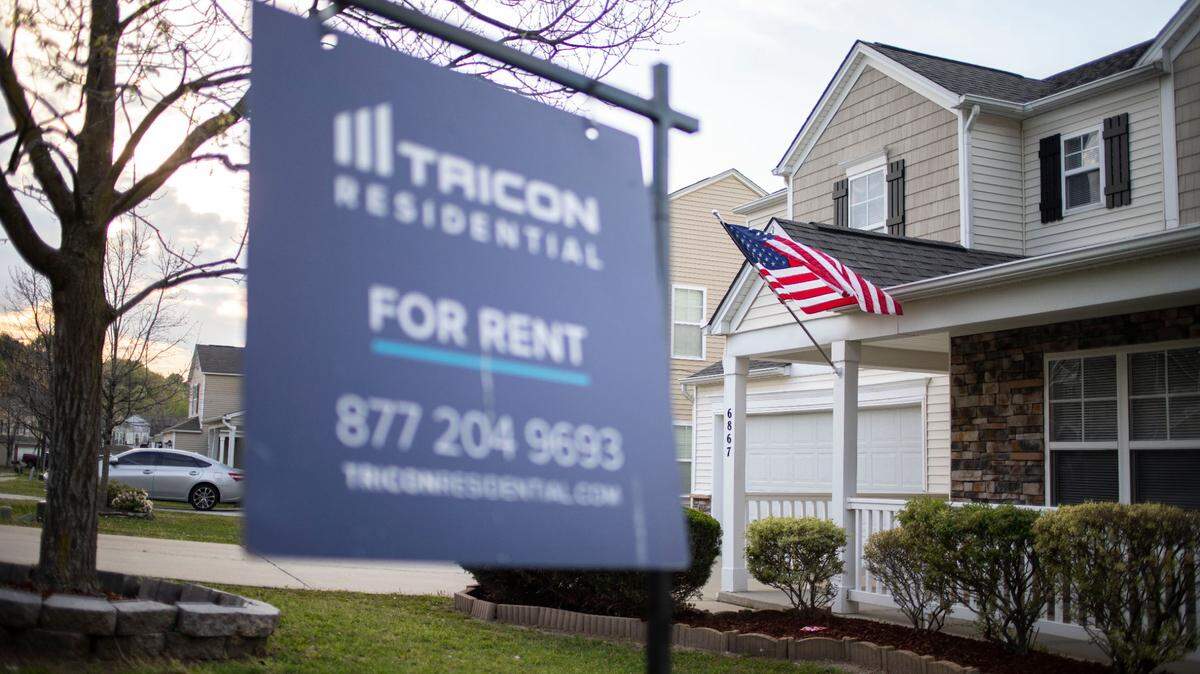
Corporate landlords have acquired more than 40,000 single-family homes in North Carolina metro areas over the past decade, sometimes pinching tenants, homebuyers and neighborhoods. But local and state officials have been slow to react, calling for solutions from the federal government.
On Monday, the White House took what may be a concrete step in that direction.
President Joe Biden earlier this week released a plan to boost the supply of affordable housing across the United States, largely through changes to federal housing funding and financing.
One provision directs the federal government to offer distressed properties on the Federal Housing Administration’s books to owner occupants and nonprofits, rather than institutional investors.
“Large investor purchases of single-family homes drive up home prices for lower-cost starter homes, making it harder for aspiring first-time and first-generation home buyers, among others, to access wealth-building opportunities from homeownership,” the White House statement said.
Concern, but no local action
Security for Sale, an investigation published this month by The Charlotte Observer and The News & Observer, uncovered the scale of corporate landlords in North Carolina and revealed how the industry sometimes hurts tenants and neighborhoods.
The investigation found that 25,000 homes in the Charlotte area are owned by institutional investors, including one-quarter of all rental homes in Mecklenburg County. The Triangle is the industry’s second hottest market in this state.
Local officials have raised concerns about the growth of the industry in North Carolina, but so far have not taken steps to regulate it.
“It’s just a situation where market forces and market dynamics play out in a way that I think is detrimental to neighborhoods,” said Charlotte City Councilman Greg Phipps in an interview this week. “I really think it’s a dismal prospect that we’re facing right now in terms of how this is playing out with corporate landlords, private equity.
“That’s gonna be hard, I think, to overcome unless we get help from legislatures.”
Biden plan targets foreclosed properties
Enter the federal government.
U.S. Rep. Alma Adams, a North Carolina Democrat, recently called for more to be done to slow corporate landlords. Last week, Adams introduced the Observer and N&O investigation into the congressional record while questioning Treasury Secretary Janet Yellen about affordable housing.
“We’ve got so many homes ending up in the hands of corporate buyers,” Adams said in an interview with The Observer this week. “That’s just tragic in my opinion. What we’re trying to do is look at legislation that will ease that burden, and make sure there’s available housing for homeowners, particularly first-time homeowners.”
The congresswoman said she is working to craft legislation that will “help with this issue we’re having with corporate landlords” and will likely look to tack that language onto a future infrastructure or funding bill in the House of Representatives.
But until such legislation is passed, some experts say governments might be limited in how they can regulate corporate landlords.
“There’s not a whole lot that the government can do directly to intervene,” said Eric Seymour, a Rutgers University housing researcher and professor, adding that there’s not much to prevent the willing selling and buying of property. “This is hard because we privilege real estate and private property ownership in this country.”
The White House plan may be an exception, if only a small one.
Biden directed the Federal Housing Administration to sell more distressed properties — basically mortgages on the federal government’s books that have gone through foreclosure — to owner-occupants or nonprofit organizations instead of institutional investors.
Between 2012 and 2016, the federal government sold more than 100,000 mortgage loans, with 98% going to institutional investors, according to the U.S. Department of Housing and Urban Development. The White House said Monday that it’s still typical for about the majority of these distressed properties to go to investors. Biden’s new policy aims to sell at least half of future properties to owner-occupants or nonprofits.
The actual impact the change could have on North Carolina, though, is not yet clear.
Jordan Monaghan, a spokesperson for Democratic Gov. Roy Cooper, said the governor’s office expects a White House briefing on the plan in the coming days and that they intend to work with the Biden administration on the broader issue of affordable housing.
“Understanding the causes of this problem and taking specific action to address it is critical to families who struggle to afford rent or feel the American Dream of owning a home is out of reach,” Monaghan said in an emailed statement this week. “The Governor’s recent budget proposal helps first-time homebuyers with down payments and expands affordable housing by supporting the construction and rehabilitation of rental housing.”
Seymour said it’s ironic that the federal government is calling upon the Federal Housing Administration to be part of the solution. The agency helped launch the institutional single-family rental industry by transferring tens of thousands of distressed properties to institutional investors in the wake of the foreclosure crisis.
“The federal government played no small part in creating the (institutional) single-family rental market in the immediate aftermath of the foreclosure crisis,” Seymour said. “The single-family rental market is predicated on massive, widespread foreclosure.”
‘Speed, not dollars’
Shamus Roller, executive director of the National Housing Law Project, said some of the ideas the Biden administration is including both in its budget and proposals to Congress have “strong merit” — especially the effort to direct foreclosed homes taken over by Fannie Mae and Freddie Mac away from investors.
When the two government-backed firms move to resell those homes, Roller said it’s corporate investors that have the advantage. It’s more often an issue “of speed and not dollars,” since smaller actors need time to put financing together.
“They can’t move as fast as a giant corporation that has cash sitting in the bank,” Roller said.
Creating the space for those smaller buyers — for example, by reserving a period where sales are only available to owner-occupants or other agencies to help homebuyers – is “a pretty important step,” he said. It would amount to the first attempt on the federal level he could think of to slow the growth of corporate landlords.
Roller said his sense is that most corporate landlords are buying on the open market for now. But if housing prices dip and foreclosures rise in another recession, those buying habits could change.
“Policies like this aren’t just for the moment in which we find ourselves,” Roller said.
The National Rental Home Council, a trade group representing some of the largest companies in the single-family rental industry, called the Biden plan a “legitimate framework” for addressing long-running supply constraints in the housing market.
“Importantly, the administration’s plan recognizes the need for a multi-faceted approach that engages a variety of relevant stakeholders and housing providers, with the ultimate aim of ensuring all Americans have ready access to a suitable range of housing opportunities, both in the owner-occupied and rental housing markets, to include the market for single-family rental homes,” David Howard, the council’s executive director, said in an emailed statement this week.
Roller said there’s another reason the plan to more put more foreclosures in the hands of small buyers holds greater promise than other White House proposals to control housing costs — it requires no approval from Capitol Hill. Many of the other pieces of Biden’s plan are included in measures now before Congress or in his budget, Roller said.
“Those are important, but Congress is not known for following the budgets given to them by the president.”
Can’t see the interactive map? Click here to reload the page.
This story was originally published May 19, 2022 at 6:00 AM.