NC congresswoman makes last-ditch effort to extend universally free meals in schools
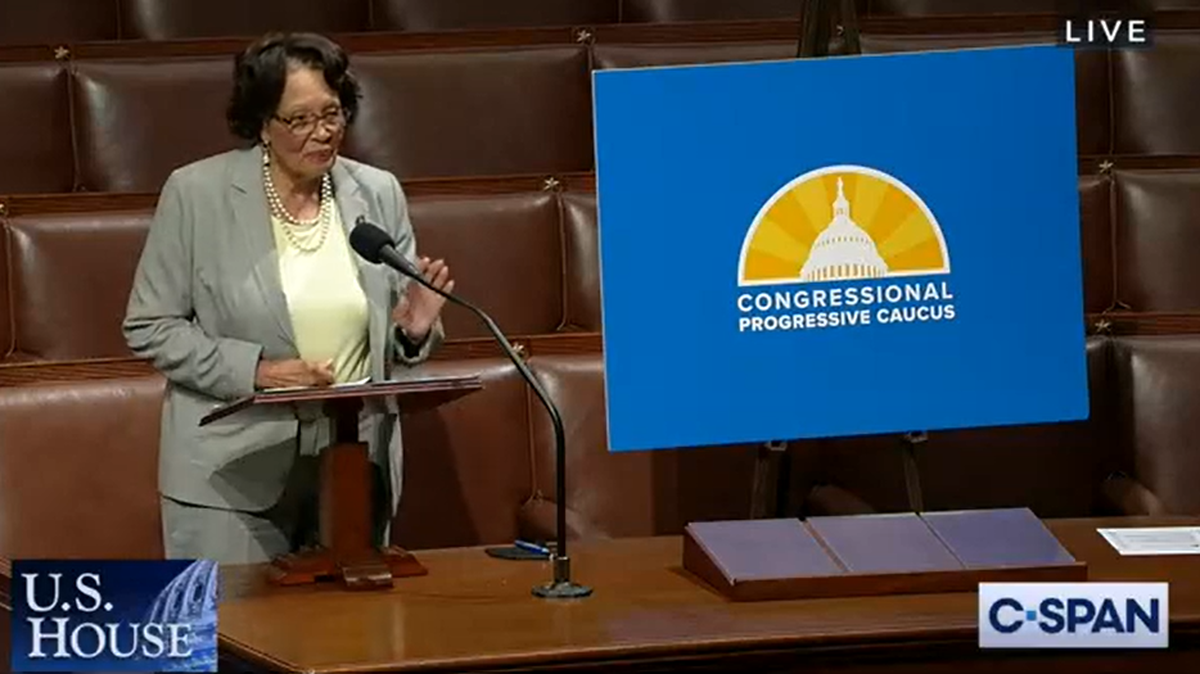
A federal program that gave students free breakfast and lunch at school will expire next week, and a North Carolina congresswoman is warning her peers millions of children will go hungry if they fail to act.
U.S. Rep. Alma Adams, a Charlotte Democrat, told members of the U.S. House last week that communities across the country will experience a hunger crisis in schools and pleaded with leadership to bring a bill to the floor extending the federal program that ends June 30.
“Even as the pandemic continues and food prices are on the rise, these waivers are set to expire,” she said during a special order hour held last week on the House floor. “As a 40-year educator, I know hunger has been a crisis in our schools and our communities since long before the pandemic.”
The U.S. Department of Agriculture’s universally free school meals, which were provided to K-12 students, including in Charlotte-Mecklenburg Schools, arose out of pandemic-era waivers that allowed all students to get school breakfast and lunch at no cost regardless of their family’s income.
The program began in March 2020. School nutrition advocates have urged Congress for an extension in the federal 2022 spending bill. In letters dated June 10 to federal lawmakers, State Board of Education Chair Eric Davis and the Republican Superintendent of Public Instruction Catherine Truitt said the waivers need to be extended for another year to “ensure children have access to nutritious school meals, to support program sustainability and to prevent substantial financial losses for schools in our state.”
Free breakfast, but not necessarily free lunch
In 2019, 92,010 students statewide participated in the Summer Food Service Program, an initiative that ensures children from low-income families are provided free meals and snacks during the summer. Adams said almost 100,000 students needed help from their schools so they didn’t go hungry and emphasized the numbers were amassed pre-pandemic.
In Charlotte, Adams said, the hunger crisis led at least 24 elementary, middle, and high schools in CMS to open food pantries to be able to serve students in need during breaks and during summer vacation.
Now, without an extension of the COVID-prompted program, school meal programs will return to pre-pandemic procedures for the 2022-23 school year, which means free breakfast continues. Lunch may not. CMS already has announced it will not raise the prices of lunch. As of April 1, 2019, 48.6% of enrolled students were on free or reduced lunch.
For pre-K students, the lunch meal price is $2.50; K-8 students pay $2.75 and 9-12 students pay $3. The reduced price lunch meal is 40 cents.
Cassie Fambro, a media relations specialist for CMS, previously told the Observer breakfast will continue to be provided in all of the district’s schools at no charge for the 2022-23 school year. For each of CMS’ summer camps and programs, free breakfast and lunch also will be provided.
CMS also has 68 schools that fall into the community eligibility provision, an option for schools and districts in low-income areas. The program allows schools to serve meals at no charge to all enrolled students, and families do not have to fill out an application.
“Approximately 114 of our district’s schools are not eligible for that provision, meaning that access to summer nutrition will become a patchwork, and when students return at the end of summer, fewer students will get the meals they need,” Adams said. “Our choice is clear: we can choose to act, or we can let millions of children go hungry.”
Politico reported in March that Congress was expected to extend the waivers for another year until Senate Minority Leader Mitch McConnell and other Republicans opposed the extension, making passage of a bill now an uphill battle.
Sam Spencer, the communications director for Adams’ office, said extending the waivers has bipartisan support among North Carolina leaders, including Davis, who is unaffiliated, and Truitt, who is Republican.
In their letters sent to Republican Sens. Richard Burr and Thom Tillis, Davis and Truitt wrote: “Rising costs, coupled with the fractured K-12 food supply chain, are posing challenges that may be difficult for local districts to overcome next school year.”
They said food costs in North Carolina’s school nutrition programs have risen by 25% to 40% over the past 18 to 24 months, and costs of frequently used food preparation supplies have doubled.
“Recent surges in fuel prices have not only contributed to the rising cost of food, they also have increased delivery costs to more than double,and sometimes triple, the cost of deliveries,” Davis and Truitt wrote.
Families urged to apply
School leaders continue to push families to make sure they fill out paperwork to help with meals.
Students attending some CMS schools will have to qualify for free or reduced-price lunch through direct certification, which could include families receiving food stamps, students who are homeless or foster children. Students can also receive free meals from an approved free or reduced-price meal benefit application.
Applications will be available online or on paper beginning Aug. 1.
This story was originally published June 21, 2022 at 1:27 PM.