
Biden administration points to Gastonia project as future of fighting climate change
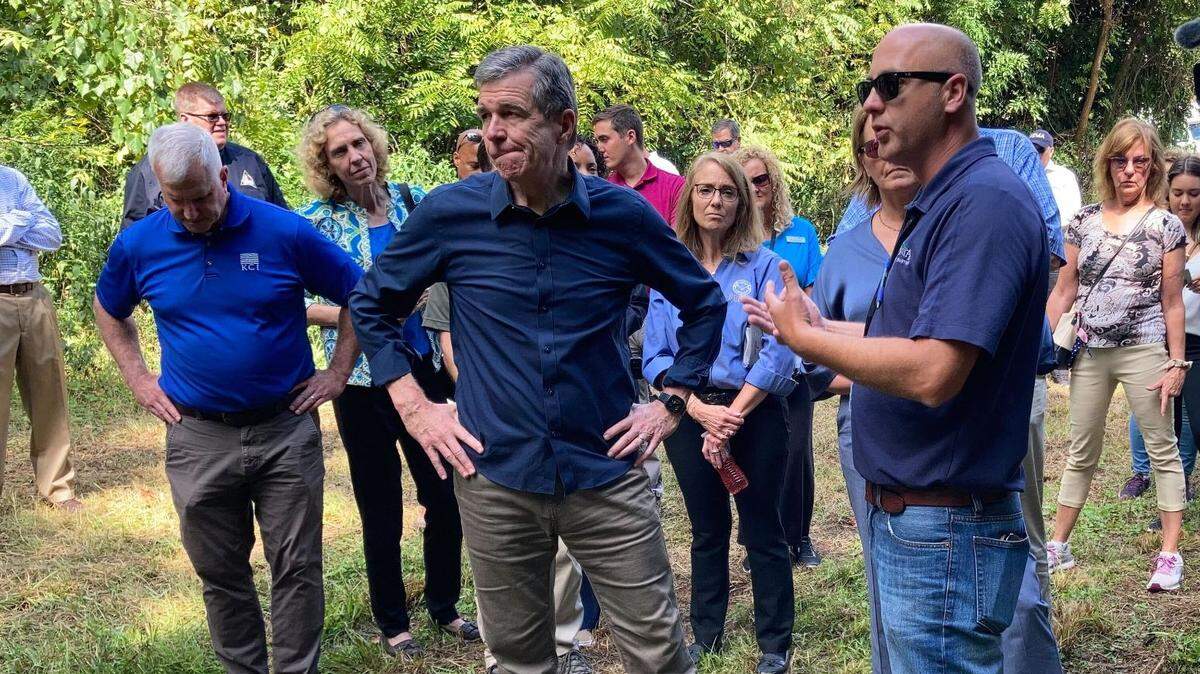
Federal officials see a sewer project in Gastonia as an example of how $3 billion in new funding could help communities across the country prepare for climate change.
The project in Gastonia, where Duharts Creek intersects U.S. 29, will help shore up a precarious sewer line that follows the creek and provides service to thousands of homes, a hospital and retail businesses.
Parts of the line are completely exposed, leaving it vulnerable to breaking during high water. The federal government, through the Federal Emergency Management Agency, is providing $8 million to move it away from the creek and restore eroded banks of the creek.
FEMA administrator Deanne Criswell toured the site and announced that climate resiliency programs will receive $3 billion for other projects. About $2.3 billion will go to the Building Resilient Infrastructure and Communities Program. Another $800 million will go to the Flood Mitigation Assistance Program.
Gov. Roy Cooper joined Criswell in Gastonia Friday, saying the money could help communities throughout the state that are grappling with more frequent severe weather events.
Prepare for dangerous storms in NC
Officials said the timeline for the Gastonia project isn’t clear. Jason Doll, senior scientist with KCI Associates of NC, which helped develop the grant package for the project, said construction could start in about two years. It might take another year after that to finish it.
Cooper said the project shows how the state is using federal partners to prepare for dangerous storms. The state is taking other steps, he said, citing a bill he signed in 2021 directing the the North Carolina Utilities Commission to achieve carbon neutrality by 2050.
Criswell called on other local governments to take advantage of the new funding. She said FEMA staff are prepared to help municipalities navigate the application process.
The increase in weather resistance programs to $3 billion comes after other funding increases approved by Biden. During his first year in office, he increasing funding for those programs from $700 million to $1.6 billion, according to a news release from FEMA. He’s called climate change “the crisis of our generation.”
Robert Cloninger, assistant director of public works for the city of Gastonia, said the city is putting $2.4 million into the sewer improvement and is looking for other grant opportunities as well.
Helping Gastonia ‘function in hard times’
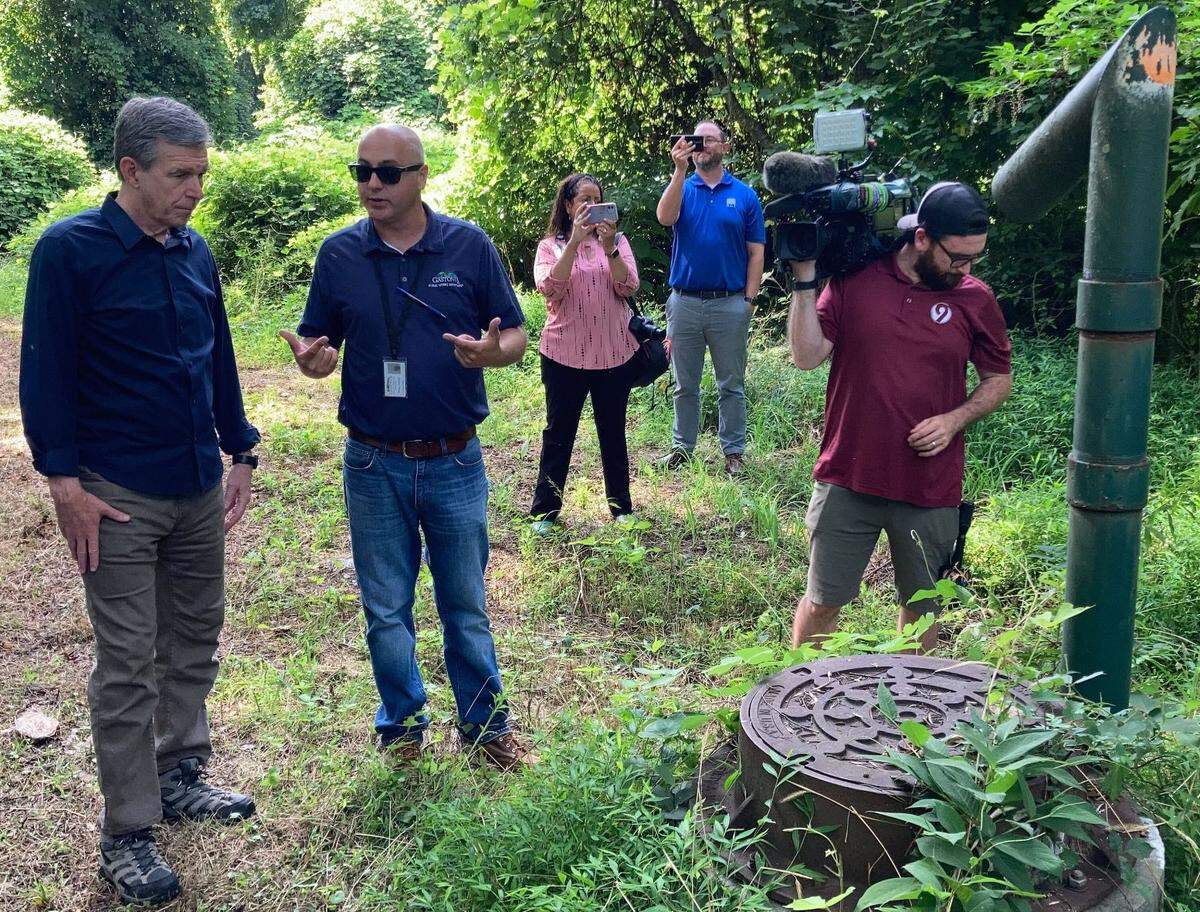
Along with improving the sewer line, Cloninger said the money will restore the stream to a natural state. Rather than concrete embankments to support the creek banks, the stream will be transformed back to a natural ecosystem, he said.
The project will help the city “to know we can function in hard times,” he told Cooper.
Doll, with KCI, said debris and logs pushed down the creek during a flood can cause a break because joints in the sewer line are among the parts completely exposed. A break would disrupt service to thousands and endanger the environment, he said.
“There’s not a shortage of communities that could use the funding, I assure you of that,” Cloninger told Cooper.
This story was originally published August 12, 2022 at 1:23 PM.
.jpg)