
One vote short of supermajority, NC House GOP passes rules making veto overrides easier
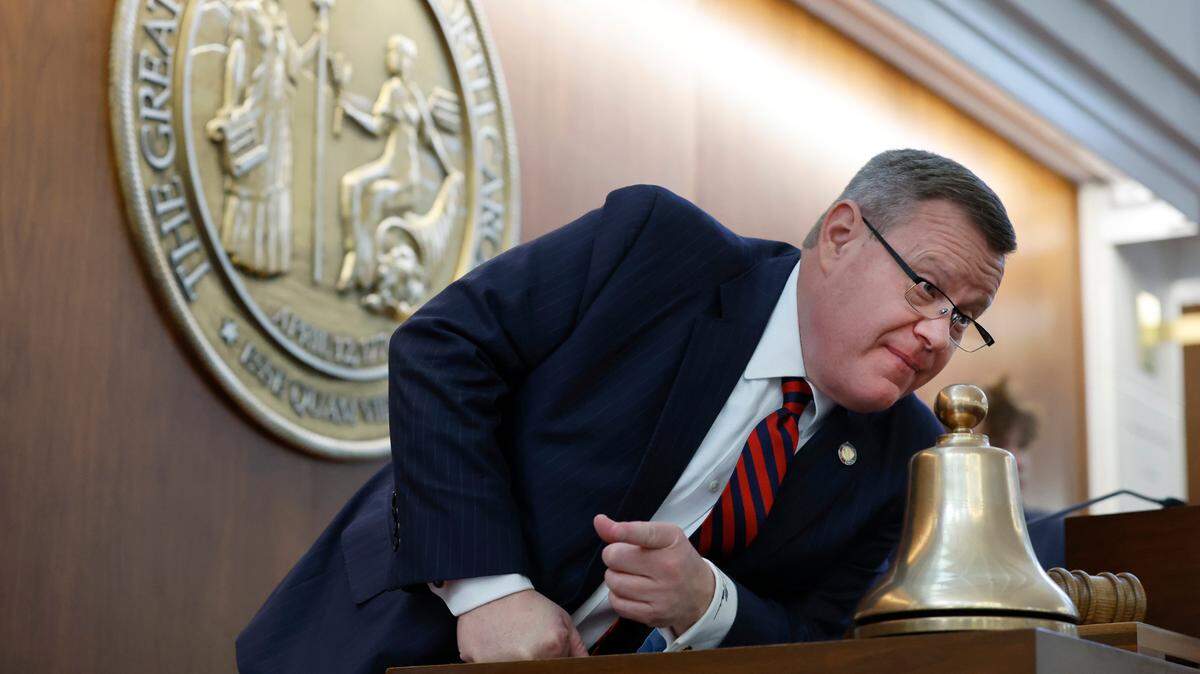
Whether a bill becomes law in North Carolina this year may come down to just one vote — and when the voting takes place.
Republicans have the advantage, as the majority party in the General Assembly, but the governor is a Democrat. Everything from abortion restrictions to the state budget to what is taught in public schools is at play, and the tension lies in the exact vote count.
Republicans have a supermajority in the state Senate: the three-fifths required to override a veto from Democratic Gov. Roy Cooper. The House is one vote short of a supermajority, but House Speaker Tim Moore has repeatedly called their potential to win Democratic votes a “working supermajority.”
Whether the 71 House Republicans always need one of the 49 Democrats to vote with them to override a veto could come down to who is actually on the floor at the time of the vote.
And the timing for those votes to be called is part of the House’s own rules. The House adopted its rules in a floor vote on Wednesday, over Democrats’ failed attempts to amend them. The new rules eliminate a 48-hour notice of voting on bills, including overrides.
Democrats are most worried about veto override votes. Republicans can count who’s in the chamber during any given session and decide to call the vote when numbers favor them. That’s what happened in 2019, when most of the House Democrats were absent and House Speaker Tim Moore called a vote on a budget.
Veto override votes
Republicans did make a concession to Democrats on veto overrides.
Rather than giving no notice as originally planned, the rules state that a gubernatorial veto override vote “may be taken up on the legislative day it is received in the House from the Senate or Governor or any other legislative day it is printed on the calendar” of daily business that the House clerk publishes.
House Rules Chair Destin Hall told Democrats that they’ll probably know before Republicans will that Democratic Gov. Roy Cooper is going to veto a bill. So Democrats will have that notice from Cooper directly.
Democrats offered six amendments to the rules, which all failed.
During a committee meeting on Tuesday, Rep. Carla Cunningham, a Charlotte Democrat, asked how many calendars would be printed and when, as the House calendar is generally not determined for the next day until the evening.
“How many printed calendars should I expect in 24 hours?” Cunningham asked.
Hall said that while they will “generally let that calendar be the calendar for the following day,” it is ultimately the speaker’s call.
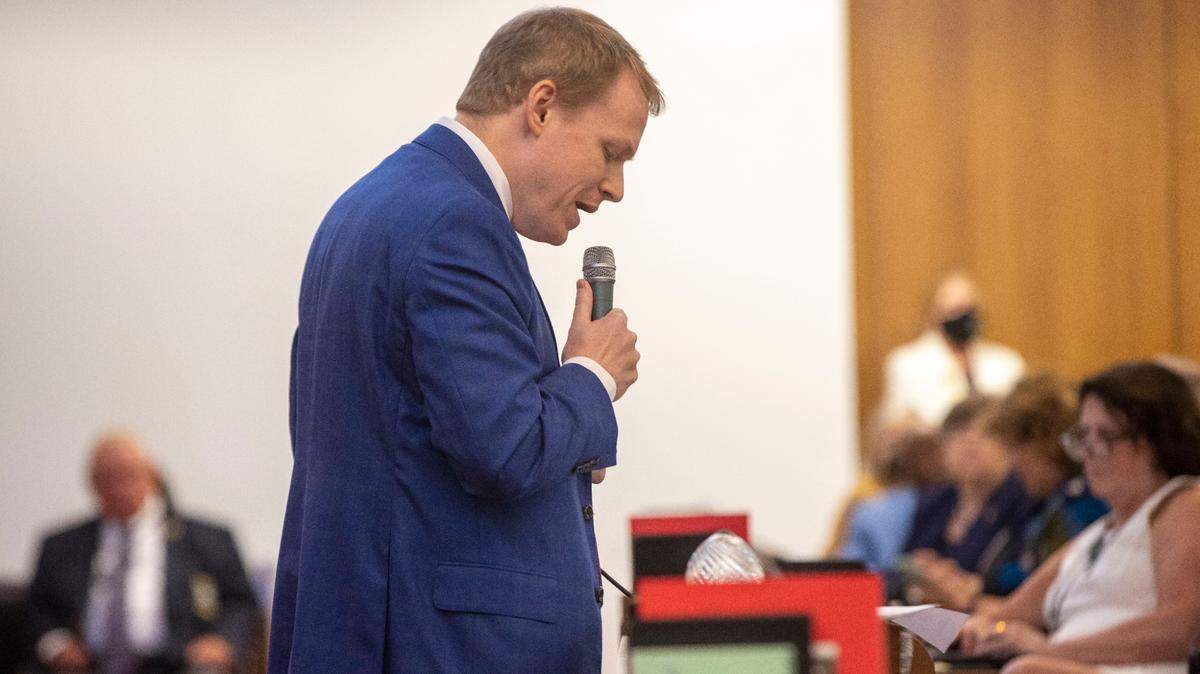
2019 budget override
Rep. Deb Butler, a Wilmington Democrat, called the rules change a “tactical move” and likened it to “gotcha-style politics.” Butler received national attention during the 2019 House budget veto override vote, when she shouted “I will not yield” at Moore.
Previous rules had a requirement for 48 hours’ notice of overrides, though some vetoes remained on the calendar so long, with votes not called, that they are in a so-called “veto garage,” where they can be parked until a vote. Moore pulled the 2019 budget veto from that veto garage.
That move didn’t overturn Cooper’s veto, however, as the Senate never took a vote. The General Assembly has not successfully overturned a gubernatorial veto since losing a previous supermajority during Cooper’s first term.
Hall said Republicans are “going to try to override every veto that the governor issues. However, it’s not our goal to do that through trickery or deceit,” he said.
House Minority Leader Robert Reives, a Chatham County Democrat, questioned what might happen if it’s not Moore or Hall presiding.
“What we do too much is we base so many bills, and in this case the rules, on the people who are presently in place,” Reives said.
Reives also said that the Senate gives notice of veto override votes.
Moore told reporters after the House session that Republican leadership would “make it very clear how we’re going to lay out things, the calendar.”
“If you go back to the situation in 2019 again, that involved, I would say miscommunication between two members who are no longer here. Well alright, since 2019, have you had any issues? Of course not a one. And you had COVID — when people weren’t even in the capital city,” Moore said. “If anyone were to engage in mischief, that would have been it. That’s not how it works.”
Moore said that on the days when they override vetoes, “it will be very clear. It will be very obvious.” He said he wants the conversation to be about the merits of the bill, not gamesmanship.
“Any veto that comes down, we will absolutely override it,” he said.
Reives told reporters after the House session that scheduling votes would build better trust between Democrats and Republicans as well as with the public.
“I think that there’s nothing wrong with us running on a schedule — there’s really nothing that compels us not to schedule everything out,” he said.
Cooper told reporters at an event at the Executive Mansion on Wednesday that he thinks it’s “really important for not only legislators, but the public to have plenty of notice as to when the legislature is going to vote on important issues like voting rights, like women’s reproductive freedom, like gun reform.”
“And, you know, we’ve heard leaders say that they weren’t going to surprise anybody. We need to hold them to their word. They need to get plenty of notice so that the people know that this is going to happen and that legislators — who are part of the citizen legislature, they have other jobs, they have family obligations — that they all know that this is going to happen,” Cooper said.
Other rules are the same as in past years, including the dress code: “Members shall observe appropriate attire: coat and tie for male members and dignified dress for female members.”
Insider editor Lars Dolder contributed to this story.
This story was originally published February 15, 2023 at 6:18 PM with the headline "One vote short of supermajority, NC House GOP passes rules making veto overrides easier."
.jpg)