Tougher penalties for rioting become law in NC, as Gov. Cooper declines to block them
Gov. Roy Cooper said Friday he had let legislation become law without his signature that would raise criminal penalties for rioting.
The bill cleared the Republican-controlled General Assembly early in March with bipartisan support, making it likely that lawmakers could have circumvented the Democratic governor if he had tried to block it. It’s one of the first bills previously blocked by Cooper to become law since last fall’s election results diminished the power of his veto.
Cooper vetoed similar legislation that Republican lawmakers introduced in 2021 due to concerns about the effect stricter penalties could have in deterring protesters from exercising their First Amendment rights. But he acknowledged on Friday that the new measure, House Bill 40, had been amended to reflect some of the concerns critics have brought up.
Still, he said he remained concerned about the bill’s potential impacts.
“Property damage and violence are already illegal and my continuing concerns about the erosion of the First Amendment and the disparate impacts on communities of color will prevent me from signing this legislation,” Cooper said in a statement.
HB 40 cleared the Senate this month with a single Democrat joining Republicans to vote in favor of the bill, and passed the House before that with the support of six House Democrats, including a few members of the Legislative Black Caucus.
One of the bill’s supporters, Democratic Rep. Shelly Willingham, previously told The News & Observer he believed in the bill because he felt lawmakers needed to do more to hold violent rioters accountable, and said he would vote with Republicans to override a veto if the governor decided to block the bill again.
Republicans have a supermajority capable of overriding Cooper’s vetoes in the Senate, and are just one seat short in the House, which meant that the GOP-controlled legislature would have likely been able to bypass a veto and see the bill enacted into law.
Activists had urged Cooper to veto bill
Current state law already punishes rioting, but HB 40 would increase some of those penalties. Among other raised penalties, the bill makes it a more serious felony to “willfully” engage in a riot and cause serious bodily injury, or property damage greater than $2,500.
It also allows authorities to detain anyone charged with rioting and looting for 24 hours, to serve as a “cooling off” period.
Other increased penalties apply if someone engaging in a riot causes a death, or assaults a police officer or other emergency personnel.
House Speaker Tim Moore, who proposed anti-rioting legislation in the aftermath of the 2020 protests against police brutality that happened in downtown Raleigh, said he was alarmed by the property damage that occurred in the middle of some of the otherwise peaceful protests, and wanted to make sure there was a strong deterrent in state law.
Republicans passed the original bill in 2021 with the support of only two House Democrats and none in the Senate. Cooper vetoed the bill, saying that he felt it was unnecessary and intended to “intimidate and deter people from exercising their constitutional rights to peacefully protest.”
But when Moore reintroduced the bill this session, support for it among Democrats grew. Willingham, who is Black, signed onto the bill as a primary sponsor, and joined Moore and other sponsors in presenting it to House and Senate committees, and defending it from questions raised by Democrats and concerned activists.
During a Senate committee meeting, Kerwin Pittman, a social justice activist, said the bill was racist and was being enacted to stymie the Black Lives Matter protests. He also addressed Democrats who were considering supporting the bill and said they would be held accountable if they did.
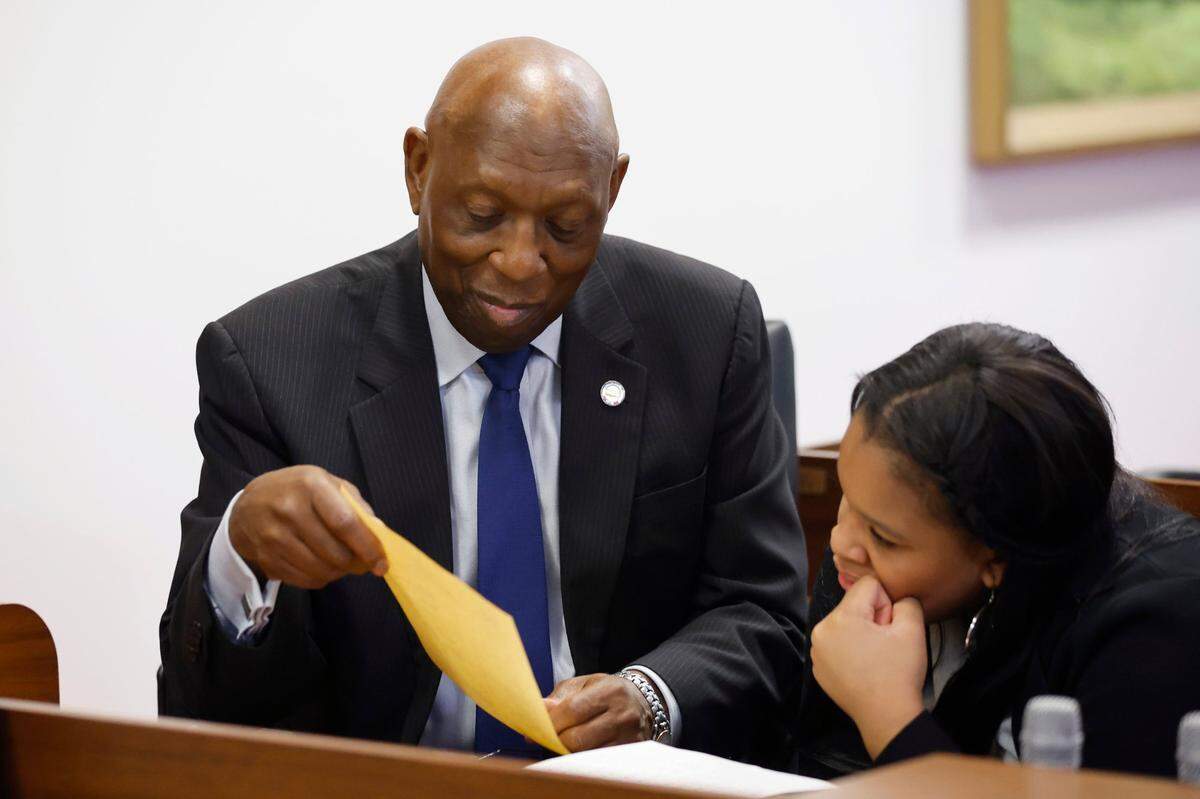
Willingham, who has said the bill will apply only to rioters who engage in violent behavior or destroy property, pushed back against Pittman’s suggestion that it was targeted toward any specific movement.
“If you’re thinking that this is something that was done in reaction to ... what’s been happening with Black Lives Matter or any other kinds of (demonstrations), then I’ll tell you that you’re wrong,” Willingham said.
Democratic supporters defend HB 40
Activists from civil rights organizations have continued to express concern that the bill could result in peaceful protest being criminalized.
The voting rights group Democracy North Carolina and others had asked Cooper to veto HB 40 because, they said, it would “suppress free speech and further criminalize Black and Brown communities.”
“At first glance, HB 40 appears to be written to protect our communities from property damage that could possibly result from a peaceful protest, but this bill would end up having a much more detrimental effect,” said Cheryl Carter, Democracy NC’s co-executive director.
“HB 40 is an insidious attempt to discourage people from participating in the fundamental democratic practice of freely protesting and petitioning their government for a redress of grievances out of fear of racial retaliation.”
Willingham and other bill sponsors have vehemently rejected the notion that the bill is racist, and have said the bill will only increase punishments for violent behavior, and won’t do anything to discourage people from demonstrating peacefully and making their voices heard.
A former police officer who served in Washington, D.C., in the late 1960s and early 1970s, Willingham told The N&O he knew what it was like to be in the middle of violence and chaos, having responded to multiple riots, including the ones that engulfed the nation’s capital in April 1968 after the assassination of Martin Luther King Jr.
“I’ve been on that line, I’ve been the one in uniform, I’ve been the one where people have shot at me, thrown rocks and bricks, and I’ve been between people breaking the law, and trying to enforce the law,” Willingham said.
“Most police officers out there, I’m not saying every one of them, but I believe that the vast majority of police officers out there do the right thing,” he added. “And I think they’ve been trained to the point that they know what’s aggressive, and what’s something that’s done to try and cause them to do something they shouldn’t do, and so I trust that.”
This story was originally published March 17, 2023 at 1:40 PM with the headline "Tougher penalties for rioting become law in NC, as Gov. Cooper declines to block them."