First look at Charlotte’s $3.3 billion budget: pay raises and bigger tax bills for many
The Charlotte City Council on Monday got a first glimpse of the proposed 2024 fiscal year budget, which includes city employee raises and maintains a revenue-neutral tax rate.
City Manager Marcus Jones said staff focused on four principles in his $3.3 billion budget: council priorities, well-managed government, supporting employees and investing in residents. Jones says the city won’t need to tap into reserve funds and no city employee layoffs will be required in the upcoming fiscal year, which starts July 1.
That the budget drops to a revenue-neutral rate, 26.04 cents per $100 in valuation, means the city won’t bring in more money from property taxes than economic growth provides. However, people who own their home are likely to feel the brunt of an uneven revaluation.
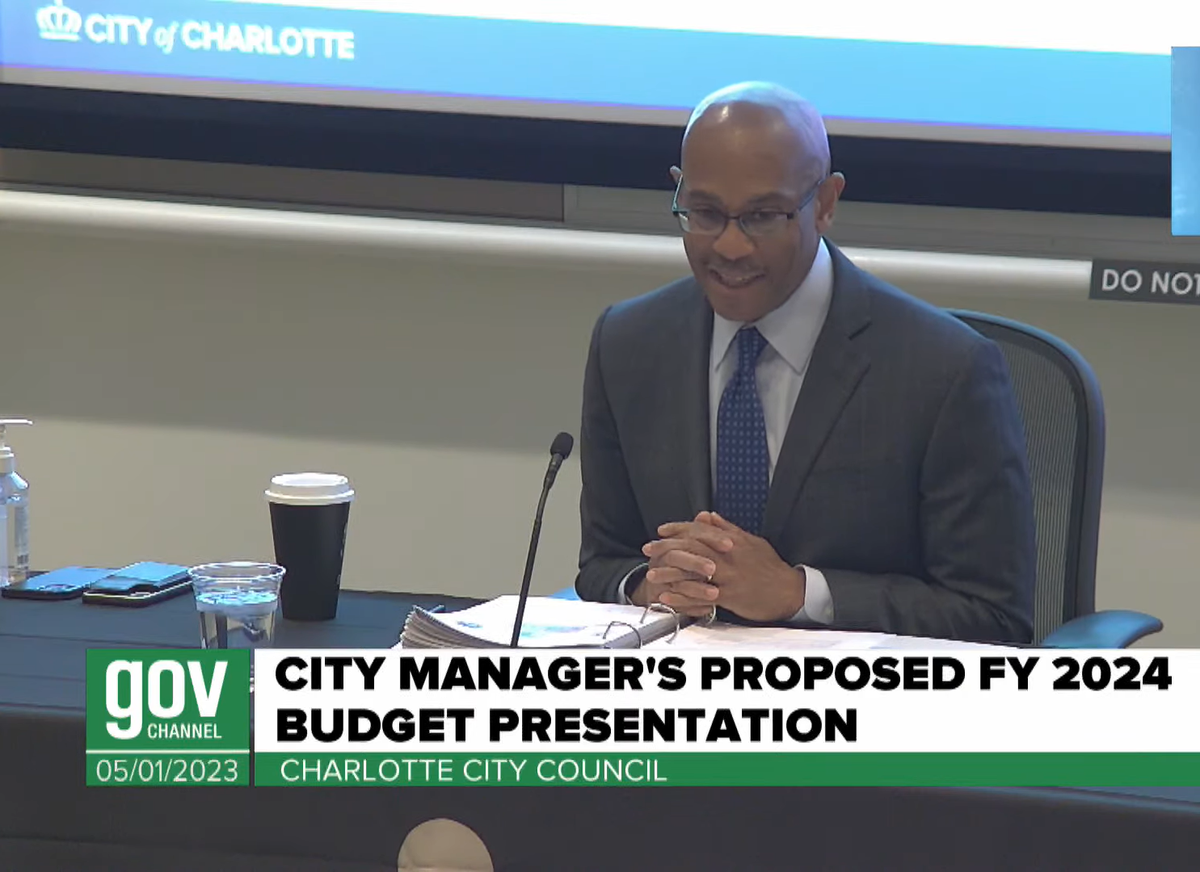
Jones assured council members the budget is structurally balanced, but said the council must make time to discuss how they can find revenue for future years. If city goals continue to grow, the council won’t be able to pay for them without raising the tax rate or finding a different source, Jones said.
Here are four quick takeaways from Monday’s budget presentation.
1. Raises for city employees
▪ Jones’ proposed budget includes 6% raises for all hourly employees in the next fiscal year.
▪ The raises are an effort to combat a climbing vacancy rate for hourly jobs, Jones said. The rate reached 13.5% in 2022, up from 7.9% in 2021.
▪ The city raised hourly employee wages this fiscal year 8% — a total of 14% over a two-year period if city council members leave raises as proposed.
▪ Jones also proposed a 5.5-8% pay increase for all Charlotte Fire Department employees.
2. Revenue-neutral tax rate
▪ Jones said the budget moves the property tax rate to a revenue-neutral level, 26.04 cents per $100 in valuation, to help combat cost pressures from the Mecklenburg County revaluation — a process that happens every four years. The current property tax rate is 34.81 cents.
▪ “Charlotte will be the lowest property tax rate of the 15 biggest cities in North Carolina,” Jones said.
▪ Still, about 90% of city homeowners will see property tax increases, city budget director Ryan Bergman said.
▪ “What ended up happening this time is residential property ... went up higher than commercial property. And so what ends up happening is just a small change, where residential is now (seeing an increase of) 58% of value rather than 56%. But it has a pretty big impact. It leads to about $5.8 billion that’s now on residential rather than commercial,” Bergman said at a Monday news conference. “So that’s why even at a revenue neutral rate, you will still see around 90% of homeowners paying a higher bill.”
3. ‘We’re not pulling back on anything’
▪ The city has consolidated internal teams and had to “stop doing things” that “aren’t a priority,” Jones said in a news conference, but he was not specific when asked by reporters directly about budget cuts.
▪ “We can provide essentially the same level of service that we did in FY 23,” Jones said. “We’re not pulling back on anything.”
4. Police budget increases by $17 million
▪ The proposed budget includes 8% raises for all Charlotte-Mecklenburg Police Department officers and sergeants. New starting officer pay would be $62,911.
▪ CMPD’s raises will help increase its budget by about $17 million, 5.4%, from the current year. Almost all of the increase is related to compensation and benefits changes.
▪ CMPD has 91 officers planning to retire this year, and the agency fears it doesn’t have enough officers to fill their roles, Jones said.
What’s next?
The city will hear from residents during a public comment session at the May 8 Charlotte City Council meeting. Budget workshops begin May 11, and the full proposed budget is posted on the city of Charlotte’s website.
This story was originally published May 2, 2023 at 6:00 AM.