NC budget approved after midnight; final vote coming Friday morning
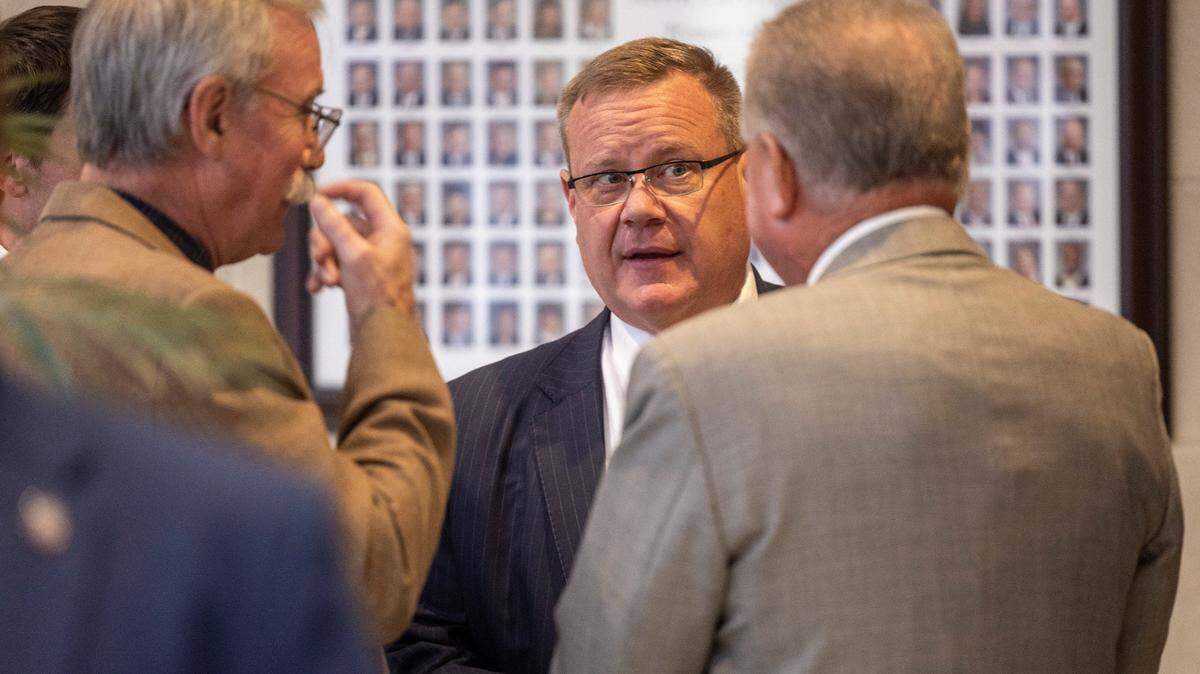
A state budget deal that appropriates $60 billion across two years, triggers Medicaid expansion and includes tax cuts, raises and many Republican policy priorities cleared one chamber of the General Assembly early on Friday and was expected to receive final approval later in the day.
The much-anticipated bill passed an initial vote in the House on Thursday afternoon with all Republicans and five Democrats voting in favor: Reps. Garland Pierce, Michael Wray, Shelly Willingham, Cecil Brockman and Carla Cunningham. Later on Thursday evening, the bill cleared an initial vote in the Senate with lawmakers voting along party lines.
Shortly after midnight on Friday morning, the House took the second vote it needed to, leaving a final vote in the Senate scheduled for 9:30 a.m. before the spending plan could be sent to the desk of Gov. Roy Cooper. The Democratic governor will have 10 days to either sign the budget, let it become law without his signature, or veto it.
Republicans, who have a supermajority in both legislative chambers, have the votes to override a veto.
“This budget is built on key investments in our state’s infrastructure, meeting our needs in health care, education, transportation, manufacturing, and tourism, just to name a few,” said Rep. Donny Lambeth, a Forsyth County Republican. It includes “major investments to respond to the changing struggle we have with depression and mental health.”
“As you think about the budget, think about its impact on our state. Are there challenges still? Well, absolutely, but working together, we can meet those challenges,” Lambeth, who serves as a senior chairman of the House Appropriations Committee, said Thursday morning.
Raises, tax cuts
The budget gives most state employees raises of 7% over two years. It gives teachers an average 7% raise over two years, with larger increases for early-career teachers than for veteran teachers; raises range from 3.6% to 10.8% based on experience. It includes a major expansion of private school vouchers.
It cuts the personal income tax rate to 3.99% by 2025. The rate could drop to 2.49% if revenue collection goals are met. For certain corporations, the budget lowers the franchise tax, or fees paid to do business. North Carolina’s corporate income tax rates are already set to drop to zero by 2030.
Rep. Brandon Lofton, a Mecklenburg County Democrat, called out the late release of the budget, which was published Wednesday just after 4 p.m. He said the raises for teachers and state employees were too low considering the “biting inflation,” the expansion of private school vouchers and the 15% raises for Council of State elected officials.
Sen. Michael Lee, a Republican from New Hanover County, said that by the second year under the budget, the average teacher should be making more than $60,000. This, he said, is due to raises and a salary supplement provided in most counties.
Other Democrats also said the raises were too low and would affect hiring and retaining state employees. They also criticized the vouchers, which they said would move money from strained public schools to private schools, affecting thousands of kids and families.
Policy
Rep. Lindsey Prather, a Democrat from Buncombe County, said the “budget is bad for North Carolina” considering “power grabs and micromanaging” policies in it, including ones giving legislators more power over the state’s community college system.
Democratic Rep. Marcia Morey of Durham, said half of the budget is policy “that should be bills that we heard here in committee, that we invite the public to debate, that we have amendments on, that are separate bills dealing with policy and not stuck in this budget.”
House Minority Leader Rep. Robert Reives said with this legislative session and budget, the state legislature will become “the most powerful legislature in the country. We have abilities and rights now that are controlled by the 170 of us, that have never been contemplated by the makers of the Constitution.”
Senate Minority Leader Dan Blue said the public is “entitled to transparency in what we do in their building,” referencing a provision within the 625-page budget that expands lawmakers’ exemptions from public records law, which could potentially give them full discretion to determine which of their records are public.
Other policy provisions in the budget provide more power to a Republican-led oversight committee, allow judges on the Court of Appeals and state Supreme Court justices to carry a concealed handgun while in court, shift how appointments are made in the judicial standards commission, which investigates and disciplines judges, and more.
Health care and more
In the first year, the budget appropriates $7.33 billion for the Health and Human Services Department. Of those funds, $50 million in one-time money will go to providers of health care services in rural and under-served areas and $80 million will go to support families caring for children with behavioral health and or other special needs.
Billions more will go to increase reimbursement rates for skilled nursing facilities, personal care services and for Medicaid behavioral health providers, said Rep. Wayne Sasser, a Republican from Montgomery County.
The budget also triggers Medicaid expansion, the state-federal health care program for low-income individuals, and provides funding for a new children’s behavioral health hospital in the Triangle. Implementation of Medicaid is not expected until at least December.
Republican Sen. Ralph Hise said the $1.6 billion in one-time federal money gained under expansion would be spent in the budget on the children’s hospital as well as for implementing a new partnership between ECU Health and UNC Health, which would help build new health clinics. Funding would also be used to expand health care programs at community colleges.
The budget provides $500 million in funding for a nonprofit that seeks to help UNC System researchers create new businesses. It includes billions for water and wastewater projects, and highway maintenance programs. It also plows more savings into reserves.
Casinos and gaming off the table
A proposal to legalize more casinos, including on nontribal lands, and authorize tens of thousands of video lottery terminals across the state didn’t survive budget negotiations.
Disagreements between the House and Senate on gambling appeared set to derail months-long budget negotiations: Senate leader Phil Berger pushed for casinos to be included in the budget while House Speaker Tim Moore said his chamber did not have the votes.
The House appeared set to release a new budget bill, which would not include casinos or Medicaid expansion. Instead, these policies would have been pushed into a new bill. Drafts of both of these bill were obtained by The News & Observer on Monday night.
By Tuesday night, however, Moore and Berger announced they had reached an agreement to cut casinos and keep Medicaid in the budget, as they had originally laid out earlier this year.
This story was originally published September 21, 2023 at 2:09 PM with the headline "NC budget approved after midnight; final vote coming Friday morning."