
NC State Health Plan votes to end coverage of expensive weight loss drugs, like Wegovy

Facing unsustainable costs, the NC State Health Plan’s board of trustees voted to end all plan coverage of popular weight-loss drugs beginning April 1.
Board members met Thursday afternoon to consider options for how the plan could deal with rising costs. In October, the board imposed a moratorium on new prescriptions for one of the drugs, Wegovy, when made solely for weight-loss purposes. The moratorium began Jan. 1.
At the conclusion of the lengthy meeting, the board voted 4-3 to exclude all coverage of obesity GLP-1 medications. This will end coverage for plan members who were grandfathered in and already taking the medications.
Usage of Wegovy, Saxenda and other drugs by plan members has increased significantly in recent years, as have costs incurred by the plan. The plan spent a projected $102 million on these drugs in 2023, or 10% of its roughly $1 billion in net pharmacy spending last year, The News & Observer previously reported.
In 2023, a total of 24,750 state employees were using weight-loss drugs through the health plan.
The board considered an option of leaving coverage of the drugs in place and continuing talks with drug manufacturers.
But board members who voted to end coverage said they weren’t confident that maintaining the status quo would help the plan provide the drugs to its members at a lower cost. Several board members raised the significantly higher cost of the drugs during Thursday’s meeting, with some even saying they felt the plan was being “bullied” or “extorted” into accepting unreasonably higher prices.
Ardis Watkins, the executive director of the State Employees Association of North Carolina, said the choices facing the health plan — dropping the drugs from coverage altogether or being forced to raise costs on all plan members — were untenable. That was especially the case in light of a 23% vacancy rate across all of state government, and far higher rates in certain departments and agencies.
“How in the world are we going to bring people into state government, who we keep putting every problem that is not caused by employees, back on the employees?” Watkins asked.
Employees ask for continued coverage
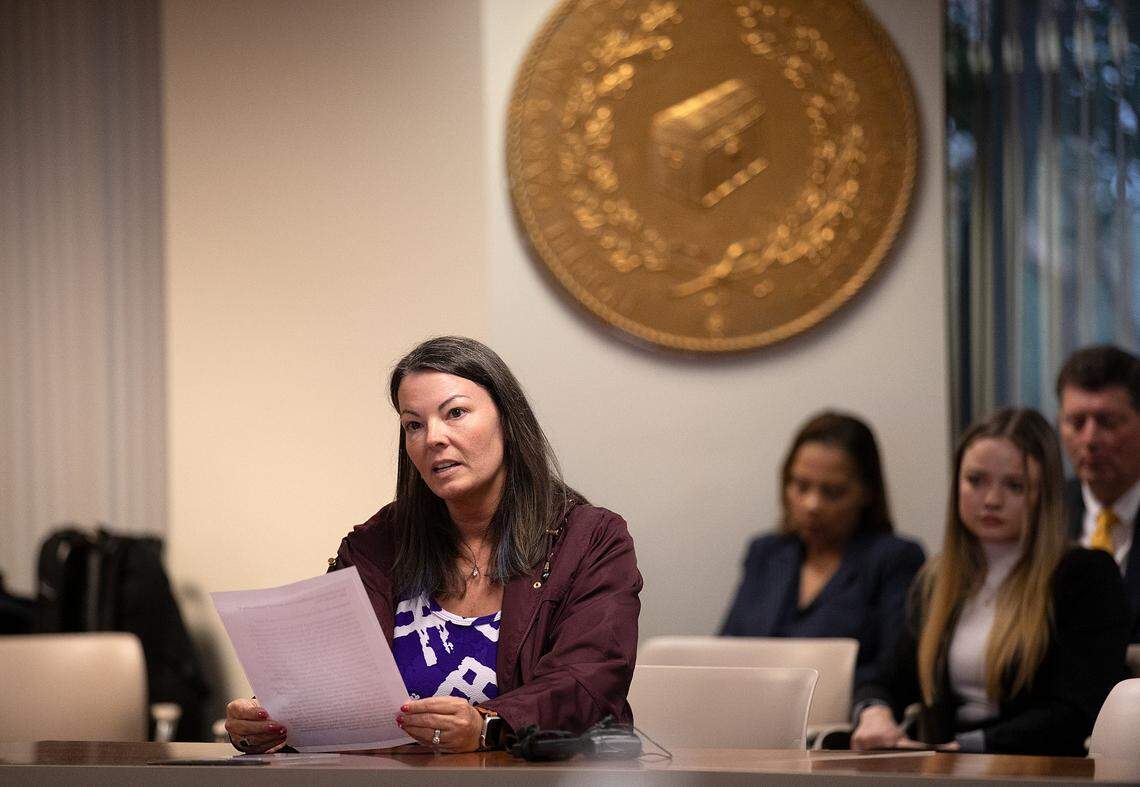
State employees who have benefited from the drugs urged the board to continue coverage, even if only for people who met certain criteria. They said they took the medication because it helped them lose weight when surgeries had not worked, or other medical conditions had hindered them from doing so.
But health plan staff told the board they had evaluated several potential criteria that could be put into place, such as requiring a minimum number of visits with a nutritionist or completion of a medically supervised weight-loss program, and were informed that in nearly each instance, doing so would result in losing all of the savings that came through manufacturer rebates, or discounts.
During the meeting, the board heard from staff that the cost of covering GLP-1 drugs before manufacturer rebates had more than quadrupled from around $3 million per month three years ago, to more than $14 million per month in 2023.
Staff also told the board that the plan is projected to incur significant operating losses over the next four years. In 2024, those losses are expected to total $195 million.
By ending coverage for the weight-loss drugs after April 1, the plan expects to save nearly $100 million this year.
“We can’t spend money we don’t have, we just can’t,” said Dr. Pete Robie, an internist from Winston-Salem appointed to the board by state Treasurer Dale Folwell, who oversees the State Health Plan. “We just can’t. That’s not meeting our fiduciary relationship. And to spend an extra $1,000 a month (per prescription) just to support profit, not to support the development and manufacturing of medicine, is unconscionable.”

End of rebate ends savings
In 2023, the health plan received a 40% rebate from Novo Nordisk, the manufacturer of Wegovy and Saxenda, according to an analysis by State Health Plan staff. That saved the state $539 off of the $1,347 list price for each prescription of both drugs.
That rebate ended when the plan imposed the moratorium on new prescriptions for Wegovy at the beginning of this year, because it put the state out of compliance with its contract.
A spokesman for CVS Caremark, the company that negotiates prices with drug manufacturers on behalf of the plan, said after Thursday’s vote that the company’s “sole priority” is to negotiate the lowest net cost for weight-loss drugs that are being used by thousands of state employees.
In a statement, spokesman Phillip Blando said Novo Nordisk, Eli Lilly and other manufacturers “need to stop dragging their feet and agree to offer their medicines at a fair price to North Carolina’s public servants.”
“Let me be clear: the drug manufacturers can choose the lower the cost of these medicines today and offer relief to the State Health Plan,” Blando said.
“We pass through 100% of any rebates the manufacturer offers to the North Carolina State Health Plan. Our clients receive manufacturer rebates when coverage for a drug meets certain terms and conditions, including inclusion on the formulary. If the terms and conditions are not met, CVS Caremark is not able to collect a rebate for its client.”
This story was originally published January 25, 2024 at 5:22 PM with the headline "NC State Health Plan votes to end coverage of expensive weight loss drugs, like Wegovy."
