Heading to the polls in NC? Here’s what to know about new election laws before voting
Voters should be aware that new laws might make things a little different at the ballot box this year.
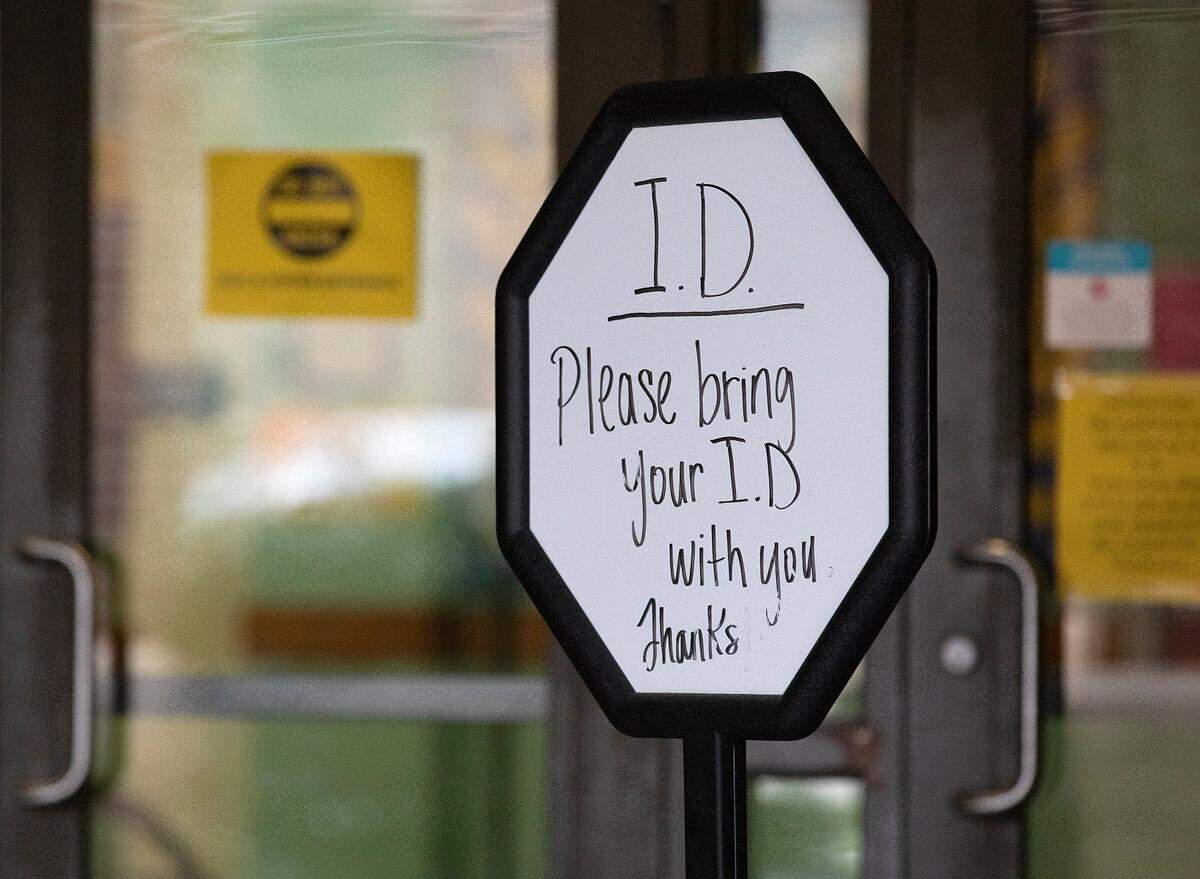
You need an ID to vote
First up is the big one: voter ID. Due to a ruling from the NC Supreme Court, all voters are now required to show a photo ID to vote. For most people, this means a driver’s license, but a full list of acceptable IDs can be found on the State Board of Elections’ website.
Voting by mail? You’ll still need to include a photocopy of your ID with your ballot.
Voters who don’t have an ID may fill out an ID exception form when they vote. County boards of elections are required to count ballots with completed ID exception forms “unless the county board has grounds to believe the affidavit is false,” according to state law.
County boards of elections now provide free photo IDs to any registered voter.
There are new rules for poll observers
A new law enacted last year specifies exactly what partisan poll observers can do at a voting place.
Poll observers are appointed by political parties and sent to polling places to view the voting process.
The new law specifies that observers are allowed to take notes, listen to conversations between voters and poll workers and move freely around the voting place. Observers are not allowed to tell voters who to vote for, see a voter’s ballot or stop voters from entering the polling place.
State and federal law makes it a crime for anyone, including poll observers, to intimidate voters or election officials.
Up to three observers from each party may be present at a voting space at any given time.
You have less time to get your absentee ballot in
In previous elections, any mail-in ballot that arrived up to three days after Election Day would still be counted as long as it was postmarked by the day of the election.
Now, mail-in absentee ballots generally must arrive at the county board of elections’ office by 7:30 p.m. on Election Day.
Your signature may be analyzed
If you’re voting by mail, your signature on the ballot may be checked against the signature the state has on file from your voter registration.
This signature verification technology is being tested in a pilot program in 10 counties in the primary election. During the pilot, no votes will be thrown out for failing the verification test.
The pilot program will be conducted in the following counties:
- Durham
- Halifax
- Bertie
- Wilkes
- Montgomery
- Rowan
- Jones
- Pamlico
- Henderson
- Cherokee
Bringing someone with you? They may need to sign in.
A new law requires that any nonvoting person who enters a voting place must sign a log and give their name, address and the time they entered. This requirement does not apply to any minor children accompanying a voter.
What else could be different? These changes are stalled in court
Lawmakers passed more sweeping changes to elections, but some of them are currently help up by courts.
Republicans passed Senate Bill 749 last year, which aimed to overhaul the structure of state and local boards of elections. Instead of having a majority of members from the governor’s party, all of these boards would become evenly split between Republicans and Democrats. The governor would also lose all appointments to these boards, with legislative leaders getting to pick the members instead.
A panel of judges temporarily blocked SB 749 from taking effect in November.
Lawmakers also made changes to same-day registration last year that a federal court has stalled, for now. Under the new law, voters who registered to vote and cast their ballot in the same day would be sent one mailed notice to their listed address. If that notice was returned as undeliverable, the voter’s registration would be canceled and their ballot would be thrown out — without the voter being able to contest the decision.
Judge Thomas Schroeder temporarily blocked this change, writing that there was a risk voters could be unfairly disenfranchised if the Postal Service makes a mistake.
This story was originally published February 13, 2024 at 6:00 AM with the headline "Heading to the polls in NC? Here’s what to know about new election laws before voting."
CORRECTION: An earlier version of this story misstated how a new law affects partisan poll observers. The law maintains existing permission for up to three observers per site from each party, but gives the parties more leeway in how they mix site-specific observers with those who cover multiple locations.